• Home
  • About
  • DavidKitz.ca
  • Youtube Videos
  • Books by David
  • Books on Amazon.com

I love the Psalms

~ Connecting daily with God through the Psalms

I love the Psalms

Tag Archives: John the Baptist

Your Prayer Has Been Heard

08 Monday Dec 2025

Posted by davidkitz in Advent, Psalm 21

≈ Leave a comment

Tags

angel, angel of the Lord, Elijah, Elizabeth, Holy Spirit, Jesus, John the Baptist, Prayer, Psalms, success, the LORD, victory, Zechariah

Today’s quote and prayer from
“Psalms 365: Develop a Life of Worship and Prayer


Today’s
Reading: Psalm 21:1-7

Listen to today’s reading by Jonathan Dent:

https://davidkitz.blog/wp-content/uploads/2025/12/psalm-211-7-mix1-final.mp3

Heavenly Father,
help me to rightly handle the success you bring.
Lord Jesus,
you are my victory over death,
hell, and the grave.
Help me remain thankful.
You are more wonderful than I can imagine.
I praise you.
I owe any success I have achieved to you,
Lord Jesus.
Amen.

— — — —

The Birth of John the Baptist Foretold

Then an angel of the Lord appeared to him,
standing at the right side of the altar of incense.

When Zechariah saw him,
he was startled and was gripped with fear.

But the angel said to him:
“Do not be afraid, Zechariah;
your prayer has been heard.
Your wife Elizabeth will bear you a son,
and you are to call him John.

He will be a joy and delight to you,
and many will rejoice because of his birth,

for he will be great in the sight of the Lord.
He is never to take wine or other fermented drink,
and he will be filled with the Holy Spirit
even before he is born.

He will bring back many of the people of Israel
to the Lord their God.

And he will go on before the Lord,
in the spirit and power of Elijah,
to turn the hearts of the parents to their children
and the disobedient to the wisdom of the righteous—
to make ready a people prepared for the Lord.”

(Luke 1:11-17 NIV)*

Para la publicación de Salmos 365 de hoy en español haga clic aquí.

bgbg_v4.3_1501818
* NEW INTERNATIONAL VERSION, COPYRIGHT ©1973, 1978, 1984, 2011 BY BIBLICA

Pray for enduring peace in Israel and Gaza,
and continue to pray for peace to return to Ukraine and Russia!

Volume I of Psalms 365: Develop a Life of Worship and Prayer won the Best Book of the Year Award from The Word Guild and Volume II has won the Best Devotional of the Year Award. For those who love God’s word, this three-book series is an ideal way to daily meet with the Lord. To purchase or for a closer look click here.

New from David Kitz

James—the brother of Jesus—who was this man? What evidence do we have that this “brother of our Lord” even existed?

David Kitz digs deep into archeology, family dynamics, church history, and the biblical texts. What emerges from his research is a portrait of a decisive, pivotal leader who embodied the will and character of Jesus Christ.

But how did James—James the unbeliever—transform to become a leader who changed the course of world history? In these pages you will uncover the answer and rediscover for yourself the life-changing power of the gospel.

To view further details or purchase this or other books directly from the author click here.
Guide Our Feet into the Path of Peace

04 Thursday Dec 2025

Posted by davidkitz in Psalm 19, Psalms

≈ Leave a comment

Tags

forgiveness of sins, Jesus, John the Baptist, meditation, mercy of God, Prayer, Redeemer, Rock, salvation, the LORD

Today’s quote and prayer from
“Psalms 365: Develop a Life of Worship and Prayer


Today’s
Reading: Psalm 19:12-14

Listen to today’s reading by Jonathan Dent:

https://davidkitz.blog/wp-content/uploads/2025/12/psalm-1912-14-mix1-final1-declick.mp3


Heavenly Father,
please forgive my sins.
Often,
I have lived according to my will,
not yours.
Forgive my selfish ways.
May these words of my mouth
and this meditation of my heart
be pleasing in your sight, L
ORD,
my Rock and my Redeemer.

Amen.

— — — —


Zechariah’s Prophecy concerning Jesus
and John the Baptist

And you, my child,
will be called a prophet of the Most High;

    for you will go on before the Lord
to prepare the way for him,

to give his people the knowledge of salvation
    through the forgiveness of their sins,
because of the tender mercy of our God,
    by which the rising sun will come to us from heaven
to shine on those living in darkness
    and in the shadow of death,
to guide our feet into the path of peace.”
(Luke 1:76-79 NIV)*

Para la publicación de Salmos 365 de hoy en español haga clic aquí.

bgbg_v4.3_1501818
* NEW INTERNATIONAL VERSION, COPYRIGHT ©1973, 1978, 1984, 2011 BY BIBLICA

Pray for enduring peace in Israel and Gaza,
and continue to pray for peace to return to Ukraine and Russia!

Volume I of Psalms 365: Develop a Life of Worship and Prayer won the Best Book of the Year Award from The Word Guild and Volume II has won the Best Devotional of the Year Award. For those who love God’s word, this three-book series is an ideal way to daily meet with the Lord. To purchase or for a closer look click here.

New from David Kitz

James—the brother of Jesus—who was this man? What evidence do we have that this “brother of our Lord” even existed?

David Kitz digs deep into archeology, family dynamics, church history, and the biblical texts. What emerges from his research is a portrait of a decisive, pivotal leader who embodied the will and character of Jesus Christ.

But how did James—James the unbeliever—transform to become a leader who changed the course of world history? In these pages you will uncover the answer and rediscover for yourself the life-changing power of the gospel.

To view further details or purchase this or other books directly from the author click here.

Regime Change: the Mission of the Dynamic Duo

23 Sunday Nov 2025

Posted by davidkitz in The Elisha Code

≈ Leave a comment

Tags

Ahab, Elijah, Elisha, fire from heaven, God's power, humility, idolatry, Jesus, Jezebel, John the Baptist, lies, Mount Carmel, pride, Pride and Humility, regime change, repentance, Russia, the LORD, Ukraine

At that time Jesus, full of joy through the Holy Spirit, said, 
“I praise you, Father, Lord of heaven and earth,
because you have hidden these things from the wise and learned,
and revealed them to little children. 
Yes, Father, for this is what you were pleased to do.
(Luke 10:21, NIV)

Before sunrise on February 24, 2022, Russia launched a multi-pronged attack on Ukraine by air, land, and sea. Kiev, the capital, was expected to fall within days. President Biden offered to evacuate Ukrainian President Volodymyr Zelenskyy from the besieged capital. But a resolute and defiant Zelensky replied, “I need ammunition, not a ride.”[i]

What was Vladimir Putin’s objective in launching this unprovoked Russian attack on his smaller southern neighbor? His immediate goal was regime change. He wanted to oust the democratic, pro-western government of Ukraine and replace it with a pro-Russian regime subservient to his will.

Putin failed in his immediate objective. The Ukrainian defenders mounted a fierce resistance. The invaders were beaten back, though they engaged in rape, and a wanton killing of civilians, and inflicted massive destruction.

Photo by Pixabay on Pexels.com

At the time of this writing, the war rages on. The outcome remains uncertain. Regime change may yet come. But will the regime change be in Kiev or in Moscow? Time will tell.

Here is what we know with certainty from the Scriptures. The LORD wants regime change. Elijah and Elisha, the Old Testament dynamic duo, were on a mission. They had an assignment directly from the LORD God Almighty. What was their mission—the task the LORD assigned to them?

In broad terms their assignment was regime change. The northern Kingdom of Israel had turned its back on God—the God who generations earlier had rescued them from slavery in Egypt. Worse yet, Israel had turned to idolatry. Under the autocratic rule of Ahab and Jezebel, the worship of the fertility gods Baal and Asherah flourished.[ii]

First Elijah, and then, Elisha was tasked with bringing the wayward people of God back to worshipping Yahweh. But King Ahab and Queen Jezebel—Satan’s power couple—stood in the way.

Furthermore, this was a life and death struggle for the minds and hearts of the people.

Amid a famine brought on by a severe drought some dared to defy Israel’s King and Queen. Obadiah, Ahab’s palace administrator, was such a man. A devout believer in the LORD, Obadiah risked his life.

While Jezebel was killing off the Lord’s prophets, Obadiah had taken a hundred prophets and hidden them in two caves, fifty in each, and had supplied them with food and water (1 Kings 18:4, NIV).

In response, Elijah courageously confronted King Ahab and challenged him to assemble all of Israel for a duel to the death on Mount Carmel. Ahab was to bring with him “the four hundred and fifty prophets of Baal and the four hundred prophets of Asherah, who eat at Jezebel’s table” (1 Kings 18:19, NIV).
Thus the stage was set for what many consider the greatest challenge and display of God’s power in the Hebrew Scriptures.

          Elijah went before the people and said, “How long will you waver between two opinions? If the Lord is God, follow him; but if Baal is God, follow him.”
          But the people said nothing.
Then Elijah said to them, “I am the only one of the Lord’s prophets left, but Baal has four hundred and fifty prophets. Get two bulls for us. Let Baal’s prophets choose one for themselves, and let them cut it into pieces and put it on the wood but not set fire to it. I will prepare the other bull and put it on the wood but not set fire to it. Then you call on the name of your god, and I will call on the name of the Lord. The god who answers by fire—he is God.”
Then all the people said, “What you say is good”
(1 Kings 18:21-24, NIV).

The LORD vindicated his prophet, Elijah, by sending fire from heaven that “burned up the sacrifice, the wood, the stones and the soil, and also licked up the water in the trench” (1 Kings 18:38, NIV).

The prophets of Baal were vanquished.[iii] But rather than turn on Ahab and have him killed as well, Elijah declares the king should go and celebrate because a drought-ending rainfall was on its way. Then Elijah ascended the mountain, fell on his knees, and prayed for the rain to come, and after much prayer the downpour arrives.[iv]

Why this show of mercy to Ahab, the tyrant and accessory murder?[v] If the ultimate goal is regime change, then why not eliminate the man who stood in the way? Why didn’t the prophet mete out God’s wrath and retribution? Instead, Elijah portrays mercy and the abundant grace of God. Why?

The answer lies at the heart of the gospel message. The gospel message according to Jesus is all about regime change. It’s about letting King Jesus rule our hearts and minds. The government that affects us most directly isn’t in Washington, London, Moscow, or Ottawa, and it isn’t in a state or provincial capital. The government that affects us most directly is the government of our heart and mind. Is Jesus enthroned there? Is he governing your decision making? Is he calling the shots?

Far too often, we think a change of government at the national, state, or local level will transform our lives. That’s a political fantasy politicians love to peddle. True transformational change begins at the individual level. And there is nothing more transformational than spiritual rebirth. Jesus’ conversation with Nicodemus reveals that truth.[vi]

In Elijah’s interaction with Ahab, we see this principle of repentance and rebirth at work. Elijah was working to change the heart of the king. He wanted to see the LORD enthroned there. What could bring about that profound change in the king Ahab’s heart?

Clearly there was a need for repentance. And what could bring about that change? A jaw-dropping, heart-stopping demonstration of God’s power set the stage for genuine repentance. Surely, the miracle of fire falling from heaven would result in a change of heart and a change allegiance—a change from the worship of Baal to the worship of Yahweh.

Take up the Armor of God

Secondly, nothing melts stony hearts like the kindness and mercy of God. Elijah demonstrated that mercy by his treatment of Ahab, and by praying for the rain that ended a three and-a-half-year drought and famine in the land.[vii]

There’s something extravagant about the patience and mercy of God.

Don’t forget that the Lord is patient because he wants people to be saved
(2 Peter 3:15a, CEV).

Or do you show contempt for the riches of his kindness, forbearance and
patience, not realizing that God’s kindness is intended to lead you to repentance?
(Romans 2:4, NIV).

 In his interactions with Ahab, Elijah consistently displayed the undeserved kindness and patience of God. Nothing demonstrates this better than Elijah’s confrontation of Ahab after the incident involving Naboth’s vineyard. Jezebel plotted to have Naboth killed, and Ahab then seized Naboth’s land.[viii]

Elijah spoke these prophetic words to the king:

‘This is what the Lord says: In the place where dog licked up Naboth’s
blood, dogs will lick up your blood—yes, yours!’”
(1 Kings 21:19, NIV).

Of Jezebel, Elijah said:

“And also concerning Jezebel the Lord says: ‘Dogs will devour Jezebel by the
wall of Jezreel’
(1 Kings 21:23, NIV).

But what happen next is truly astonishing. We read that Ahab “tore his clothes, put on sackcloth, and fasted. He lay in sackcloth and went around meekly” (1 Kings 21:27, NIV).

And how did the LORD respond to Ahab’s apparent repentance and contrition?

Then the word of the LORD came to Elijah the Tishbite: “Have you noticed how Ahab has humbled himself before me? Because he has humbled himself, I will not bring this disaster in his day, but I will bring it on his house in the days of his son” (1 Kings 21:28-29, NIV).

What this turn of events demonstrates is the power of personal repentance. Genuine repentance has the power to change the course of history. It prevented the brutal end to Ahab’s dynasty during his lifetime.

Was Ahab’s repentance genuine? We can certainly debate that question. It appears that Ahab turned away from sin, but did he turn his affections to the LORD? Did he seek after God? Or was this a caught-with-a-hand-in-the-cookie-jar repentance that signaled he was sorry to be caught, but not sorry enough to change his ways?

Let’s remember that true biblical repentance brings about a regime change in the mind. The selfish ego that ruled for so long must abdicate. God is in charge now. King Jesus governs our thoughts and actions.

Perhaps Ahab experienced a measure of true repentance, but the real power—the true ruler of his life—was Queen Jezebel. She suppressed Ahab’s repentance and conversion, both after fire fell from heaven at Mount Carmel, and after Elijah confronted him over the incident involving Naboth’s vineyard.

For national regime change to occur, the true power behind the throne needed to repent or be replaced. But in this case, the kingpin wasn’t the king. The kingpin was Queen Jezebel. All of Elijah’s efforts appear to be aimed at King Ahab. But the queen remained untouched, unchanged, and unrepentant. And she ruled the day.

By faith, Elijah engineered an astonishing display of God’s power at Mount Carmel. But shortly thereafter, he also displayed an astonishing level of cowardice in the face of Jezebel’s threats.

Frequently, a great victory is followed by great temptation.

           Now Ahab told Jezebel everything Elijah had done and how he had killed all the prophets with the sword. So Jezebel sent a messenger to Elijah to say, “May the gods deal with me, be it ever so severely, if by this time tomorrow I do not make your life like that of one of them.
Elijah was afraid and ran for his life.
(1 Kings 19:1-3, NIV)

How could this prophet display such raw courage one day, and on the next day wilt before the threats of this depraved woman? After all, Jezebel was calling on the same disgraced gods that Elijah had revealed as powerless a day earlier. Where was the God of Elijah now in the face of this threat? Was he hiding, or had he fallen asleep?

Of course, not! But the prophet succumbed to his fleshly nature, sheer exhaustion, and the fear of man—or more precisely the fear of a woman.

Some psychologists see the classic hallmarks of a manic-depressive in Elijah’s response. He swings from extreme highs to extreme lows. He storms the mountain heights of emotion, exerts himself to an extreme,[ix] and then sinks into the depths of despair.

After fleeing to Horeb, the mountain of God, twice Elijah lays out his complaint before the LORD.

“I have been very zealous for the Lord God Almighty. The Israelites have rejected your covenant, torn down your altars, and put your prophets to death with the sword. I am the only one left, and now they are trying to kill me too” (1 Kings 19:14, NIV).

How does the LORD respond to Elijah’s complaint? He has him appoint his successor and then corrects his self-pitying exaggeration. The modern equivalent might be an announcement from your boss that you are fired for just cause. Let’s take a closer look at the LORD’s reply to Elijah:

“Go back the way you came, and go to the Desert of Damascus. When you get there, anoint Hazael king over Aram. Also, anoint Jehu son of Nimshi king over Israel, and anoint Elisha son of Shaphat from Abel Meholah to succeed you as prophet. Jehu will put to death any who escape the sword of Hazael, and Elisha will put to death any who escape the sword of Jehu. Yet I reserve seven thousand in Israel—all whose knees have not bowed down to Baal and whose mouths have not kissed him” (1 Kings 19:15-18, NIV).

Let’s first look at Elijah’s lie and Yahweh’s response to it. Yes, Elijah lied. He said he was the only prophet of the LORD left, yet Obadiah specifically told Elijah that as a faithful follower of the LORD since his youth, he had hidden a hundred prophets of the LORD in two caves.[x] Yet, before the people gathered on Mount Carmel, Elijah repeats his boast about being the only prophet of the LORD left in the land.[xi] Clearly this was not true.

Furthermore, there is false humility in Elijah’s plea before the LORD. He states, “I have been very zealous for the LORD God Almighty.” Though he has been zealous he has made his zeal a point of pride. He has compared himself with others and concluded their faith and sacrifices in the face of severe persecution merit no consideration. His efforts alone are noteworthy. Thus, he concludes he is the only faithful man left.

Depression begins when we believe a lie. Elijah believed the lie that he alone was faithful to Yahweh. In addition, depression breeds isolation and self-pity. Both are hallmarks of the state Elijah is in.

Sadly, this great man of God fell short and now a replacement is needed to continue the deep work he set in motion in Israel. The will and purpose of God must prevail. But the LORD uses pure vessels rather than those tainted by pride.[xii]

Elijah’s failings all too frequently have been repeated by churches and ministries down through the annals of history. God dramatically uses an individual or a movement to bring about a spiritual awakening or renewal. But then pride sets in. A sense of superiority emerges. This is coupled with a degree of exclusivity that manifests itself by restricting fellowship to a certain group or an inner circle. Attitudes or statements declaring that, “We alone have the full truth” begin to emerge.

Soon the Spirit that was so evidently present in the early days of fruitful ministry is absent. Pride sets in and the Holy Spirit flees. The LORD will use a different vessel—the humble vessel wiped clean.

There is a striking parallel between the ministry of Elijah and John the Baptist:

  • There appears to be a very deliberate attempt by John to take on the appearance of Elijah in his dress, diet, and demeanor.[xiii]
  • Both men boldly called the nation to repentance.
  • Both directly confronted the political leaders of their time (Ahab and Herod Antipas).
  • Both sank into states of depression where they questioned their ministry (Elijah at Mount Horeb, John while imprisoned).
  • Both had their life and ministry undermine or cut short by a woman (Jezebel and Herodias).
  • Both sought regime change but failed to see it in their day.
  • Both sowed the seeds of a remarkable transition.
  • Both were succeeded by men who brought the work they began to fruition (Elisha and Jesus).

With Elijah’s fiery departure, the mission of regime change fell to Elisha to accomplish. A double portion of Elijah’s anointing now rests on him, and under the LORD’s guidance through his ministry Elisha performs miracle after miracle—fourteen in total—doubling Elijah’s total.

Though the overall mission of this prophetic dynamic duo remained the same, there are some striking differences between Elijah and Elisha in terms of their calling, ministry, character, and personality. In the same vein, there are striking differences between the New Testament duo of John the Baptist and Jesus.

First, we should note that Elisha came from a wealthy farm family. We read that at the time of his calling, he was plowing with twelve yoke of oxen. A common farm family might have a single yoke (pair) of oxen, but Elisha was plowing with twelve yoke (twenty-four oxen). That’s an astonishing number, and it implies the family farm is enormous.

Elijah went up to him and threw his cloak around him. Elisha then left his oxen and ran after Elijah. “Let me kiss my father and mother goodbye,” he said, “and then I will come with you.”
“Go back,” Elijah replied. “What have I done to you?”
So Elisha left him and went back. He took his yoke of oxen and slaughtered them. He burned the plowing equipment to cook the meat and gave it to the people, and they ate. Then he set out to follow Elijah and became his servant
(1 Kings 19:19-21,NIV).

Elisha left all to follow Elijah. There is something highly symbolic about Elisha’s sacrifice of his oxen and the burning of his plow. In his farewell, he burned the bridges back to his former lifestyle. It’s a stunning about face for a wealthy young man. Elisha turned his back on the riches and prestige of this world to become the servant/slave of a homeless roving prophet.

Jesus, the prophet of the new covenant, left his throne in glory to become the servant of all. He set aside the wealth of heaven to serve among the poor. He asks his followers to do the same. Some like Peter, James, John, and Matthew, the tax collector, heeded his call, left all, and followed him. Others like the rich young ruler clung to the security of their wealth.[xiv]

It’s striking that Elijah repeatedly tried to dissuade Elisha from following him.[xv] Yet, Elisha persisted. Similarly, Jesus repeatedly warned his followers of the cost they would bear in becoming his disciples.[xvi] Have you and I persevered in following Jesus despite hardship and opposition?

Second, Elisha was a man of the people, whereas Elijah was a man of solitude—a man of the desert wilderness.

Elijah spent months—possibly years—hidden in a raven while he was fed by ravens.[xvii] Again when he fled from Jezebel, he first retreated to the wilderness and then went on a forty-day trek into the Sinai Desert and Horeb, the mountain of God.[xviii] Elijah chose long periods of isolation and God spoke to him during these times.

By contrast, in the biblical record, there are no extended periods where Elisha self-isolated. Instead, we see a man who was actively engaged with others. His leadership role in the company of the prophets illustrates his gregarious nature. He is portrayed as a man of food and fellowship.[xix]

In his social life Elisha resembles Jesus, his New Testament counterpart. He too was outgoing—a man of the people. Similarly, Elijah, the austere prophet, resembles John the Baptist in his spartan ways and his desert lifestyle. In his discourse on John, Jesus draws our attention to the contrast between his temperament and ministry style when compared with John.

“To what can I compare this generation? They are like children sitting in the marketplaces and calling out to others:

“‘We played the pipe for you,
and you did not dance;
we sang a dirge,
and you did not mourn.’

For John came neither eating nor drinking, and they say, ‘He has a demon.’ The Son of Man came eating and drinking, and they say, ‘Here is a glutton and a drunkard, a friend of tax collectors and sinners.’ But wisdom is proved right by her deeds” (Matthew 11:16-19, NIV).

These words of Jesus are the prelude to his lament over the unrepentant cities (Matthew 11:20-24). Despite their sharply contrasting lifestyles, this New Testament dynamic duo was unable to bring about the deep nationwide repentance both men sought. Furthermore, despite miraculous works the population was largely unmoved, and therefore God’s judgment would fall.[xx]

Let’s remember the paramount goal for the prophetic Old Testament and New Testament dynamic duos is regime change. And genuine regime change starts with repentance. Hearts must be changed. Repentance is entirely about a change in direction. The wayward and rebellious turn away from sin and toward God. A new King begins to reign in the repentant heart and as a result a life is changed from the inside out.

When this happens broadly in a society, a true Spirit led awakening occurs.

Though Elijah was unable to bring about regime change, Elisha succeeded in doing just that, and he accomplished that transition in a remarkable way. He did it by commissioning an unnamed young man. Elisha entrusted the most significant nation-changing-assignment of his career into the hands of a biblical nobody.

And Elisha the prophet called one of the sons of the prophets, and said to him “Get yourself ready, take this flask of oil in your hand, and go to Ramoth Gilead. Now when you arrive at that place, look there for Jehu the son of Jehoshaphat, the son of Nimshi, and go in and make him rise up from among his associates, and take him to an inner room. Then take the flask of oil, and pour it on his head, and say, ‘Thus says the Lord: “I have anointed you king over Israel.”’ Then open the door and flee, and do not delay” (2 Kings 9:1-3, NIV).

The young man did just as he was told. The result was the overthrow of a brutal dynasty that for three generations had led the nation into a cesspool of sin and the clutches of idolatry. The demonic yoke of Jezebel’s oppression over Israel and Judah was broken and the worship of the LORD was restored. This dramatic regime change was the culmination of the prophetic work of Elijah and Elisha.

Why did Elisha entrust this nation-changing-assignment to this unnamed son of the prophets? Since Elisha received the revelation that regime change was at hand, why didn’t he deliver the message himself? Why work through this nameless young man?

The answer lies in the character and ministry style of the prophet. Elisha was a man of humility, and a team builder. He delegated responsibility rather than attempting to do everything by himself. This team building quality is displayed by his leadership role in the company of the prophets.[xxi] He continually worked with and alongside others including his devious servant Gehazi.[xxii]

In his ministry style Elisha resembles Jesus, our Lord and Savior. Above all, Jesus was a humble team builder. Yes, like Elisha, he was a miracle worker, but his most significant work (excluding redemption) was the education and equipping of his disciples. He too, had his greedy Gehazi. His name was Judas Iscariot.[xxiii] But Jesus risked all to train an army of followers who would overthrow the dark spiritual masters of this world and establish his kingdom. As Paul so eloquently states:

For our struggle is not against flesh and blood, but against the rulers, against the authorities, against the powers of this dark world and against the spiritual forces of evil in the heavenly realms (Ephesians 6:12, NIV).

Jesus deputized, empowered, and commissioned his followers to carry on his work, and he began doing so early in his ministry. He sent out the seventy (some translations seventy-two) into the towns where he was about to go. They returned rejoicing that the demons were subject to them. Their success brought Jesus great joy. See Luke 10:1-24.

Yes, Jesus has been using young, unsung, unnamed nobodies to accomplish his purpose from the very beginning.

This is the eleventh weekly excerpt from the award-winning book 
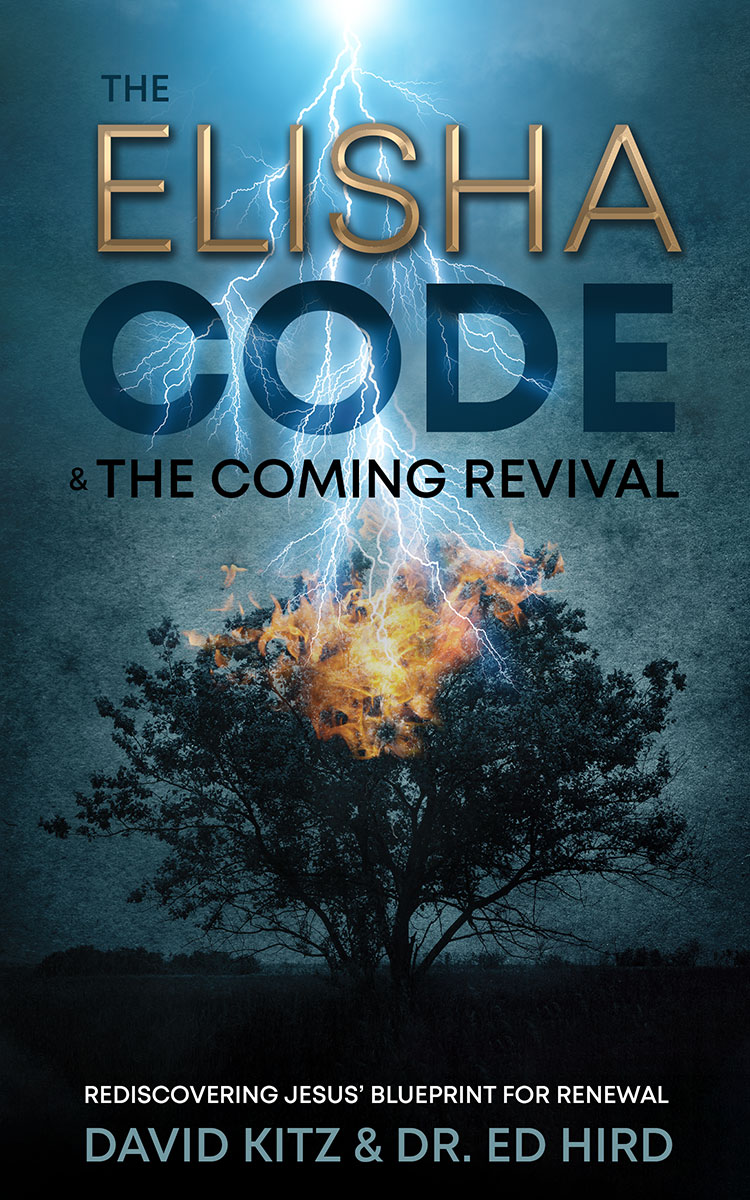
The Elisha Code & the Coming Revival 

A soul-gripping read.
Is a return-to-Jesus revival possible in our time?
This book points the way forward.
For details click here.

[i] “Volodymyr Zelenskiy stands defiant in face of Russian attack”, The Guardian, 26 February 2022. Archived from the original on 1 March 2022. Retrieved 2 March 2022.

[ii] “I have not made trouble for Israel,” Elijah replied. “But you and your father’s family have. You have abandoned the Lord’s commands and have followed the Baals. Now summon the people from all over Israel to meet me on Mount Carmel. And bring the four hundred and fifty prophets of Baal and the four hundred prophets of Asherah, who eat at Jezebel’s table” (1 Kings 18:18-20).

[iii] Then Elijah commanded them, “Seize the prophets of Baal. Don’t let anyone get away!” They seized them, and Elijah had them brought down to the Kishon Valley and slaughtered there (1 Kings 18:40).

[iv] 1 Kings 18:41-45

[v] 1 Kings 18:4, 1 Kings 21:1-16

[vi] John 3:1-21

[vii] James 5:17-18

[viii] 1 Kings 21:1-16

[ix] 1Kings 18:44-46

[x] 1 Kings 18:12-15

[xi] 1 Kings 18:22

[xii] 2 Timothy 2:19-21

[xiii] 2 Kings 1:8, Matthew 3:1-4

[xiv] Matthew 19:16-24, Mark 10:17-23, Luke 18:18-30

[xv] 1 Kings 19:20, 2 Kings 2:2, 2:4, 2:6

[xvi] Matthew 8:18-22, Luke 14:25-33, Matthew 10:37-39,

[xvii] 1 Kings 17:1-9

[xviii] 1 Kings 19:3-9

[xix] 2 Kings 6:1-7, 2 Kings 4:38-41, 2 Kings 4:42-44

[xx] Matthew 11:23-24, Luke 19:41-44

[xxi] 2 Kings 6:1-7

[xxii] 2 Kings 5:19-27, 2 Kings 6:15-17

[xxiii] John 12:4-6

He Who Is Least

09 Sunday Nov 2025

Posted by davidkitz in The Elisha Code

≈ Leave a comment

Tags

Banting, Bible, born again, Christianity, diabetes, evangelical, faith, God, gospel, humble, humility, insulin, Jesus, John the Baptist, Kingdom of God, Matthew, Old Testament, paradox, rebirth, servant, serve

On that day you, Jerusalem, will not be put to shame
for all the wrongs you have done to me,
because I will remove from you your arrogant boasters.
Never again will you be haughty on my holy hill.
But I will leave within you the meek and humble.
The remnant of Israel will trust in the name of the L
ORD
.
(Zephaniah 3:11-12, NIV)

The previous chapter concluded with Paul declaring he came to the Corinthians “in weakness with great fear and trembling” (1 Corinthians 2:3), but despite his weakness, God mightily used him to demonstrate the Spirit’s power.
There is something quite contradictory or paradoxical about Paul’s statement in 1 Corinthians 2:3-5, but this paradox of strength in weakness follows a consistent pattern in Paul’s epistles. He begins his first letter to the Corinthians by highlighting one of these apparent contradictions.

Brothers and sisters, think of what you were when you were called. Not many of you were wise by human standards; not many were influential; not many were of noble birth. But God chose the foolish things of the world to shame the wise; God chose the weak things of the world to shame the strong. God chose the lowly things of this world and the despised things—and the things that are not—to nullify the things that are, so that no one may boast before him (1 Corinthians 1:26-29, NIV).

Paul is telling us that God and his Kingdom operate on entirely different principles than the values and philosophies of this world. God uses and shows favor to those who are weak, foolish, and of low status in the eyes of the world. God’s Kingdom is a totally upside-down Kingdom according to the world’s perspective.

Paul elaborates further on the contradictory, paradoxical nature of God’s Kingdom in his second letter to the Corinthians when he states, “That is why, for Christ’s sake, I delight in weaknesses, in insults, in hardships, in persecutions, in difficulties. For when I am weak, then I am strong” (2 Corinthians 12:10).
This call for humility and submission is not confined to Paul’s letters. Peter explicitly calls for the same.

All of you, clothe yourselves with humility toward one another, because,

“God opposes the proud
but shows favor to the humble.”

Humble yourselves, therefore, under God’s mighty hand, that he may lift you up in due time. (1 Peter 5:5b-6).

James repeats this call for humility in his epistle. In fact, in their appeal James and Peter quote the same verse, Proverbs 3:34. (See James 4:6-7.)

The apostles’ teaching and lived experience simply reflected the teaching of their Lord and master Jesus Christ. Jesus’ life was a continual paradox. He was born in a stable, yet his birth was heralded by angels, the appearance of a star, and the arrival of magi from foreign lands. Then, he began his ministry with a manifesto that sets the operating principles of our world on its head.

“Blessed are the poor in spirit for theirs is the kingdom of heaven.
Blessed are those who mourn, for they will be comforted.
                                        
Blessed are the meek, for they will inherit the earth.
                                         
Blessed are those who hunger and thirst for righteousness, for they will be filled.
                                       
Blessed are the merciful, for they will be shown mercy.
                                                
Blessed are the pure in heart, for they will see God.
                                             
Blessed are the peacemakers, for they will be called children of God.
                                                

Blessed are those who are persecuted because of righteousness, for theirs is the kingdom of heaven” (Matthew 5:3-10)

Jesus’ ministry centered on the poor, the sick, the oppressed and afflicted. Peter described Jesus’ life work with these words, “God anointed Jesus of Nazareth with the Holy Spirit and power, and how he went around doing good and healing all who were under the power of the devil, because God was with him” (Acts 10:38).

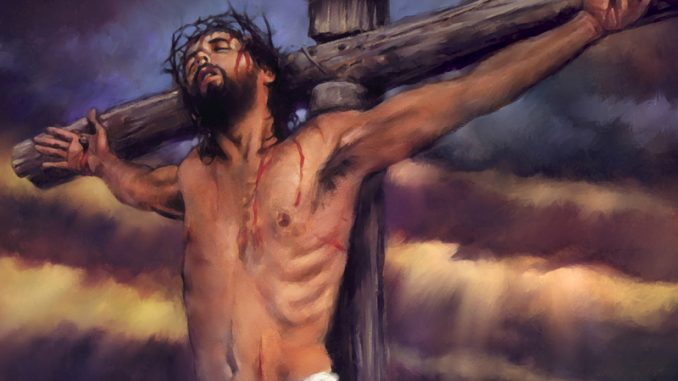
Jesus was the eternal Creator of all things, yet through the miracle of incarnation he willingly subjected himself to the frailties and limitations of humanity. That included the humiliation of suffering the death of a criminal on a cruel Roman cross.

This upside-down perspective is at the heart of the Elisha code as revealed in the eleventh chapter of Matthew. In the previous chapters of this book, we recounted how the miracles of Jesus run parallel to the miracles of the prophet Elisha. In fact, there is a striking similarity in the content, style, and tenor of the ministries of Jesus and Elisha.
Furthermore, in Matthew eleven, Jesus definitively states that John the Baptist “is the Elijah who is to come” (Matthew 11:14). Again, there is a remarkable similarity in the intent, tone, and scope of the ministries of John and Elijah. So then, chapter eleven of Matthew establishes the link between the Old Testament prophetic duo of Elijah and Elisha and the New Testament duo of John the Baptist and Jesus Christ.

But in his description of John, Jesus goes on to make a statement that is rather puzzling and frequently misunderstood or misinterpreted.

Truly I tell you, among those born of women there has not risen anyone greater than John the Baptist; yet whoever is least in the kingdom of heaven is greater than he (Matthew 11:11, NIV).

The first part of this statement is very straight forward though quite startling. Clearly, Jesus held John in the highest regard—higher than any human past or present. Higher than Abraham. Higher than Moses. Higher than David. Higher than any of the Old Testament prophets. Jesus places John the Baptist at the head of the list, above all who ever lived. That is quite the honor!

But then Jesus goes on to say, “yet whoever is least in the kingdom of heaven is greater than he.”
So, who then is greater than John?

Evangelicals have puzzled over the meaning of this statement. Some have come up with a rather elaborate interpretation that relies heavily on dispensational theology. They reason that John was not born again; therefore, he is not included in the kingdom of heaven. Hence, anyone who is born again under the New Testament dispensation is greater than John.

However, this dispensational interpretation runs into several obstacles when we compare it with the whole of Scripture.

First, let’s be unequivocally clear. Spiritual rebirth is essential to anyone’s entrance into the kingdom of God. Jesus said, “Most assuredly, I say to you, unless one is born again, he cannot see the kingdom of God” (John 3:3). We must come into relationship with God—be born into his kingdom to be citizens of the kingdom.

Monarch Butterfly — photo by David Kitz

Jesus’ statement in John 3:3 raises other questions concerning the believers of the Old Testament era. Will we see them in heaven? Are they citizens of the kingdom?

There is ample biblical evidence that John the Baptist and all the great saints of the Old Testament are citizens of the Kingdom. In fact, in Luke’s Gospel, Jesus said just that.

“There will be weeping and gnashing of teeth, when you see Abraham and Isaac and Jacob and all the prophets in the kingdom of God, and yourselves thrust out. They will come from the east and the west, from the north and the south, and sit down in the kingdom of God. And indeed there are last who will be first, and there are first who will be last” (Luke 13:28-30).

Moreover, in Matthew 11, Jesus identifies John as being greater than all the prophets.

Then what did you go out to see? A prophet? Yes, I tell you, and more than a prophet. This is the one about whom it is written: “‘I will send my messenger ahead of you, who will prepare your way before you’” (Matthew 11:9-10).

If the patriarchs and prophets of the old covenant are included in the kingdom of God, then surely John who Jesus identifies as being greater than them all is included as well.

Furthermore, Hebrews 11 makes it abundantly clear that great Old Testament heroes of the faith will be present with us in glory. In fact, they are part of a great cloud of witnesses cheering us on (Hebrews 12:1-3).

So from these scriptures it is clear that the Old Testament heroes of the faith are all citizens of the kingdom. But Jesus said they cannot be citizens of the kingdom unless they are born again (John 3:3). How can they be born again when that teaching had not been introduced yet? In John 3, Jesus provides the answer to that conundrum.

“The wind blows where it wishes, and you hear the sound of it, but cannot tell where it comes from and where it goes. So is everyone who is born of the Spirit” (John 3:8).

Rebirth happens by the Spirit, and it has been happening from the very beginning. The day may come when we will meet with Enoch, Moses, and David in the kingdom.

The wind of the Spirit was blowing in the hearts of John the Baptist and the Old Testament citizens of the spiritual kingdom, and they were born again by the Spirit. This must be so, or Jesus could not say what he said in Luke 13:28-30 where he identifies them as sitting down in the kingdom of God. (They could not be sitting down in the kingdom of God unless they were born again.)

Moreover, there are not two kingdoms of God, one for the Old Testament believers and one for the New Testament born-again believers. There is only one eternal, spiritual kingdom of God, and we will all sit together in it.

Jesus is after all the great unifier of Jews and Gentiles just as Paul states.

 In reading this, then, you will be able to understand my insight into the mystery of Christ, which was not made known to people in other generations as it has now been revealed by the Spirit to God’s holy apostles and prophets. This mystery is that through the gospel the Gentiles are heirs together with Israel, members together of one body, and sharers together in the promise in Christ Jesus. (Ephesians 3:4-6)

Jesus introduced us to the teaching and the understanding of being born again, but that does not mean spiritual rebirth was not happening before he introduced that teaching. Isaac Newton introduced us to the concept of gravity, but that does not mean the laws of gravity were not working until he introduced them.

Similarly, Dr. Frederick Banting and Dr. Charles Best discovered insulin in 1921, and in January 1922 they injected insulin into a dying fourteen-year-old, type one diabetic named Leonard Thompson. The transformation in Leonard’s body was nothing short of miraculous. Until that time a diagnosis of type one diabetes was viewed as a death sentence. Most patients died within weeks or months.

Where land ends, Bruce Peninsula National Park — photo by Karen Kitz

We too like Leonard Thompson are under a death sentence. We suffer from a deadly condition called a sinful nature. The cure for this condition is spiritual rebirth at the hands of the Great Physician, Jesus Christ.

Insulin was doing its life-sustaining work in human bodies long before Banting and Best discovered it. In the same way, the Spirit was at work drawing people like Moses and David into relationship with the heavenly Father long before Jesus had his conversation with Nicodemus in John 3. And Old Testament people like Deborah, Ruth, Esther, and Jeremiah responded in faith as the Spirit of God touched their lives. They too came into a life altering relationship with God—a relationship that we now call being born again.

Logic dictates that these Old Testament saints must have experienced rebirth, or they could not sit down in the kingdom of God as Jesus declares they will in Luke 13:28-30.

Consequently, Jesus’ statement in Matthew 11:11 about “he who is least in the kingdom of God” is not about setting up a distinction between those who are born again, and those who are not born again, or drawing a distinction between the Old Testament and New Testament dispensations. Rather, it’s a passage about humility, where Jesus takes on the identity of being the one who is least in the Kingdom of God.

Now let’s again look at Matthew 11:11 with fresh eyes.

Truly I tell you, among those born of women there has not risen anyone greater than John the Baptist; yet whoever is least in the kingdom of heaven is greater than he (Matthew 11:11, NIV).

After stating that John is the greatest man who ever lived, Jesus asserts that the one who is least in the kingdom is greater than John. So, who then is greater than John?

Surely, we can all agree that Jesus is greater than John. He is after all the king of the kingdom. But in true contradictory, paradoxical fashion Jesus casts himself as being least in the kingdom of God. Jesus takes on that identity because he came to serve, suffer, and die.

So then, Matthew 11:11 is a passage that portrays Jesus humbling himself and taking the lowest position though he is King of all. This is the ultimate paradox expressed in a brilliant turn of phrase—so brilliant its meaning has eluded more than a few theologians.

Paul beautifully describes Christ’s humiliation and subsequent exaltation with these familiar words:

Who, being in very nature God,
did not consider equality with God something to be used to his own advantage;
rather, he made himself nothing
by taking the very nature of a servant,
being made in human likeness.
And being found in appearance as a man,
he humbled himself by becoming obedient to death—
even death on a cross!

Therefore God exalted him to the highest place
and gave him the name that is above every name,
that at the name of Jesus every knee should bow,
in heaven and on earth and under the earth,
and every tongue acknowledge that Jesus Christ is Lord,
to the glory of God the Father
(Philippians 2:6-11, NIV).

With his statement in Matthew 11:11, Jesus is making himself nothing and taking on the very nature of a servant just as Paul describes.

Furthermore, this self-deprecation follows a pattern that we see repeated in Matthews Gospel. Jesus repeatedly tells reverse stories, paradoxical parables where the first will be last. See Matthew 18:1-5, Matthew 19:30, Matthew 20:16, Matthew 20:28. These passages assert that Jesus and his kingdom work on principles and values that are the opposite of those found in the world. The poor have true wealth. The weak are strong. The despised are honored. Matthew 11:11 fits into this pattern of reversal with Jesus taking the lowest or least position.

But why is this emphasis on humility significant? What is the application for us today? Humility is at the core of the Elisha Code. We too need to follow in the footsteps of Jesus. We too need to humble ourselves and serve as he did.

The world will not be won to Christ by millionaire evangelists and pastors crisscrossing the globe in their private jets and preaching a gospel of prosperity and self-fulfillment. The world will be won by the meek—those who know how to humble themselves and serve—serve at the cost of their lives as the first century apostles did. That is the Jesus way—the way of the cross.

This is the nineth weekly excerpt from the award-winning book 
The Elisha Code & the Coming Revival 

A soul-gripping read.
Is a return-to-Jesus revival possible in our time?
This book points the way forward.
For details click here.

The Return of the Dynamic Duo

28 Sunday Sep 2025

Posted by davidkitz in The Elisha Code

≈ Leave a comment

Tags

Bible, born again, David Kitz, Elijah, Elisha, gospel, Jesus, Jewish heritage, John the Baptist, Kingdom of God, Moses, repentance, salvation, the LORD, theology

When they had crossed, Elijah said to Elisha,
“Tell me, what can I do for you before I am taken from you?”

“Let me inherit a double portion of your spirit,” Elisha replied.

“You have asked a difficult thing,” Elijah said,
“yet if you see me when I am taken from you, it will be yours—
otherwise, it will not.”
(2 Kings 2:9-10, NIV)

The more things change, the more they stay the same.[i] This common expression captures within it the seed truth that history tends to repeat itself. Human nature, social norms and patterns of behavior stay the same across the continuum of time and space. Consequently, though the individual players, time, and location may differ, outcomes frequently are the same or fall into a familiar pattern. For this very reason, Bible stories remain relevant today, despite being written ages ago to people of a different language and culture.  
            In today’s culture when we use the term dynamic duo, several pictures, or scenarios immediately spring to mind. Batman and Robin from DC Comics popularized the term, but throughout history, and within our own experience we have all encountered dynamic duos—individuals who work together well to accomplish a common purpose.
           Can we identify dynamic duos in the Old Testament? We certainly can. Moses and his young successor Joshua spring to mind.
            The prophets Elijah and Elisha are a dynamic duo whose miraculous powers and exploits rival the adventures of the finest superheroes in the Marvel Universe. First-century Jewish teens reading accounts of their miraculous feats would be immediately drawn to them. Furthermore, the last book of the Old Testament ends with the promise of Elijah’s return.    

“See, I will send the prophet Elijah to you before that great and dreadful day of the Lord comes. He will turn the hearts of the parents to their children, and the hearts of the children to their parents; or else I will come and strike the land with total destruction” (Malachi 4:5-6, NIV).

            And if Elijah is returning, then Elisha, or an Elisha-like figure cannot be far behind. As the New Testament era dawns, the stage is set for the return of the dynamic duo. There is nothing quite like a sequel. In this case it’s a prophetic, dynamic-duo sequel that returns after an absence of about seven centuries. Imagine the anticipation.
           Is it any wonder then that Elijah’s name appears twenty-eight times in the gospels? Aside from Peter, none of the apostles are named as frequently as Elijah. It is quite extraordinary for a hero from a previous era to be referenced so frequently. Yet the expectation of Elijah’s arrival was palpable. Jesus was often incorrectly identified as the Elijah who is to come.[ii] With the start of Christ’s ministry, and his demonstration of miraculous powers, the burning question within the first-century Jewish community was “Has Elijah returned?”
             In the eleventh chapter of Matthew’s Gospel answers that question directly. He identifies who the new Elijah—the second Elijah really is.

           And when John had heard in prison about the works of Christ, he sent two of his disciples and said to Him, “Are You the Coming One, or do we look for another?”
          Jesus answered and said to them, “Go and tell John the things which you hear and see: The blind see and the lame walk; the lepers are cleansed and the deaf hear; the dead are raised up and the poor have the gospel preached to them. And blessed is he who is not offended because of Me.”
          As they departed, Jesus began to say to the multitudes concerning John: “What did you go out into the wilderness to see? A reed shaken by the wind? But what did you go out to see? A man clothed in soft garments? Indeed, those who wear soft clothing are in kings’ houses. But what did you go out to see? A prophet? Yes, I say to you, and more than a prophet. For this is he of whom it is written:
                    ‘Behold, I send My messenger before Your face,
                    Who will prepare Your way before You.’
          “Assuredly, I say to you, among those born of women there has not risen one greater than John the Baptist; but he who is least in the kingdom of heaven is greater than he. And from the days of John the Baptist until now the kingdom of heaven suffers violence, and the violent take it by force. For all the prophets and the law prophesied until John. And if you are willing to receive it, he is Elijah who is to come. He who has ears to hear, let him hear!
(Matthew 11:2-15, NKJV)

          So, there we have the answer to the question on everyone’s mind at that time. John the Baptist is Elijah who is to come. The first member of the New Testament dynamic duo has been identified.    

What does Jesus’ identification of John the Baptist as the new Elijah really mean?

It does not mean John is the reincarnation of Elijah. Elijah’s body was whisked away to heaven in a whirlwind on a chariot of fire.[iii] Centuries later, he returns with Moses to meet with Jesus on the Mount of Transfiguration.[iv]

Chapel of the Transfiguration, Grand Teton National Park — Photo courtesy of Matthew Taylor

            Clearly, John and Elijah are two distinct persons from two distinct historical eras. In fact, when he was questioned about his identity, John denied being the Christ or Elijah.[v] However, Jesus rightly identified John the Baptist as moving and ministering in the spirit of Elijah. He fulfilled the prophecy of Malachi.[vi]
            Elijah’s ministry was a ministry of repentance. His assignment from the LORD was to draw the backslidden people of Israel (the northern kingdom) back to worshipping the one true God. Israel had fallen into the grievous sin of idolatry under the rule of King Ahab and his evil consort Jezebel. Many had bowed their knees to Baal, the male fertility god, and partaken in the worship of the female deity Ashtoreth.
            John the Baptist had a similar assignment. He too was to draw the Jewish nation back to God. But in the New Testament era, the sins of the nation were of a more subtle nature. The worship of Yahweh had become cold and formal while the sinful heart was unchanged.

The Lord says:
“These people come near to me with their mouth
    and honor me with their lips,
    but their hearts are far from me.
Their worship of me is based on merely human rules they have been taught
(Isaiah 29:13, NIV).

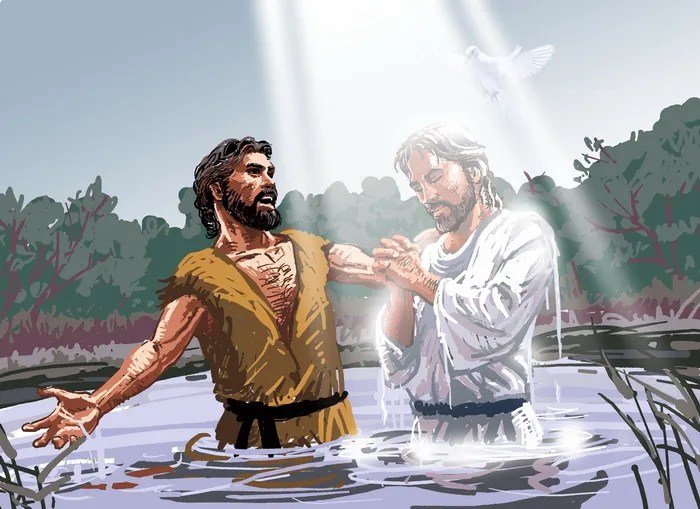
This corrupt condition of the heart is what John came to address. He did so with a clarion call to repentance followed by baptism. Furthermore, he insisted no one can claim safety from the coming wrath due to their lineage or national heritage.

Produce fruit in keeping with repentance. And do not think you can say to yourselves, ‘We have Abraham as our father.’ I tell you that out of these stones God can raise up children for Abraham. The ax is already at the root of the trees, and every tree that does not produce good fruit will be cut down and thrown into the fire. (Matthew 3:8-10, NIV).

          What root was John attacking with the above statement? He was hacking away at the presumption of salvation by virtue of national origin. The Sadducees and Pharisees who John was addressing trusted in their Jewish heritage as being sufficient for eternal salvation. Apparently, your birth certificate doesn’t qualify you for entrance into the Kingdom of God. God is looking for a repentant heart—a changed heart. 
                With these words, John was laying the groundwork for Jesus’ core message of salvation through regeneration. We must be born again as Jesus revealed in his conversation with Nicodemus.[vii] And the first step in that regenerative process begins with repentance, initially championed by John,[viii] reiterated by Jesus,[ix] and preached by the apostles.[x]
                Today, we speak of disruptive technology changing the way business and society operate. John’s message was disruptive theology. His message attempted to completely change how Jewish society of that time viewed their relationship with God. Many Jewish people saw themselves as citizens in God’s Kingdom simply because they were children of Abraham. John’s mission was to shatter that misperception. Something more was needed then, and it is needed now. Salvation begins with a repentant heart. And like Elijah of old, John was calling the nation to repent and turn back to God.
                Jesus addressed the same topic in his John 8:12-59 temple discourse with the Jewish religious leadership. In that heated discussion, Jesus’ opponents trumpeted their Abrahamic pedigree, while rejecting the testimony of the Son of God. God is always looking for the fruits of repentance in our lives. But there was an absence of fruit in these religious leaders.
                It was John the Baptist who first raised this issue with the Pharisees and Sadducees. If we are not simply born into the Kingdom by natural birth, as the religious leadership claimed, how then do we gain entrance? Jesus provides the answer:

          “Very truly I tell you, no one can enter the kingdom of God unless they are born of water and the Spirit. Flesh gives birth to flesh, but the Spirit gives birth to spirit. You should not be surprised at my saying, ‘You must be born again’ (John 3:5-7, NIV).

                This disruptive theology was introduced by John and advanced to the next level through the ministry of Jesus. John and Jesus truly worked as a dynamic duo. Furthermore, all four Gospel writers recognized John’s foundational contribution. It’s striking that though each Gospel is focused on the life and ministry of Jesus, none of the Gospel writers begin their account with Jesus. They all begin with John. He truly was the forerunner and the way-maker for our Savior.
                Many of the underpinnings of the Christian faith were introduced by John. Repentance followed by baptism is a prime example. Baptism, with roots in the Jewish mikvah, a ceremonial washing rooted in the Books of Moses, was an innovation introduced and popularized by John. Baptism represents a soul transforming innovation that was, with only slight modification, incorporated directly into Christ’s teaching and the Great Commission.

           Go therefore and make disciples of all the nations, baptizing them in the name of the Father and of the Son and of the Holy Spirit, teaching them to observe all things that I have commanded you; and lo, I am with you always, even to the end of the age.” Amen. (Matthew 28:19-20, NKJV).

                Baptism is a living picture of new birth. It is the defining symbol and sacrament of the born-again experience. John laid the groundwork for the gospel of Christ. He worked like a bulldozer leveling the way for Christ.[xi] He destroyed the argument that salvation was race based and in so doing he paved the way for Jesus’ teaching on spiritual rebirth.
                It logically follows that if salvation is not based on lineage or race, but rather on a spiritual rebirth, then that experience of rebirth is open to all humanity and not the sole domain of the Jewish people.
                Both John and Jesus were looking for fruit—the transformative fruit of repentance.[xii] And through the work of the Holy Spirit, that fruit could be found among both Jews and Gentiles. It was no longer confined to the Jewish nation. All could potentially be grafted into the vine through faith in Jesus.
                Jesus identified John the Baptist as the new Elijah. Who then is the new Elisha?

Chapter 2 Endnotes
[i] “plus ça change, plus c’est la même chose”, Jean-Baptiste Alphonse Karr, 1849. 

[ii] Matthew 16:13-14

[iii] 2 Kings 2:11-12

[iv] Matthew 17:1-13, Mark 9:2-13, Luke 9:28-36

[v] John 1:19-28

[vi] “See, I will send the prophet Elijah to you before that great and dreadful day of the Lord comes. He will turn the hearts of the parents to their children, and the hearts of the children to their parents; or else I will come and strike the land with total destruction” (Malachi 4:5-6, NIV).

[vii] John 3:1-21

[viii] Matthew 3:1-2, Mark 1:4, Luke 3:2-3,

[ix] Matthew 4:17, Mark 1:14-15

[x] Acts 2:36-39, Acts 3:19

[xi] Matthew 3:3

[xii] Matthew 3:8, Matthew 7:15-20, Matthew 21:33-46

This is the fourth weekly excerpt from the award-winning book 
The Elisha Code & the Coming Revival 

A soul-gripping read.
Is a return-to-Jesus revival possible in our time?
This book points the way forward.
For details click here.

Rediscovering Jesus’ Blueprint for Renewal

22 Sunday Sep 2024

Posted by davidkitz in The Elisha Code

≈ 1 Comment

Tags

art, Bible, biblical, books, Christian faith, Christianity, churches, David Kitz, Elijah, Elisha, hope, Jesus, John the Baptist, morality, revival

Is positive change, revival, and renewal possible today in the church, and more broadly in society and the world? This is a valid question in our culture where many are in despair and have lost hope. Many churches are in decline, public morality is in decline, and many have abandoned the Christian faith. Can this trendline be reversed?

In their book The Elisha Code & the Coming Revival David Kitz and Dr. Ed Hird tackle these issues head-on, and they do so, from a thoroughly biblical perspective.

In this interview with Logan Crawford, David Kitz sketches out some key truths about revival that have been lost and now uncovered through an examination of two prophetic dynamic duos, Elijah and Elisha from the Old Testament, and John the Baptist and Jesus from the New Testament.

Are you ready for renewal and a new perspective?

Prophetic Voices Are Needed Today

09 Sunday Jun 2024

Posted by davidkitz in The Elisha Code

≈ 2 Comments

Tags

Bible, Christianity, church, Elisha, faith, God, gospel, Jesus, John the Baptist, Luther, prophet, prophetic, repentance, revival, spiritual blindness

In that day the deaf will hear
the words of the scroll,
and out of gloom and darkness the eyes of the blind will see.
(Isaiah 29:18)

The prophetic role of Christ is often ignored or downplayed in the church today. But the early reformers recognized this crucial function in Jesus’ ministry. In his explanation of the second article of the Apostles’ Creed, Luther writes:

Christ was anointed to be my Prophet, Priest, and King.
As my Prophet, He revealed Himself by word and deed,
and by the preaching of the Gospel still reveals Himself
as the Son of God and the Redeemer of the world. *

A gospel message that is preached without a call to repentance is not a gospel message at all. Coming to faith in Jesus requires—no, demands—repentance. Real repentance is real change. Change from the inside out. Change that is deep, meaningful, and evident in daily life.

John demanded change from those who came to be baptized, whatever their station in life, and that included Pharisees who in their pride believed no change was required (see Matthew 3:1–12).

Furthermore, we should not see repentance simply as a onetime occurrence. Yes, it is the vital starting point in our walk of faith,  but true repentance goes far beyond that. Repentance must be incorporated into our way of life—a life of continual turning away from sin and living in humble service to our
Savior-King.

Though the blind man received his sight, (see John 9) the Pharisees persisted in their spiritual blindness, even though the miracle-working Savior was standing before them.

Jesus said, “For judgment I have come into this world,
so that the blind will see and those who see will become blind.”

Some Pharisees who were with him heard him say
this and asked, “What? Are we blind too?”

Jesus said, “If you were blind, you would not be
guilty of sin; but now that you claim you can see,
your guilt remains.” (John 9:39–41)

For the Pharisees of Jesus’ day and the spiritually blind of our day, this maxim holds true: If we don’t recognize the prophet, we won’t recognize the Savior. Jesus’ words remain relevant today:

Whoever welcomes a prophet as a prophet will receive
a prophet’s reward, and whoever welcomes a righteous
person as a righteous person will receive a righteous
person’s reward. (Matthew 10:41)

The voice of the prophet is needed today, just as it was in Jesus’ day. A national call to repentance is needed now. Who will voice that call? Where are the prophets for our time?

#6 leaders with hindsight, insight, and foresight
The relative absence of legitimate prophetic voices in the church today should trouble us. There was a four-hundred-year prophetic gap between the Old and New Testament—a gap when the Spirit of God was silent. But then suddenly John the Baptist and Jesus appeared on the scene. The first two chapters
of Luke describe an astonishing flurry of Spirit-initiated activity as heaven set the great redemption story into motion. Will there be a similar flood of Spirit-directed activity before Christ’s second coming?

It is clear from the Scriptures that prophets were active within the New Testament church, and furthermore, Paul considered them essential to the proper functioning of the body of Christ.

So Christ himself gave the apostles, the prophets,
the evangelists, the pastors and teachers, to equip his people
for works of service, so that the body of Christ
may be built up until we all reach unity in the faith
and in the knowledge of the Son of God and become
mature, attaining to the whole measure of the fullness of Christ.
(Ephesians 4:11–13)

In Acts we read that there were numerous prophets active in the church. Some of them are listed by name. They includeAgabus, Barnabas, Simeon called Niger, Lucius of Cyrene, Manaen, and Saul (Acts 11:27–28, Acts 13:1–3, Acts 15:32, Acts 21:8–10). This Saul is also known as Paul, and he and Barnabas were commissioned by the church leadership in Antioch to go on the first great missionary journey (Acts 13:1–3).

Where would the church be today if these prophets had not spoken the word of the Lord over Paul and Barnabas? Would there be a church in Europe? Would we even know of theministry of Paul? The New Testament church grew as it received prophetic direction from those who were attuned to hear the
plans of God.

The church of God grows and flourishes when there are men and women who hear what the Spirit is saying, see what the Spirit is doing, and then declare it to the church and the world. That is the role of the prophet.

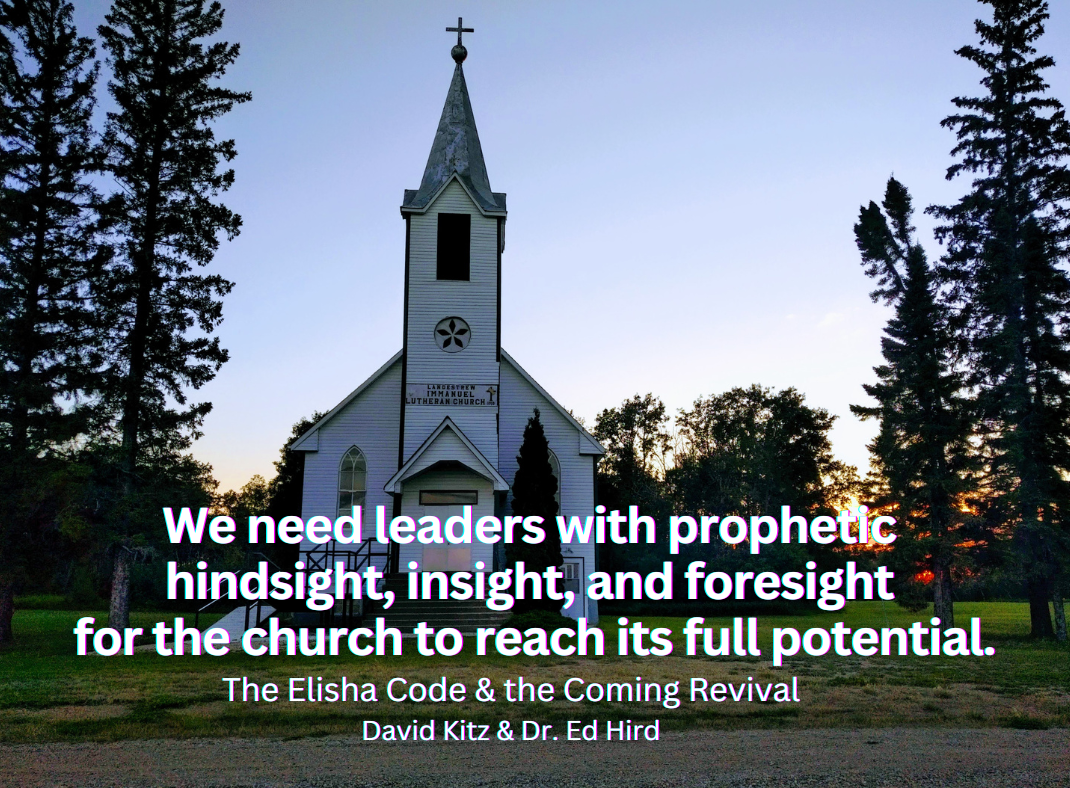
We need leaders with prophetic hindsight, insight, and foresight for the church to reach its full potential.

* Luther’s Small Catechism: A Handbook of Christian Doctrine (St. Louis, MO: Concordia Publishing House), 107.

An excerpt from
The Elisha Code & the Coming Revival
by David Kitz and Dr. Ed Hird.TheElishaCodeCVR5

To purchase or for a closer look click here.

An Author Interview with David Kitz

02 Thursday May 2024

Posted by davidkitz in Books by David Kitz

≈ Leave a comment

Tags

Christians, church history, David Kitz, Elijah, Elisha, Gaza, Holy Spirit, Israel, Jesus, John the Baptist, miracle, New Testament, Old Testament, renewal, repentance, revival, spiritual renewal, Ukraine

David, what event in your life inspired you to write The Elisha Code & the Coming Revival?

On February 11th, 2018, I delivered a sermon entitled Healing the Water. My message2023-10-06-OnlineSharing-2 was based on Elisha’s first public miracle, the healing of the spring at Jericho. I was struck by the parallel nature of this miracle when compared with Jesus’ first miracle of turning water into wine. This triggered a quest to discover if Elisha’s other miracles resembled the miracles of Jesus. To my amazement they do. Further research uncovered the parallel nature of the ministry of Elijah and John the Baptist, and later, the ministry of Elisha and Jesus. But what are the practical implications of this biblical discovery for believers today?

The Old Testament dynamic duo of Elijah and Elisha sparked spiritual renewal in their day. John the Baptist and Jesus did the same in New Testament times. My friend, Dr. Ed Hird, has been writing about men and women from church history who spark revival in their day. Together we decided to partner in bringing a message of renewal and revival for the people of our time.

David, how is the topic of your book personal to you and why did you choose to share it with readers?

TheElishaCodeCVR5I stumbled upon a unique, unexplored perspective of Elijah and Elisha’s prophetic ministry that linked directly to the ministry of John the Baptist and Jesus. These four men preached repentance and brought revival and new life to the people of their time. Along with many Christians today, Dr. Ed Hird and I believe this message of deep spiritual renewal is urgently needed now.

Why should people purchase and read the book you coauthored with Dr. Ed Hird?

This book is a blueprint for the revival we need in our lives and in our churches today. Furthermore, the thread of practical life applications is both impactful and encouraging.

What are some current and newsworthy world events that relate to the topic(s) of your book?

We live in dark times—times of fear, pestilence, national and international intrigue, and political and environmental turmoil. War rages in Israel, Gaza, Ukraine, and other countries across the globe. Many are in despair. Moral rot is evident everywhere in society. Meanwhile, churches are closing, and faith is in decline. Spiritual renewal is urgently needed.

Explain two things you most want readers to walk away with after reading your book.

Further decline is not inevitable. Throughout history God has sent spiritual fire starters among us—men and women who turn people’s hearts toward God. Now is the time to renew our faith in a miracle working God who powerfully draws people to himself by his Spirit. It has happened before. It will happen again before Christ’s return.

TheElishaCodeCVR5

To purchase or for a closer look click here.

Is Revival Needed in Our Day?

03 Wednesday Apr 2024

Posted by davidkitz in book review

≈ Leave a comment

Tags

awakening, Bible, book review, church, David Kitz, Elijah, Elisha, God, Holy Spirit, Jesus, John the Baptist, revival, spiritual renewal

Many in the church and the broader community readily admit that we need a spiritual awakening or renewal in our nation. Is that even possible in these divisive, troubled times?

In his review of The Elisha Code & the Coming Revival, authored by David Kitz and Ed Hird, John Murray suggests revival may be possible, but much depends on our response.

Here then is John Murray’s review:

As I read through this book three words came to mind, intriguing, interesting and challenging.

The title itself is intriguing as one waits for the Elisha code to be revealed. Then it is further intriguing as the authors introduce the ministry of Elijah and Elisha, the well-known prophets from the Old Testament.

Then came the interesting and fascinating comparison between their ministry and that of John the Baptist and Jesus, recorded in the New Testament. Incredibly revealing was the pattern and similarity in the comparison of their ministry, even down to almost identical miracles performed.

Finally came the personal challenge. Do we have the desire to reflect the character of Jesus or Elisha? Are we open to the work of God’s Holy Spirit in our lives? Do we want to be a blessing to a hurting and needy world? We are left with the question of how deeply do we desire to be part of the needed revival within and outside the church today?

This book puts it on the line.

TheElishaCodeCVR5

To purchase or for a closer look click here.

A Review of The Elisha Code

06 Saturday Jan 2024

Posted by davidkitz in book review

≈ Leave a comment

Tags

anointed, book, David Kitz, Elijah, Elisha, Jesus, John the Baptist, revival

The title, The Elisha Code, might make one think of a book like The Da Vinci Code and its search for a secretive, hidden key that would enable a special few to decode a mystery. Or it might even cause some to think back to the early days of the Christian Church and the rise of Gnosticism with its guarded secret knowledge available only to initiates. But not this book.
TheElishaCodeCVR5

For these authors—this “dynamic duo”—the “code” is there for all to see if they know where to look for it in God’s Word. What David Kitz and Ed Hird have done is to discover and reveal amazing—might I say, “uncanny”— parallels between the two Old Testament prophets Elijah and Elisha, and the two New Testament personages of John the Baptist and Jesus. The uncovering and displaying of these parallels, which help us see scripture with new eyes, is the heart of the book, and in themselves make it worth the read.

But one might ask, “To what end?” The authors clearly answer that question in the latter half of the book (and in the second half of the book’s title—the Coming Revival). The authors’ goal is not just cleverly to point out these complementary passages, but to bring the reader to see the conditions required for revival that will inevitably come if God’s people will meet them.

Delving deep into the lives of great men and women whom God anointed and used to bring about revivals and do transformational gospel work; and in laying out the spiritual requirements for revival, Kitz and Hird challenge us today to give ourselves fully to God so that we ourselves, living in this twenty-first century, might be his instruments in enabling the revival to come.

Neil Bramble—freelance writer and editor, longtime magazine editor, published author and book editor, and a professional member of The Word Guild.

To purchase or for a closer look at The Elisha Code and the Coming Revival visit Amazon or click here for the author’s website.

← Older posts

Psalms 365: Develop a Life of Worship and Prayer

Psalms 365 Volume II

Psalms 365 vol 3
— Psalms 365 Volume III

Psalms

Recent posts

  • Ready for the King of Glory December 19, 2025
  • My Spirit Rejoices in God My Savior December 18, 2025
  • Joining the Generation That Seeks God December 18, 2025
  • Why Am I So Favored December 17, 2025
  • How Can You Find the Good Life? December 17, 2025
  • The Power of the Most High December 16, 2025
  •  The Earth Turns to the LORD December 16, 2025

Calendar

December 2025
M T W T F S S
1234567
891011121314
15161718192021
22232425262728
293031  
« Nov    

Blog Posts

Comments

  • davidkitz on Joining the Generation That Seeks God
  • cjsmissionaryminister on God Sent His Son
  • cjsmissionaryminister on The God of the Broken

Blog at WordPress.com.

Privacy & Cookies: This site uses cookies. By continuing to use this website, you agree to their use.
To find out more, including how to control cookies, see here: Cookie Policy
  • Subscribe Subscribed
    • I love the Psalms
    • Join 1,378 other subscribers
    • Already have a WordPress.com account? Log in now.
    • I love the Psalms
    • Subscribe Subscribed
    • Sign up
    • Log in
    • Report this content
    • View site in Reader
    • Manage subscriptions
    • Collapse this bar
 

Loading Comments...