Tags
I will praise Him!
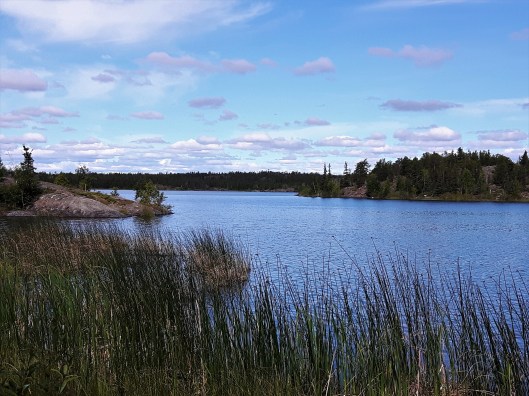
Near Yellowknife, Northwest Territories, Canada — photo courtesy of Liz Kranz

25 Saturday Aug 2018
Tags
Near Yellowknife, Northwest Territories, Canada — photo courtesy of Liz Kranz
05 Thursday Jul 2018
Posted in Bible, Devotionals, God's word, Psalm 119, Psalms
Reading: Psalm 119
ע Ayin
(Verses 121-128)
I have done what is righteous and just;
do not leave me to my oppressors.
Ensure your servant’s well-being;
do not let the arrogant oppress me.
My eyes fail, looking for your salvation,
looking for your righteous promise.
Deal with your servant according to your love
and teach me your decrees.
I am your servant; give me discernment
that I may understand your statutes.
Because I love your commands
more than gold, more than pure gold,
and because I consider all your precepts right,
I hate every wrong path (NIV).

Deal with your servant according to your love — photo by David Kitz
Reflection
Do you have a negative view of judgment—God’s judgment? Do you cringe at the thought? If you are guilty of wrongdoing, you should cringe. But if you have been harmed by wrongdoers you have solid grounds to welcome God’s judgment. Our sense of justice calls for the intervention of a righteous judge.
There is none more righteous than the LORD—none more worthy to sit as judge. For this reason the psalmist calls for God to act. It is time for you to act, LORD; your law is being broken.
As we look about our world, as we listen to newscasts, it becomes increasingly apparent that it’s time for God to act. Lawlessness, hate, and violence abound. Sexual perversion is promoted—gets top billing—is openly applauded. Plutocrats with their extravagant wealth rule the roost, while the poor struggle to feed their families. On the international stage dictators and warmongers parade about freely, while oppressing their own people. Those who would dare to oppose them are imprisoned or slaughtered.
This injustice was brought into sharp focus last week through a series of interviews I had in Athens with Turkish refugees fleeing from the Erdogan government.
Where is the justice? Where is truth and right judgment in all this? Where is the LORD? Daily, the prayer on our lips should be this: It is time for you to act, LORD; your law is being broken.
It’s time for evil and crooked dealings to be exposed. It’s time for the light of day to reveal what has been done in secret. It’s time for the righteous Judge—the Judge of all the earth—to act.
On a personal level, like the psalmist, let this be the cry of our hearts: Deal with your servant according to your love and teach me your decrees. The prophet Hosea also has a fitting word for us. But you must return to your God; maintain love and justice, and wait for your God always (Hosea 12:6).
Response: LORD God, I see the corruption that is in the world. Keep me from it. It is time for you to act, LORD; your law is being broken. Please show mercy and grace to those who call out to you. Amen.
Your Turn: Are you troubled by the lawlessness and injustice in society? Where do you turn?
01 Sunday Jul 2018
Posted in Bible, God's word, Psalms
Tags

Wild irises — photo by David Kitz
06 Friday Apr 2018
Posted in Bible, Devotionals, Psalm 101, Psalms
Tags
anointed, blameless, David, deceit, friend of God, God's enemies, integrity, Israel, judgment, King David, lies, lower class, Regina, Saskatchewan
Reading: Psalm 101
(Verses 5-8)
Whoever slanders their neighbor in secret,
I will put to silence;
whoever has haughty eyes and a proud heart,
I will not tolerate.
My eyes will be on the faithful in the land,
that they may dwell with me;
the one whose walk is blameless
will minister to me.
No one who practices deceit
will dwell in my house;
no one who speaks falsely
will stand in my presence.
Every morning I will put to silence
all the wicked in the land;
I will cut off every evildoer
from the city of the LORD (NIV).
Reflection
One of the roles of a king in ancient Israel was to render judgment in difficult civil cases. In fact, judges ruled Israel for about 400 years before the first king was anointed; hence the judicial role was of great significance during the early years of Israel’s kingdom period.

The burning bush in a frozen landscape, Regina, Saskatchewan — photo by David Kitz
This reading from Psalm 101 should be viewed as King David’s commitment to his judicial role. He was determined to govern wisely, and for him that meant identifying and siding with those who do right. My eyes will be on the faithful in the land, that they may dwell with me; the one whose walk is blameless will minister to me.
Choosing the right kind of people to associate with is of great importance. This is not about the economic strata you occupy. Typically, rich people associate only with other rich people; similarly lower class people have friends of the same social standing. But honesty and integrity cross these artificial socioeconomic lines. There are crooks and swindlers among the rich and among the poor. In the same way there are honest people of integrity at the extremes of both wealth and poverty.
David’s objective was to raise the integrity bar. He had no patience for lies or deceit. What kind of people do you enjoy hanging around with? Do they prompt you to walk with them in a blameless way, or do they drag you down in the gutter? Do they prompt you to good deeds or tempt you into a crooked path? It has often been said that we are known by the friends we choose. Are you a friend of God? James has this admonition for us: Don’t you know that if you love the world, you are God’s enemies? And if you decide to be a friend of the world, you make yourself an enemy of God (James 4:4, CEV).
Response: Heavenly Father, I want to be your friend. I want to love you because you first loved me and showed that love through your son, Jesus. Help me to choose my friends wisely as I let your life and joy shine through me. Amen.
Your Turn: Do your friends encourage you in your faith walk? Are you letting light shine?
30 Friday Mar 2018
Posted in Bible, Devotionals, Good Friday, Psalm 98, Psalms
Tags
communion, creation, Eden, injustice, Jesus, joy, judge, judgment, mountains, pain, perversity, power of sin, resurrection, Righteousness, rivers, shalom, sin, Tree of Life
Reading: Psalm 98
(Verses 7-9)
Let the sea resound, and everything in it,
the world, and all who live in it.
Let the rivers clap their hands,
let the mountains sing together for joy;
let them sing before the LORD,
for he comes to judge the earth.
He will judge the world in righteousness
and the peoples with equity (NIV).
Reflection
What comes to mind when you think of God’s judgment? Do you envision pictures of doom, gloom and destruction? If that’s your response, you are not alone, but maybe you have the wrong set of pictures? Maybe you have a wrong understanding of God? Should the redeemed live in dread of God’s judgment?

He was pierced for our transgressions.
Psalm 98 is a joyous anthem of praise to God—praise for the salvation the LORD has won for us. The psalmist begins this psalm by calling us to sing to the LORD a new song. In today’s reading, that call for praise and worship is extended to all of nature. Let the sea resound, and everything in it, the world, and all who live in it. Let the rivers clap their hands; let the mountains sing together for joy.
Have you seen any mountains singing for joy? Have you heard the rivers clap their hands? I love the pictures such thoughts put in my mind. In reality all of creation is speaking daily. The earth, sea and sky are telling of God’s mercy and glory. The setting sun shouts out the praises of God. Can you hear it?
According to the psalmist, there is a cause for this great celebration by the sea, the rivers and the mountains. These elements of creation are celebrating because the LORD is coming to judge the earth. He will judge the world in righteousness and the peoples with equity. In other words God’s judgment should bring joy not dread. The LORD will set things right.
For far too long we have lived in a world of injustice, suffering and death. When the LORD comes, He will bring all this pain and perversity to an end. The environmental degradation that we have caused will come to an end. The Eden that was lost because of mans’ sin will be restored. Once again we will have access to the Tree of Life. Best of all we will walk in sweet communion with our heavenly Father. All this is possible because of the suffering, death and resurrection of Jesus. The power of sin was broken at the cross. Since God’s coming judgment will bring about all this glorious restoration, why wouldn’t we join the mountains as they sing for joy?
Many of us have a wrong understanding of God and a wrong understanding of the purpose for His judgment. His judgments are good. They bring about peace—the shalom of God. Here in Psalm 98 we have the promise of His word on that. He will judge the world in righteousness and the peoples with equity.
Response: LORD God, in the past I have dreaded your judgment, but now I recognize your goodness. Come quickly, Lord Jesus. I want to see this world set right through your power and grace. Amen.
Your Turn: Do you fear God’s judgment? Is that always a good thing? Can it be misunderstood?
27 Tuesday Mar 2018
Posted in Bible, Devotionals, Psalm 97, Psalms
Tags
authority, despots, foundation, goodness, Governor General, judgment, mercy of God, Prime Minister, Prince William, reigns, Righteousness, royal family, the LORD, throne, Victoria
Reading: Psalm 97
(Verses 1-7)
The LORD reigns, let the earth be glad;
let the distant shores rejoice.
Clouds and thick darkness surround him;
righteousness and justice are the foundation of his throne.
Fire goes before him
and consumes his foes on every side.
His lightning lights up the world;
the earth sees and trembles.
The mountains melt like wax before the LORD,
before the Lord of all the earth.
The heavens proclaim his righteousness,
and all peoples see his glory.
All who worship images are put to shame,
those who boast in idols—
worship him, all you gods! (NIV).
Reflection
Who is in charge here? In any situation, that’s a legitimate question. There are always a variety of authorities in any given situation. A while back I watched Prince William and his family get off a plane in Victoria, BC. On the tarmac the royal family was first greeted by the Governor General, then by the Prime Minister of Canada, then the Lieutenant Governor of the British Columbia and finally, the Premier of the province. They were all lined up according to proper protocol. Yes, there are a variety of authorities all deserving respect. But this question remains. Who is in charge here?

The place where your glory dwells—sunset near MacNutt, SK. — photo by David Kitz
The authorities of this world have jurisdiction over a certain geographic area or realm. Some authorities govern well and in others rule as despots who plunder the wealth of the nation. But Psalm 97 reminds us that there is one great authority who rules over all. The LORD reigns, let the earth be glad; let the distant shores rejoice.
The earth can be glad and the distant shores can rejoice because this King, this heaven-dwelling authority rules well. He does not plunder His faithful people and bring them to ruin. He reigns supreme from on high. Clouds and thick darkness surround him; righteousness and justice are the foundation of his throne.
We can rest assured that the LORD will do what is right. He is allied with goodness, mercy and truth. That’s why justice is the foundation of His throne. We should not fear His judgments because they are right and good. Yes, the authors of evil should be afraid, but if we have done right, we can count on the LORD as our defender. Now here is a proclamation that we all should heed. The heavens proclaim his righteousness and all peoples see his glory.
Response: LORD God, it is my prayer that all people will see your glory and bow before you, the magnificent King of Righteousness. Extend your reign I pray. Let the distant shores rejoice because you reign. Amen.
Your Turn: Is the Lord Jesus reigning over you and your home? Who has jurisdiction there?
06 Tuesday Feb 2018
Posted in Bible, Devotionals, Psalm 82, Psalms
Tags
gods, humility, inheritance, judgment, nations, oppressed, Paul, pedestal, serve, the LORD, the Most High, the needy
Reading: Psalm 82
A song. A psalm of Asaph.
God presides in the great assembly;
he renders judgment among the “gods”:
“How long will you defend the unjust
and show partiality to the wicked?
Defend the weak and the fatherless;
uphold the cause of the poor and the oppressed.
Rescue the weak and the needy;
deliver them from the hand of the wicked.
“The ‘gods’ know nothing, they understand nothing.
They walk about in darkness;
all the foundations of the earth are shaken.
“I said, ‘You are “gods”;
you are all sons of the Most High.’
But you will die like mere mortals;
you will fall like every other ruler.”
Rise up, O God, judge the earth,
for all the nations are your inheritance (NIV).
Reflection
How high is the pedestal you are standing on? Are you standing taller than the fellow beside you?

Light of the World, shine through me — photo by David Kitz
Most of us would answer that we are not standing on a pedestal, but is that the truth. If we are honest with ourselves, I think we all can admit that we have looked down on others at times. We have considered ourselves superior to most of our peers.
Here in Psalm 82, God sets us on a pedestal. He calls us gods. This is a rather backhanded compliment, because after calling us gods, the Most High calls us to account. And what must we account for? We need to account for how we treat the weak and the poor among us. Here are the actions the LORD expects from us: Defend the weak and the fatherless; uphold the cause of the poor and the oppressed.
Are we doing these things? Far too often I spend my time jacking up my pedestal—trying to get a bit of elevation over the fellow beside me. I’m too busy to help someone else who has fallen off their pedestal or the poor clod who can’t find one to stand on. You have to pity these folks—the ones who don’t have a pedestal. How can they hold their head up if they’re superior to no one?
Paul, the apostle, writes, “We do not dare to classify or compare ourselves with some who commend themselves. When they measure themselves by themselves and compare themselves with themselves, they are not wise” (2 Corinthians 10:12).
God will have the final say with mortals like me. This “god” needs to learn to serve in humility.
Response: LORD, you are the Most High. Help me to stop comparing myself with others. All I have comes from you. Today I want to get off my pedestal and help someone else. Show me how, Lord. Amen.
Your Turn: Do you compare yourself with others? Are you polishing your pedestal?
10 Wednesday Jan 2018
Posted in Bible, Devotionals, Psalm 76, Psalms
Tags
commands, fear, fear of God, fearing God, forgiveness, Jesus, judgment, love, obedience, relationship with God, safety, the LORD, wisdom
Reading: Psalm 76
For the director of music. With stringed instruments. A psalm of Asaph. A song.
God is renowned in Judah; in Israel his name is great.
His tent is in Salem, his dwelling place in Zion.
There he broke the flashing arrows,
the shields and the swords, the weapons of war.
You are radiant with light,
more majestic than mountains rich with game.
The valiant lie plundered, they sleep their last sleep;
not one of the warriors can lift his hands.
At your rebuke, God of Jacob,
both horse and chariot lie still.
It is you alone who are to be feared.
Who can stand before you when you are angry?
From heaven you pronounced judgment,
and the land feared and was quiet—
when you, God, rose up to judge,
to save all the afflicted of the land.
Surely your wrath against mankind brings you praise,
and the survivors of your wrath are restrained.
Make vows to the LORD your God and fulfill them;
let all the neighboring lands bring gifts to the One to be feared.
He breaks the spirit of rulers; he is feared by the kings of the earth (NIV).
Reflection
Has the church abandoned the fear of God? Has our messaging focussed so exclusively on the God of love and forgiveness that the very idea of cringing in fear before God is a completely foreign to us? In more general terms is fear a bad thing—an emotion we should always avoid? Is there something wrong with our relationship with God if we fear Him?

You are radiant with light (Psalm 76:4) — photo by David Kitz
First we need to acknowledge that fear can have both good and bad consequences. A healthy fear of a sharp blade will keep me from sticking my hands under the deck of a running lawn mower. There is wisdom and there is safety in that kind of fear. But the constant fear of a violent, abusive spouse can be devastating to a person’s health and happiness. In brief, fear is essential for self-preservation, but too much of it has terrible consequences. It has a crippling effect by producing paralysis of the human spirit.
A complete lack of fear can have terrible consequences too. I still have both my hands because of a healthy fear of whirling blades. We all need a healthy fear of God. The psalmist states, “It is you alone who are to be feared.”
Jesus essentially said the same thing. “Do not be afraid of those who kill the body but cannot kill the soul. Rather, be afraid of the One who can destroy both soul and body in hell” (Matthew 10:28).
Response: LORD God, you are the One I need to fear. Give me a healthy dose of fear. I want to love and fear you, so that I will walk in full obedience to your commands. Amen.
Your Turn: Is there a place for both love and healthy fear in your relationship with God?
19 Tuesday Dec 2017
Posted in Bible, Devotionals, Psalms
Tags
acid, betrayal, crucifixion, David's psalms, disgrace, Jesus, Judas, judgment, Peter, prophetic, scorned, shamed, thirst, vinegar
Reading: Psalm 69
(Verses 19-28)
You know how I am scorned, disgraced and shamed;
all my enemies are before you.
Scorn has broken my heart and has left me helpless;
I looked for sympathy, but there was none,
for comforters, but I found none.
They put gall in my food
and gave me vinegar for my thirst.
May the table set before them become a snare;
may it become retribution and a trap.
May their eyes be darkened so they cannot see,
and their backs be bent forever.
Pour out your wrath on them;
let your fierce anger overtake them.
May their place be deserted;
let there be no one to dwell in their tents.
For they persecute those you wound
and talk about the pain of those you hurt.
Charge them with crime upon crime;
do not let them share in your salvation.
May they be blotted out of the book of life
and not be listed with the righteous (NIV).
Reflection
Vinegar is not the first thing I would reach for, if I wanted to quench my thirst. Vinegar sets my teeth on edge. It curdles milk. It crinkles the stomach. Why? Because it’s acid, a naturally occurring acid.

Cold December sunshine — photo by David Kitz
You don’t give your friend acid to drink. But at his crucifixion that’s what the soldiers gave Jesus to quench his thirst. The soldiers also came up and mocked him. They offered him wine vinegar (Luke 23:36).
Like many of David’s psalms, there is a prophetic element in them and in this portion of Psalm 69; we see that prophetic element vividly portrayed. Jesus experienced the rejection described here. His friends deserted him. There were none to comfort him. He was scorned, disgraced and shamed. As he hung dying, he was given vinegar for his thirst.
The retribution that this psalm calls for fell on Judas. In Acts 1:20, Peter references this psalm as he speaks of the judgment that fell on Judas for his betrayal of Jesus. Yet in his moment of weakness even Peter denied knowing the Lord.
When our time of testing comes will we stand true to the Lord?
Response: Lord Jesus, you suffered rejection on my behalf. Help me be faithful to you when the world mocks you. Help me stand true. Give me courage through the power of your Holy Spirit. Amen.
Your Turn: Have you always stood true, aligning yourself with Jesus?
27 Friday Oct 2017
Posted in Bible, Devotionals, Psalm 50, Psalms
Tags
God, greatest sin, hatred, judgment, murder, racism, sin, thank offerings, thanks, thanksgiving, the LORD
Reading: Psalm 50
(Verses 7-15)
“Listen, my people, and I will speak;
I will testify against you, Israel:
I am God, your God.
I bring no charges against you concerning your sacrifices
or concerning your burnt offerings, which are ever before me.
I have no need of a bull from your stall
or of goats from your pens,
for every animal of the forest is mine,
and the cattle on a thousand hills.
I know every bird in the mountains,
and the insects in the fields are mine.
If I were hungry I would not tell you,
for the world is mine, and all that is in it.
Do I eat the flesh of bulls or drink the blood of goats?
“Sacrifice thank offerings to God,
fulfill your vows to the Most High,
and call on me in the day of trouble;
I will deliver you, and you will honor me” (NIV).
Reflection
What is humanity’s greatest sin? Think about that for a moment. Is it murder? Hatred? Racism? The desecration of the planet? All of these are serious problems—serious sins. But what is the greatest sin?

Sunset on Moose Lake, Alberta — photo courtesy of Gwen Taralson
Psalm 50 begins with a great summoning of all nations. The LORD is about to enter into judgment. But what charge does He bring against His people? He does not accuse them of heinous crimes, or the desecration of His temple. I bring no charges against you concerning your sacrifices or concerning your burnt offerings, which are ever before me. Instead God calls for thank offerings. The LORD wants His people to have thankful hearts.
There is something rather anticlimactic about this call for thanksgiving. My initial reaction is one of surprise. I thought we had a serious problem here. Why summon the nations to a great gathering unless there is a declaration of some significance. Surely a lack of thanksgiving is an offence of no great significance. Or is it? Apparently in God’s view it is of great importance.
In his epistle to the Romans, St. Paul attributes a lack of thankfulness to the blinding power and deception of sin. For since the creation of the world His invisible attributes are clearly seen, being understood by the things that are made, even His eternal power and Godhead, so that they are without excuse, because, although they knew God, they did not glorify Him as God, nor were thankful, but became futile in their thoughts, and their foolish hearts were darkened (Romans 1:20-21).
Because of its long term consequences, a failure to offer thanks may be the gravest sin of all.
Response: LORD God, I owe my life to you. I have so much to be thankful for. Every day is a gift. Amen.
Your Turn: What are you most thankful for? Why do you think ingratitude has such dire consequences?

