• Home
  • About
  • DavidKitz.ca
  • Youtube Videos
  • Books by David
  • Books on Amazon.com

I love the Psalms

~ Connecting daily with God through the Psalms

I love the Psalms

Tag Archives: prophets

Elijah’s Flight from Woman

30 Sunday Nov 2025

Posted by davidkitz in Psalms, The Elisha Code

≈ Leave a comment

Tags

Bible, boys, E. Stanley Jones, Elijah, Elisha, gospel, healthy men, Heavenly Father, hiding from God, Jesus, Jezebel, prophets, sacrifice

Then the man and his wife heard the sound of the LORD God
as he was walking in the garden in the cool of the day,
and they hid from the LORD God among the trees of the garden.
 But the LORD God called to the man,
“Where are you?”
(Genesis 3:8-9, NIV)

Before continuing to examine the typological link between Elisha and Jesus, a closer look at the low point in Elijah’s ministry is warranted. We are all prone to temptation and often we are blind to our own weaknesses. Thousands of reputable ministries have been tarnished or ruined after notable accomplishments.

It is remarkable how Elijah had great success in challenging the 450 prophets of Baal, calling down fire from heaven, and then having these false prophets put to death (1 Kings 18:20-40). Finally, through prayer, he broke the three-year drought that had ravaged the land (Kings 18:41-46).

But after being cursed by Queen Jezebel, he runs away, becoming depressed and suicidal. How could just one woman have such a devastating impact on this hero of Israel? To what degree was she involved in the occult, and the manipulation of others through secret word curses?

Now Ahab told Jezebel everything Elijah had done and how he had killed all the prophets with the sword. So Jezebel sent a messenger to Elijah to say, “May the gods deal with me, be it ever so severely, if by this time tomorrow I do not make your life like that of one of them.” (1 Kings 19:1-2, NIV)

Jezebel believed she could destroy Elijah just like she destroyed many other men before him. But ultimately, she did not finish well.[i]

In the Alcoholics Anonymous twelve-step program, the acronym HALT is used to identify occasions when we are most vulnerable to temptation and even despair. Elijah suffered from all four temptations after his exhausting victory on Mount Carmel. His stunning success left him 1) Hungry 2) Angry 3) Lonely and 4) Tired.

What began as a flight from the woman, Jezebel, became a flight from God.

But God, in his compassion, ministered to Elijah’s four needs, giving him food and drink, counsel, companionship, and sleep (1 Kings 19:3-9). When Elijah said, “take my life”, it is reminiscent of Jonah after his success in Nineveh, where he too did not want to live. In that loss of hope, God spoke to Elijah not in the thunderstorm, earthquake, and pyrotechnics, but in that still small voice—the whisper of the Spirit (1 Kings 19:11-13).

The flight from woman and the LORD ended when Elijah started listening and instead of just ranting at God.

He replied, “I have been very zealous for the LORD God Almighty. The Israelites have rejected your covenant, torn down your altars, and put your prophets to death with the sword. I am the only one left, and now they are trying to kill me too”
(1 Kings 19:14, NIV).

Elijah had to give up the lie that he was the only one left. And furthermore, in listening to God, Elijah had to admit that he was not ultimately in control.

E. Stanley Jones

One of Ed’s heroes, E. Stanley Jones, listened to that still, small voice every day for one hour in the morning and one hour at night. He called it his listening post. Facing total burnout, Jones told God that he was done. God offered to take over if he would let go and let God order his life. He experienced Jesus’ healing when he came to a deep self-surrender. Elijah on Mount Horeb similarly had to come to a self-surrender. Surrender is like death for spiritual superheroes like Elijah. It is the breaking point that is often needed so we can be fully yielded to God’s will.

This flight from woman can be seen as representing a crisis in masculinity. CS Lewis scholar Leanne Payne wrote a remarkable book Crisis in Masculinity which she dedicated to Dr Karl Stern.  He was a Montreal Jewish psychiatrist (and believer in Jesus) who wrote the 1965 book Flight from Woman.[ii]

Leanne Payne, mentored by the healing pioneer Agnes Sanford, had a remarkable ministry of bringing wholeness to broken people, particularly those struggling with identity issues. She saw that many men were running from the feminine, because they were in crisis with their own masculine identity. The image of Narcissus to Leanne represented how many men curve in on themselves in self-worship.

Leanne was powerfully used in helping many men become whole through embracing their true identity as sons of the heavenly Father. Through healing prayer, Leanne helped many recover the divine imagination and creativity that had been lost in their self-absorption. All of us need healing in areas where the image of God has been broken inside us. Such powerful encounters with the Holy Spirit enable us to become more fully human. Such healing gives men the courage to responsibly embrace the unique challenges of marriage and family.

This crisis in masculinity has only deepened since the days of Payne and Stern. The identity confusion for young men is often paralyzing. The well-known Canadian psychologist Dr. Jordan Peterson often talks about how men are now the minority in university, and how many of them are struggling to find direction and academic accomplishment. These difficulties often begin in the elementary grades, where all too often there are no male teachers, few positive male role models, and academic performance among boys has seen an alarming decline.

We are witnessing a well-documented male aversion to leadership. Both boys and men are refusing to assume the mantel of leadership.

In post-modernism, men are often defined as the problem. Our culture deconstructs people through guilt and shame, and then often leaves them in nihilistic despair. In contrast, the gospel gives hope to people.

While Jordan Peterson is not yet a Christ follower, he has discovered how the Bible can help men be more authentic in living out their life’s calling as responsible contributors. Healthy men fight for their families and marriages. They do not run from them. Healthy men sacrifice for their families. They don’t sacrifice their wives and children on the altar of personal fulfillment and business success.

Elijah has much to teach men in our 21st century context. Even after he ran from woman, he ultimately was found by God, and returned to face the challenges that God had set before him.

Hiding never works. It did not work for Adam and Eve, and it did not work for Elijah. Everyone loses when men hide from the responsibilities of life.

This is the twelfth weekly excerpt from the award-winning book 
The Elisha Code & the Coming Revival 

A soul-gripping read.
Is a return-to-Jesus revival possible in our time?
This book points the way forward.
For details click here.

[i] 2 Kings 9:30-37

[ii] “Karl Stern: Freudian to Catholic”, “The Flight From Woman (1965), a philosophical treatise on modern society’s polarization of the sexes and its de-feminization, would make him a common name in women’s magazines”. https://www.tabletmag.com/sections/arts-letters/articles/karl-stern-freudian-catholic

The Son Is the Radiance of God’s Glory

22 Wednesday Oct 2025

Posted by davidkitz in Psalm 1, Psalms

≈ Leave a comment

Tags

ancestors, angels, God's son, God's glory, Hebrews, Jesus, Kiss, majesty, prophets, sins, superior, unconditional love, universe

Today’s quote and prayer from
“Psalms 365: Develop a Life of Worship and Prayer”
Today’s Reading: Psalm 2

Dear Lord Jesus,
thank you for your unconditional love.
You want only the best for me.
I yield to you.
Help me to embrace your will
and purpose for my life.
I trust in you.
I love you, Lord.
With my lips I kiss the Son.
Amen.

— — — —

Photo by Timothy Kitz

In the past
God spoke to our ancestors
through the prophets
at many times and in various ways,

but in these last days
he has spoken to us by his Son,
whom he appointed heir of all things,
and through whom also
he made the universe.

The Son is the radiance of God’s glory
and the exact representation of his being,
sustaining all things
by his powerful word.
After he had provided purification for sins,
he sat down at the right hand
of the Majesty in heaven.

So he became as much superior to the angels
as the name he has inherited
is superior to theirs.

(Hebrews 1:1-4 NIV)*

Para la publicación de Salmos 365 de hoy en español haga clic aquí.

bgbg_v4.3_1501818
* NEW INTERNATIONAL VERSION, COPYRIGHT ©1973, 1978, 1984, 2011 BY BIBLICA

Thank God for peace in Israel and Gaza,
and continue to pray for peace to return to Ukraine and Russia!

Volume I of Psalms 365: Develop a Life of Worship and Prayer won the Best Book of the Year Award from The Word Guild and Volume II has won the Best Devotional of the Year Award. For those who love God’s word, this three-book series is an ideal way to daily meet with the Lord. To purchase or for a closer look click here.

New from David Kitz

James—the brother of Jesus—who was this man? What evidence do we have that this “brother of our Lord” even existed?

David Kitz digs deep into archeology, family dynamics, church history, and the biblical texts. What emerges from his research is a portrait of a decisive, pivotal leader who embodied the will and character of Jesus Christ.

But how did James—James the unbeliever—transform to become a leader who changed the course of world history? In these pages you will uncover the answer and rediscover for yourself the life-changing power of the gospel.


A Call for Literary Prophets

19 Sunday Oct 2025

Posted by davidkitz in The Elisha Code

≈ 4 Comments

Tags

Charles Dickens, Elijah, Elisha, Harriet Beecher Stowe, Jesus, Kingdom of God, Leo Tolstoy, literary prophets, Martin Luther, Napolean, novel, prophets, Russia, Sermon on the Mount, Ukraine, war

Jesus performed many other signs in the presence of his disciples,
which are not recorded in this book.
But these are written that you may believe that Jesus is the Messiah, the Son of God, 
and that by believing you may have life in his name.
(John 20:30-31, NIV)

As stated earlier, the Old Testament prophetic duo of Elijah and Elisha can be categorized as non-literary prophets, in contrast to a host of literary prophets such as Isaiah, Ezekiel, and Micah, who provided us with the Old Testament canon.
            Like Elijah and Elisha, John the Baptist and Jesus are the premier non-literary prophets of the New Testament period. They wrote nothing for us to read. In fact, the memory of their incredible lives and deeds would undoubtedly have faded into obscurity without the work of four diligent publicists named Matthew, Mark, Luke, and John. Such is the indelible power of the written word.
            Have literary prophets arisen in our time—in the era in which we live? There are ample reasons to believe the answer is yes. But before we look for examples of current or historic literary prophets, a point of clarification is required. This search for literary prophets is not about adding to the established canon of Holy Scripture. The literary prophets we are talking about simply draw people back into relationship with God. This after all was the primary goal of godly prophetic voices down through the ages. Often that involved challenging the norms, beliefs, and systems of the time.
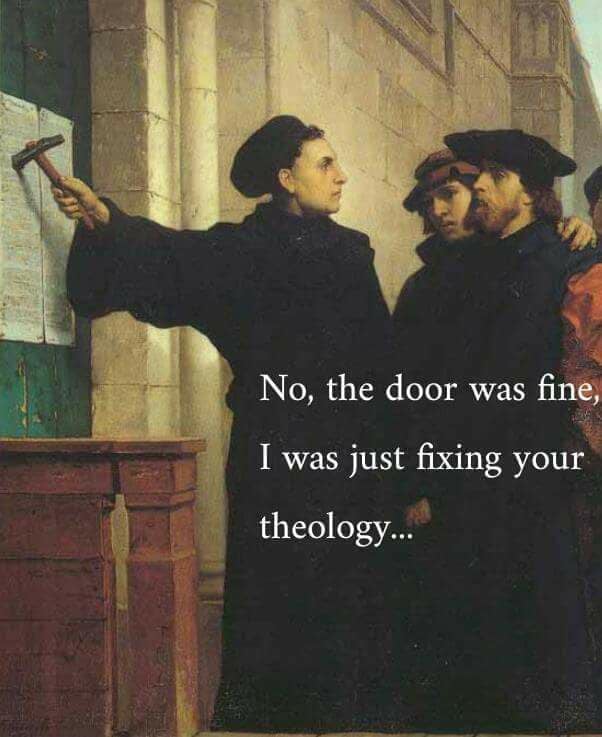
           In this respect perhaps the greatest prophet of the last millennium was Martin Luther [1483-1546]. He brought Europe out of the dark ages and into the glorious light of the gospel—a gospel that had been distorted almost beyond recognition by layers of institutional corruption, false doctrine, and a profound ignorance of the Holy Scriptures.
            How did Luther bring about such a radical change? The answer primarily lies in his work as a literary prophet. Scholars and historians agree that foremost among his literary works is his translation of the Bible into German, the vernacular of the people of central Europe. Of course, this inspired translators in other lands to produce Bibles in their local tongue. Suddenly, the Word of God was unleashed and active, changing hearts and lives across the continent and the work of Bible translation continues to this day.
            None of this would have taken place with such speed without the invention of Gutenberg’s printing press which for the first time made the Scriptures affordable and readily available. New technology presents new opportunities to transmit the gospel message. Are we currently using the new technologies available to us to advance the redeeming message of Christ in the world?
            In addition to translating the Bible, Luther authored a host of books, pamphlets, and tracts that expounded on biblical truth and exposed doctrinal error. Some of his views have been discredited, but many remain relevant.[i] He was a prophetic voice to his generation, and through his writing, his message still resounds five hundred years later.
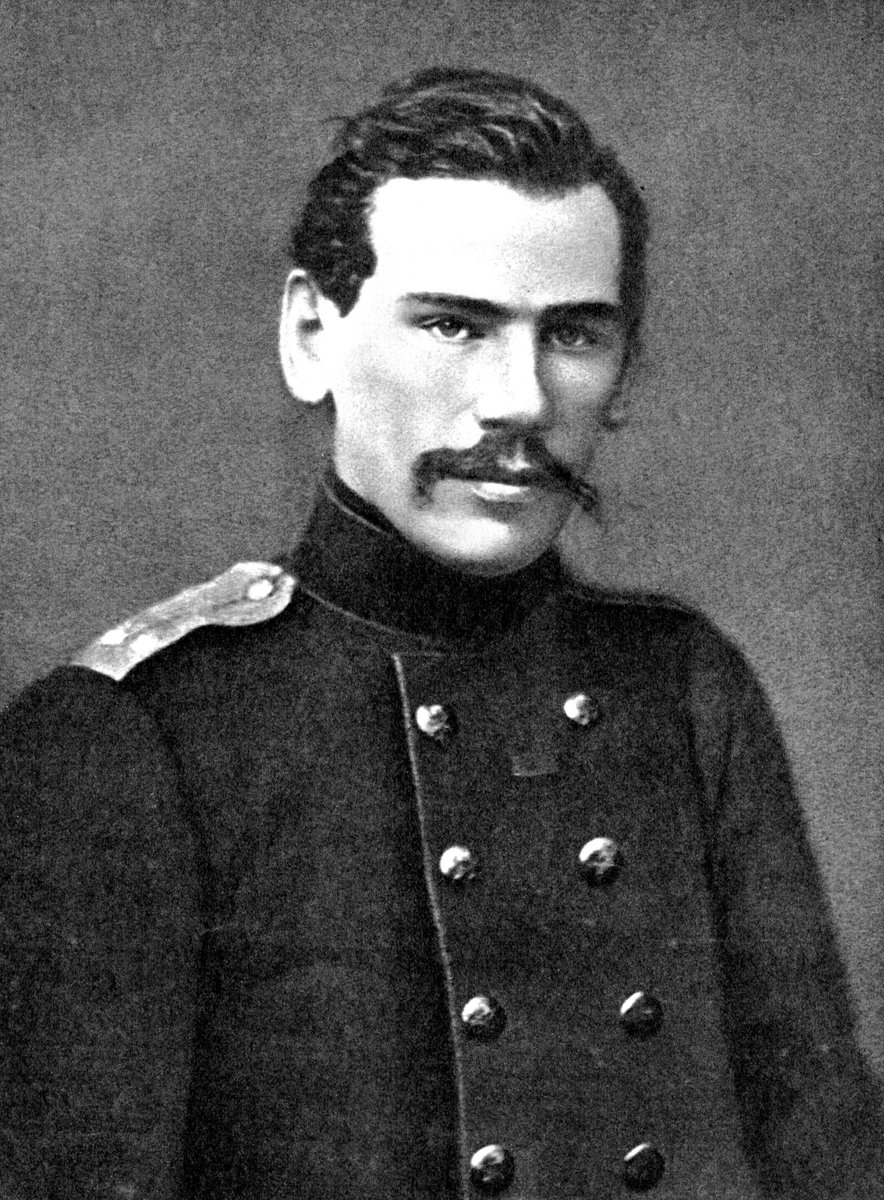
            Four centuries after Luther, in eastern Europe, another literary figure arose to challenge the religious and political thinking of his time. His name was Leo Tolstoy [1828-1910].
            What might it take for peace to come today between Ukraine and Russia? What seems impossible with people is still possible with God.

A young Leo Tolstoy

          What if Ukrainians and Russians would both rediscover the message of peace, forgiveness, and reconciliation in Tolstoy’s War & Peace? Sadly, this book is currently banned in Ukraine because of the mistaken idea that it glorifies the Russian military.
            After serving in the Crimean War as a young officer in the Russian army, Tolstoy became a committed pacifist. War & Peace never glorifies war, but rather, accurately portrays how war often embitters our souls, dehumanizes us, and robs us of the love of neighbor. Ironically, the Russian Orthodox Church excommunicated Tolstoy in 1901, partially because of his questioning their uncritical support for the Russian military.
           Many see Tolstoy as a Russian Charles Dickens. Considered by many as the world’s best novel, War & Peace overwhelms potential readers by its 1,400-page size. What surprised us as readers was how deeply Jesus’ gospel message of forgiveness was woven into this book. God is mentioned 312 times in War & Peace. Outwardly, the book is about Napoleon’s invasion of Russia, but at a deeper level, it was about human conflict and how the Kingdom of God is the only solution. 
           The Russian Prince Andrei, who represented the glorification of war in War & Peace, initially despised forgiveness as just for women and children.[i] After being mortally wounded, Andrei learns to forgive his dying enemy Anatole Kuragin, and his ex-fiancée Natasha who almost ran off with Anatole. He notably commented:

          Compassion, love of our brothers, for those who love us and for those who hate us, love of our enemies; yes, that love which God preached on earth…and I did not understand—that is what made me sorry to part with life, that is what remained for me had I lived. But now it is too late. I know it![ii]

           Andrei asks his doctor to get him a copy of the Gospels, saying that he had now a new source of happiness which had something to do with the Gospels. After discovering the law of love, Andrei met again with Natasha who was devastated with guilt and shame:

          “Forgive me!” she whispered, raising her head and glancing at him. “Forgive me!”
          “I love you,” said Prince Andrei…
          “Forgive…!”
          “Forgive what?” he asked.
          “Forgive me for what I have do-ne!” faltered Natasha in a scarcely audible, broken whisper, and began kissing his hand more rapidly, just touching it with her lips.
          “I love you more, better than before,” said Prince Andrei, lifting her face with his hand so as to look into her eyes.[iii]

            This novel could have been called Love & Forgiveness. Seventy-two times, Tolstoy talks about forgiveness in War & Peace. It was not just about the war with Napoleon, it was about the war between the sexes.

The Word of God — photo by David Kitz

            Another character in War & Peace, Pierre Bezukhov, is like a Russian Forrest Gump. He is a tragically comic figure who awkwardly stumbles into all the key times of the Napoleonic conflict, unexpectedly being a savior figure, and allowing us to observe the historic conflict in person, up close. Everything about him is unlikely, from his being an illegitimate son to becoming the wealthiest person in all of Russia. Through dreams and visions, Pierre discovered on Napoleon’s battlefield that:

            To love life is to love God. Harder and more blessed than all else is to love this life in one’s sufferings, in innocent sufferings.[i]

           Through discovering God, Pierre experienced a deep tranquility and happiness. He was no longer tormented by the meaningless of life: 

          …a simple answer was now always ready in his soul: “Because there is a God, that God without whose will not one hair falls from a man’s head.[ii]

          Meeting God gave him such a new ability to listen that people regularly told Pierre their most intimate secrets. This deep listening was what caused the embittered princess Natasha to fall in love and marry him.
           Tolstoy, a Russian aristocrat, became so enamoured with the Sermon on the Mount that he gave away all his wealth and chose to live like a peasant, tilling the land. When he decided to give up all his book income, his wife threatened to divorce him, so he compromised by only giving away the money from any of his newly written books.
            Tolstoy’s book The Kingdom of God Is Within You so impacted Mahatma Gandhi that he gave it out to his followers. Gandhi was so impressed by Tolstoy’s emphasis on the Sermon on the Mount (Matthew 5 to 7) that he read Jesus’ famous Sermon every day for the rest of his life. Tolstoy’s emphasis on non-violent resistance formed the basis of Gandhi’s campaign for Indian nationhood. Thus, through the influence of Tolstoy’s writing the entire subcontinent of India was transformed.
            Martin Luther King Jr., after reading E. Stanley Jones’ book on Gandhi, discovered the nonviolent key for his civil rights movement in America. So, the torch light of a peace-making gospel passed from a Russian author to India and onto America.
            Tolstoy’s passion for peace-making and forgiveness might even change Russian President Putin, if he would only take the time to read Tolstoy’s book.
            The late British journalist and Christian apologist Malcolm Muggeridge deeply admired the genius of Tolstoy:

         Tolstoy was one of those truly great men who come into the world at long intervals, and we need them, and we rightly continue to look to them just as the Russians do, despite all the changes that have happened.

            What if instead of resenting Russia for its tragic invasion of the Ukraine, we, like Tolstoy, began to pray passionately for its transformation? Could we have faith to believe that Russia will become a Sermon on the Mount nation, overflowing with peacemakers like Tolstoy? Let’s call out to God for such a miracle.
            On this continent in 1852, Harriet Beecher Stowe wrote a novel that transfixed America. Uncle Tom’s Cabin was the bestselling book in United States in the nineteenth century, surpassed only by the Bible.[iii] Stowe was motivated by her deep Christian faith. Her book pricked the conscience of the nation, exposed the horrors of slavery, and fomented the upheaval that led to the American Civil War which culminated in the emancipation of millions.   
            Martin Luther, Leo Tolstoy, and Harriet Beecher Stowe exemplify the incredible power of the printed page. Literary prophets are history shapers. They transformed nations and their influence remains to this day. We need more literary prophets—prophets filled with the courage of their convictions—prophets for our time.
            The written word inspires faith—life transforming faith. Perhaps John, the beloved, expressed this truth best when a the close of his Gospel he penned these immortal words: But these are written that you may believe that Jesus is the Messiah, the Son of God, and that by believing you may have life in his name (John 20:31).

[i] graf Leo Tolstoy. War and Peace (Kindle Locations 22902-22903). Kindle Edition.

[ii] graf Leo Tolstoy. War and Peace (Kindle Locations 23761-23762). Kindle Edition.

[iii] Uncle Tom’s Cabin – Wikipedia accessed March 1, 2023.

[i] graf Leo Tolstoy. War and Peace (Kindle Locations 19935-19936). Kindle Edition.

[ii] graf Leo Tolstoy. War and Peace (Kindle Locations 22902-22903). Kindle Edition.

[iii] graf Leo Tolstoy. War and Peace (Kindle Locations 19935-19936). Kindle Edition.

[i] While we honor Martin Luther as a literary prophet used in the Reformation, we acknowledge the tragic nature of the antisemitism that Luther slipped into later in his ministry.

This is the sixth weekly excerpt from the award-winning book 
The Elisha Code & the Coming Revival 

A soul-gripping read.
Is a return-to-Jesus revival possible in our time?
This book points the way forward.
For details click here.

Opening Blind Eyes

12 Sunday Oct 2025

Posted by davidkitz in The Elisha Code

≈ 2 Comments

Tags

apostles, blind, church, Elisha, Jesus, New Testament, Old Testament history, Pharisees, prophetic, prophets, repentance, spirtual blindness

In that day the deaf will hear the words of the scroll,
and out of gloom and darkness the eyes of the blind will see.
(Isaiah 29:18, NIV)

In 1546, the English writer and poet, John Heywood, penned this proverb, “There are none so blind as those who will not see.”[i]
            Heywood’s proverb is as relevant to our times as it was in his day. The most damaging condition modern humanity suffers from is spiritual blindness. But alas, this condition has been afflicting humans since we exited Eden.
            Perhaps no biblical account portrays spiritual blindness better than the story of Elisha and his servant as they are trapped in the besieged city of Samaria. On the first morning of the siege, Elisha’s servant panicked when he saw the foreign army, but the prophet responded with these words:

             “Don’t be afraid,” the prophet answered. “Those who are with us are more than those who are with them.”
             And Elisha prayed, “Open his eyes, LORD, so that he may see.” Then the LORD opened the servant’s eyes, and he looked and saw the hills full of horses and chariots of fire all around Elisha
(2 Kings 6:16-17, NIV).

            As is so often the case, the servant was blind to the spiritual realm. Today, the servants of God suffer from the same short-sightedness. It took the prayer of Elisha to open the servant’s eyes. In our day, it also takes the Holy Spirit and present-day prophets to open our eyes.  
            This eye-opening miracle was paired with a mass-blinding miracle on an unprecedented scale.

             As the enemy came down toward him, Elisha prayed to the Lord, “Strike this army with blindness.” So he struck them with blindness, as Elisha had asked.
            Elisha told them, “This is not the road and this is not the city. Follow me, and I will lead you to the man you are looking for.” And he led them to Samaria
(2 Kings 6:18-19, NIV).

          Elisha led the enemy army into the presence of the king of Israel in the heart of the capital. The king then inquired if he should slaughter his enemies. But Elisha counseled kindness rather than retribution, and a feast was prepared for the Aramean army. This act of unprecedented grace and generosity led to a time of peace between these two warring nations (2 Kings 6:23).
            Eight centuries before Christ, Elisha’s advice to the king puts into practice the words of Jesus from his Sermon on the Mount. 

           “But to you who are listening I say: Love your enemies, do good to those who hate you, bless those who curse you, pray for those who mistreat you. If someone slaps you on one cheek, turn to them the other also. If someone takes your coat, do not withhold your shirt from them. Give to everyone who asks you, and if anyone takes what belongs to you, do not demand it back. Do to others as you would have them do to you (Luke 6:27-31).

          There is an uncanny link between Elisha, the Old Testament prophet, and Jesus, his New Testament counterpart. Both men see beyond the natural realm to the astonishment of the people of their day, and both prophets counsel kindness rather than revenge in dealing with enemies.
            Though there are many outstanding miracles recorded in the Old Testament, there is no account of the physically blind receiving their sight. Yet, time after time in the Gospels, Jesus restored sight to the blind.[ii] These physical miracles were signposts pointing to an even more significant restoration of sight—the restoration of spiritual eyesight—eyesight that allows us to see who Jesus truly is and what he is doing.
            The account of Jesus healing the blindman at the Pool of Siloam is entirely about opening the eyes of those who are both physically and spiritually blind. (See John 9.) The man who received his sight was blind from birth. This was not simply a miracle of restoration. It was a creative miracle, on par with the Adam and Eve account in Genesis 2, as Jesus so aptly demonstrated.

              While I am in the world, I am the light of the world.”
 After saying this, he spit on the ground, made some mud with the saliva, and put it on the man’s eyes. “Go,” he told him, “wash in the Pool of Siloam” (this word means “Sent”). So the man went and washed, and came home seeing
(John 9:5-7, NIV).

             Jesus opened the eyes of the blindman, but as the story continues, we see he is unable to open the eyes of the spiritually blind Pharisees. John Heywood’s proverb proves true, “There are none so blind as those who will not see.”
            The Pharisees in this account were wilfully blind. Many today suffer from the same willful blindness. Due to their stubborn hearts, they are unable to see who Jesus truly is.
            The entirety of John 9 is about seeing—seeing and recognizing who Jesus is. The miracle of the man blind from birth receiving his sight should have alerted the Pharisees and temple authorities to the divine nature of Jesus, the miracle worker. But the Pharisees could not see past the fact this miracle had been wrought on the Sabbath. The miracle worker had violated the Sabbath, so they reasoned, he must be a sinner and unworthy of respect.

                 Then they turned again to the blind man, “What have you to say about him? It was your eyes he opened.”
               
The man replied, “He is a prophet.” (John 9:17, NIV)

                The healed blindman stated what was patently obvious to him. He recognized that he had been touched by the hand of God. He saw Jesus as a prophet. All of Israel was waiting expectantly for a prophet—a prophet who would once again demonstrate the power of the Almighty. Surely, restoring sight to one who was born blind was a demonstration of this power. But the Pharisees questioned the validity of the miracle and the miracle worker.
                Why were many Pharisees so spiritually blind? Despite the evidence of multiple miracles, they were unwilling to recognize Jesus as a prophet. But this blindness was not a new condition. They had already rejected John the Baptist the forerunner of the Messiah. They refused to recognize John as a prophet too. See Matthew 21:25-27.
                And why did most Pharisees reject John the Baptist? The simple answer is because John preached a message of repentance. Repentance requires an acknowledgement of sin and a turning away from it. But the Pharisees, like many people nowadays, saw themselves as righteous already. They were blind to their sin, so they saw no need for repentance. Furthermore, repentance requires humility, a character quality they shunned in favor of obstinate pride—pride in their self-professed righteousness.
                Because the Pharisees did not recognize the first prophet, John, they were blind to the second prophet, Jesus. But Jesus was far more than a prophet. As his name implies, he was and is the Savior of the world. But the proud and the self-righteous have no felt need for a Savior. They see themselves as saved already—saved through their own efforts. In their own eyes—their spiritually blind eyes—they see no need for a Savior.
                This same spiritual blindness afflicts many in both the church and society today. The cure for spiritual blindness is repentance and rebirth by the power of the Holy Spirit. That was the message of our two New Testament prophets John the Baptist and Jesus.
                A gospel message that is preached without a call to repentance is not a gospel message at all. Coming to faith in Jesus requires—no, demands repentance. Real repentance is real change. Change from the inside out. Change that is deep, meaningful, and evident in daily life.
                John demanded change from those who came to be baptized, whatever their station in life, and that included Pharisees who in their pride believed no change was required. See Matthew 3:1-12.
                Furthermore, we should not see repentance simply as a one-time occurrence. Yes, it is the vital starting point in our walk of faith,[iii] but true repentance goes far beyond that. Repentance must be incorporated into our way of life—a life of continual turning away from sin and living in humble service to our Savior-King.[iv]
                Though the blindman received his sight, the Pharisees persisted in their spiritual blindness even though the miracle-working Savior was standing before them. 

                 Jesus said, “For judgment I have come into this world, so that the blind will see and those who see will become blind.”
                Some Pharisees who were with him heard him say this and asked, “What? Are we blind too?”
                Jesus said, “If you were blind, you would not be guilty of sin; but now that you claim you can see, your guilt remains.
(John 9:39-41, NIV)  

                For the Pharisees of Jesus day and the spiritually blind of our day, this maxim holds true: If we don’t recognize the prophet, we won’t recognize the Savior.
                Jesus’ words remain relevant today:      

                Whoever welcomes a prophet as a prophet will receive a prophet’s reward, and whoever welcomes a righteous person as a righteous person will receive a righteous person’s reward. (Matthew 10:41, NIV)

                The voice of the prophet is needed today just as it was in Jesus’ day. A national call to repentance is needed now. Who will voice that call? Where are the prophets for our time?
                The relative absence of legitimate prophetic voices in the church today should trouble us. There was a four-hundred-year prophetic gap between the Old and New Testament—a gap when the Spirit of God was silent. But then suddenly John the Baptist and Jesus appeared on the scene. The first two chapters of Luke describe an astonishing flurry of Spirit initiated activity as heaven set the great redemption story into motion. Will there be a similar flood of Spirit directed activity before Christ’s second coming?
                It is clear from the Scriptures prophets were active within the New Testament church, and furthermore, Paul considered them essential to the proper functioning of the body of Christ.

               So Christ himself gave the apostles, the prophets, the evangelists, the pastors and teachers, to equip his people for works of service, so that the body of Christ may be built up until we all reach unity in the faith and in the knowledge of the Son of God and become mature, attaining to the whole measure of the fullness of Christ. (Ephesians 4:11-13, NIV)

                In Acts we read that there were numerous prophets active in the church. Some of them are listed by name. They include Agabus, Barnabas, Simeon called Niger, Lucius of Cyrene, Manaen, and Saul.[v] This Saul is also known as Paul, and he and Barnabas were commissioned by the church leadership in Antioch to go on the first great missionary journey (Acts 13:1-3).
                Where would the church be today if these prophets had not spoken the word of the Lord over Paul and Barnabas? Would there be a church in Europe? Would we even know of the ministry of Paul? The New Testament church grew as it received prophetic direction from those who were tuned to hear the plans of God.

Landestreu Church

                The church of God grows and flourishes when there are men and women who hear what the Spirit is saying, see what the Spirit is doing, and then declare it to the church and the world. That is the role of the prophet.
                We need leaders with prophetic hindsight, insight, and foresight for the church to reach its full potential.
                Prophetic vision is not always forward looking or predictive. Sometimes it looks back at events in the past and sees them with heaven-endowed clarity. For example, Jesus spoke to the Samaritan woman at the well about her past marriages and current living arrangement (John 4:15-19). As a result, the Samaritan woman immediately recognized Jesus as a prophet. This gift of prophetic hindsight was pivotal in this entire community coming to faith.

                Many of the Samaritans from that town believed in him because of the woman’s testimony, “He told me everything I ever did.” So when the Samaritans came to him, they urged him to stay with them, and he stayed two days. And because of his words many more became believers. (John 4:39-41, NIV)

                The same prophetic hindsight is need today to capture the attention of individuals and reach whole communities estranged from Christ and the gospel.
                A word of caution is in order. Not all who call themselves prophets or apostles are prophets and apostles. A true prophet or apostle will be known by the fruit of their ministry, not by the self-styled handle on their business card. There have been false prophets throughout history. We should not be surprised when we see a raft of them emerge today. But the emergence of the counterfeit should not keep us from heeding those who genuinely hear from God and declare his word.
                Paul’s admonition to the Thessalonians remains valid:

                Do not quench the Spirit. Do not despise prophecies. Test all things; hold fast what is good. Abstain from every form of evil. (1 Thessalonians 5:19-22, NKJV)

                Humility and service to others are the hallmarks of genuine faith. Pride and self-aggrandizement are flashing red lights signalling error and deception. Know the Scriptures, heed the Spirit, and proceed with caution. God guides those who humbly seek him. Jesus still opens the eyes of the blind and he still uses prophetic voices to do just that.
                The third key that helps us unlock the Elisha code is prophetic vision or spiritual insight. It is vitally needed today.

[i] Who wrote the proverb “There are… | Trivia Answers | QuizzClub

[ii] Matthew 12:22, Matthew 15:30, Mark 8:22-26, Mark 10:46-52, Luke 7:2, John 9

[iii] Peter replied, “Repent and be baptized, every one of you, in the name of Jesus Christ for the forgiveness of your sins. And you will receive the gift of the Holy Spirit (Acts 2:28, NIV).

[iv] If we claim to be without sin, we deceive ourselves and the truth is not in us. If we confess our sins, he is faithful and just and will forgive us our sins and purify us from all unrighteousness. If we claim we have not sinned, we make him out to be a liar and his word is not in us (1 John 1:8-10, NIV).

[v] Acts 11:27-28, Acts 13:1-3, Acts 15:32, Acts 21:8-10

This is the fifth weekly excerpt from the award-winning book 
The Elisha Code & the Coming Revival 

A soul-gripping read.
Is a return-to-Jesus revival possible in our time?
This book points the way forward.
For details click here.

Abandoned and Desolate

29 Friday Aug 2025

Posted by davidkitz in Psalm 138

≈ Leave a comment

Tags

abandoning God, Bible, blessed, children, desolation, God's kindness, Jerusalem, Jesus, Prayer, prophets, Psalms, temple of the Holy Spirit, the LORD

Today’s quote and prayer from
“Psalms 365: Develop a Life of Worship and Prayer”

Today’s Reading: Psalm 138:6-8

LORD God,
I want you to be fully at home
in my heart and my mind.
Show me your kindness.
My body is a temple
for your Holy Spirit.
Live in me and through me,
Lord Jesus.
Amen.

— — — —
 
“Jerusalem, Jerusalem,
you who kill the prophets
and stone those sent to you,
how often
I have longed to gather your children together,
as a hen gathers her chicks under her wings,
and you were not willing.

Look,
your house is left to you desolate.
I tell you,
you will not see me again until you say,
‘Blessed is he
who comes in the name of the Lord.’”

(Luke 13:34-35 NIV)*

Para la publicación de Salmos 365 de hoy en español haga clic aquí.

bgbg_v4.3_1501818
* NEW INTERNATIONAL VERSION, COPYRIGHT ©1973, 1978, 1984, 2011 BY BIBLICA

Please pray for peace to return to Israel, Gaza, Iran, and Ukraine!

Volume I of Psalms 365: Develop a Life of Worship and Prayer won the Best Book of the Year Award from The Word Guild and Volume II has won the Best Devotional of the Year Award. For those who love God’s word, this three-book series is an ideal way to daily meet with the Lord. To purchase or for a closer look click here.

A gripping read from David Kitz.
Is a return-to-Jesus revival possible in our time?
This book points the way forward.

The Promise He Made

23 Saturday Aug 2025

Posted by davidkitz in Psalm 105

≈ Leave a comment

Tags

Abraham, covenant, Isaac, Jacob, peace, praise the LORD, Prayer, prophets, Psalms

I will praise the LORD!

Psalm 105:8-15

He remembers his covenant forever,
    the promise he made, for a thousand generations,
the covenant he made with Abraham,
    the oath he swore to Isaac.
He confirmed it to Jacob as a decree,
    to Israel as an everlasting covenant:
“To you I will give the land of Canaan
    as the portion you will inherit.”
When they were but few in number,
    few indeed, and strangers in it,
they wandered from nation to nation,
    from one kingdom to another.
He allowed no one to oppress them;
    for their sake he rebuked kings:
“Do not touch my anointed ones;
    do my prophets no harm.” *

Para la publicación de Salmos 365 de hoy en español haga clic aquí.

bgbg_v4.3_1501818
* NEW INTERNATIONAL VERSION, COPYRIGHT ©1973, 1978, 1984, 2011 BY BIBLICA

Please pray for peace to return to Israel, Gaza, and Ukraine!

Volume I of Psalms 365: Develop a Life of Worship and Prayer won the Best Book of the Year Award from The Word Guild and Volume II has won the Best Devotional of the Year Award. For those who love God’s word, this three-book series is an ideal way to daily meet with the Lord. To purchase or for a closer look click here.

A gripping read from David Kitz.
Is a return-to-Jesus revival possible in our time?
This book points the way forward.
For details click here.

The Messiah Had to Suffer

27 Friday Jun 2025

Posted by davidkitz in Psalm 119, Psalms

≈ 2 Comments

Tags

Jesus, Messiah, Moses, Prayer, prophets, Psalms, scriptures, word of God, worship

Today’s quote and prayer from
“Psalms 365: Develop a Life of Worship and Prayer”
by David Kitz.


Reading: Psalm 119:33-40

Father God,
I want to see you.
Open my eyes to your wonders around me.
Teach me your ways
in practical life altering steps
that draw me close to you.
Open your Word to me.
Amen.

— — — —

He [Jesus] said to them, 
“How foolish you are,
and how slow to believe all
that the prophets have spoken!

Did not the Messiah have to suffer these things
and then enter his glory?”

And beginning with Moses 
and all the Prophets, 
he [Jesus] explained to them
what was said in all the Scriptures
concerning himself.
(Luke 24:30-32 NIV)*

Para la publicación de Salmos 365 de hoy en español haga clic aquí.

bgbg_v4.3_1501818
* NEW INTERNATIONAL VERSION, COPYRIGHT ©1973, 1978, 1984, 2011 BY BIBLICA

Please pray for peace to return to Israel, Gaza, Iran, and Ukraine!

Volume I of Psalms 365: Develop a Life of Worship and Prayer won the Best Book of the Year Award from The Word Guild and Volume II has won the Best Devotional of the Year Award. For those who love God’s word, this three-book series is an ideal way to daily meet with the Lord. To purchase or for a closer look click here.

A gripping read from David Kitz.
Is a return-to-Jesus revival possible in our time?
This book points the way forward.
For details click here.
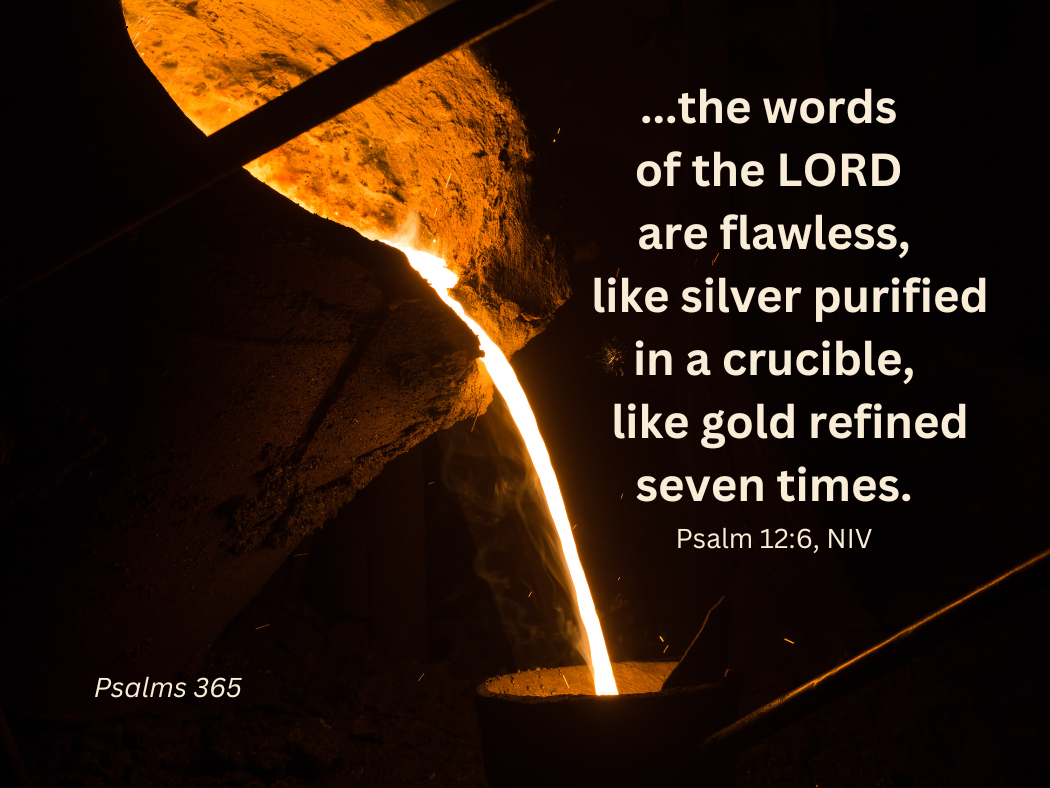
Peace Be with You

20 Sunday Apr 2025

Posted by davidkitz in Easter Sunday

≈ Leave a comment

Tags

Bible, Christianity, faith, ghost, God, Jesus, joy, Messiah, praise the LORD, proof of the resurrection, prophets, Psalms, scriptures

I will praise the LORD!

Luke 24:1-12

Jesus Appears to the Disciples

While they were still talking about this,
Jesus himself stood among them
and said to them,
“Peace be with you.”

They were startled and frightened,
thinking they saw a ghost.
He said to them,
“Why are you troubled,
and why do doubts rise in your minds?

Look at my hands and my feet.
It is I myself!
Touch me and see;
a ghost does not have flesh and bones,
as you see I have.”

When he had said this,
he showed them his hands and feet.
 
And while they still did not believe it
because of joy and amazement,
he asked them,
“Do you have anything here to eat?”
They gave him a piece of broiled fish,
and he took it and ate it in their presence.

He said to them,
“This is what I told you
while I was still with you:
Everything must be fulfilled
that is written about me in the Law of Moses,
the Prophets and the Psalms.”

Then he opened their minds
so they could understand the Scriptures.
 
He told them,
“This is what is written:
The Messiah will suffer
and rise from the dead on the third day,

and repentance for the forgiveness of sins
will be preached in his name to all nations,
beginning at Jerusalem.

You are witnesses of these things.
I am going to send you
what my Father has promised;
but stay in the city
until you have been clothed
with power from on high.”
 
*

Para la publicación de Salmos 365 de hoy en español haga clic aquí.

bgbg_v4.3_1501818
* NEW INTERNATIONAL VERSION, COPYRIGHT ©1973, 1978, 1984, 2011 BY BIBLICA

Please pray for peace to return to Israel, Gaza, and Ukraine!

Volume I of Psalms 365: Develop a Life of Worship and Prayer won the Best Book of the Year Award from The Word Guild and Volume II has won the Best Devotional of the Year Award. For those who love God’s word, this three-book series is an ideal way to begin the new year, and daily meet with the Lord. To purchase or for a closer look click here.

RGB72PsalmsVol2

A gripping read from David Kitz.
4485 SHARABLE-2

This biblically accurate novel is ideal for the Lent/Easter season.
For details click here.
Prophets Spoke from God

11 Tuesday Mar 2025

Posted by davidkitz in Psalm 89

≈ 2 Comments

Tags

Bible, Creator, Holy Spirit, prophecy, prophetic, prophets, Scripture, the LORD, trust in God, trust in God's word

Today’s quote and prayer from
“Psalms 365: Develop a Life of Worship and Prayer”
by David Kitz.

Reading: Psalm 89:38-45

LORD God,
my trust is in you
and your word.
Creator God,
I want my faith to be as secure for me
as the earth beneath my feet
and the air in my lungs.
You are all around me.
Thank you, Lord.

Amen.

— — —

We also have the prophetic message
as something completely reliable,
and you will do well to pay attention to it,
as to a light shining in a dark place,
until the day dawns
and the morning star rises in your hearts.
 
Above all,
you must understand
that no prophecy of Scripture came about
by the prophet’s own interpretation of things.
 
For prophecy never had its origin
in the human will,
but prophets, though human,
spoke from God
as they were carried along by the Holy Spirit.

(2 Peter 1:19-21, NIV)*

Para la publicación de Salmos 365 de hoy en español haga clic aquí.

bgbg_v4.3_1501818
* NEW INTERNATIONAL VERSION, COPYRIGHT ©1973, 1978, 1984, 2011 BY BIBLICA

Please pray for peace to return to Israel, Gaza, and Ukraine!

New from David Kitz
Winner of the 2024 Word Award of Merit in Biblical Studies
TheElishaCodeCVR5

To purchase or for a closer look click here.

Volume I of Psalms 365: Develop a Life of Worship and Prayer won the Best Book of the Year Award from The Word Guild and Volume II has won the Best Devotional of the Year Award. For those who love God’s word, this three-book series is an ideal way to daily meet with the Lord. To purchase or for a closer look click here.

This biblically accurate novel is ideal for the Lent/Easter season.
For details click here.

God Changed Saul’s Heart

26 Thursday Dec 2024

Posted by davidkitz in Psalm 69

≈ 2 Comments

Tags

God, perfect timing, Prayer, prophet Samuel, prophets, Psalms, salvation, Saul

Today’s quote and prayer from
“Psalms 365: Develop a Life of Worship and Prayer”
by David Kitz.Psalm 69_13-18 -365 winter

Reading: Psalm 69:13-18

Father God,
favor me.
Show up in your perfect timing.
I need you now.
I need you always.
You know best.
Teach me patience and grant me peace.
Answer me with your sure salvation.

Amen.

— — —

As Saul turned to leave Samuel,
God changed Saul’s heart,
and all these signs were fulfilled that day.

When he and his servant arrived at Gibeah,
a procession of prophets met him;
the Spirit of God came powerfully upon him,
and he joined in their prophesying.

When all those who had formerly known him
saw him prophesying with the prophets,
they asked each other,
“What is this that has happened to the son of Kish?
Is Saul also among the prophets?”
(1 Samuel 10:9-11)*

Para la publicación de Salmos 365 de hoy en español haga clic aquí.

bgbg_v4.3_1501818
* NEW INTERNATIONAL VERSION, COPYRIGHT ©1973, 1978, 1984, 2011 BY BIBLICA

Please pray for peace to return to Israel, Lebanon, Gaza, and Ukraine!

New from David Kitz
Winner of the 2024 Word Award of Merit in Biblical Studies
TheElishaCodeCVR5

To purchase or for a closer look click here.

Volume I of Psalms 365: Develop a Life of Worship and Prayer won the Best Book of the Year Award from The Word Guild and Volume II has won the Best Devotional of the Year Award. For those who love God’s word, this three-book series is an ideal way to daily meet with the Lord. To purchase or for a closer look click here

.RGB72PsalmsVol2


← Older posts

Psalms 365: Develop a Life of Worship and Prayer

Psalms 365 Volume II

Psalms 365 vol 3
— Psalms 365 Volume III

Psalms

Recent posts

  • Ready for the King of Glory December 19, 2025
  • My Spirit Rejoices in God My Savior December 18, 2025
  • Joining the Generation That Seeks God December 18, 2025
  • Why Am I So Favored December 17, 2025
  • How Can You Find the Good Life? December 17, 2025
  • The Power of the Most High December 16, 2025
  •  The Earth Turns to the LORD December 16, 2025

Calendar

December 2025
M T W T F S S
1234567
891011121314
15161718192021
22232425262728
293031  
« Nov    

Blog Posts

Comments

  • davidkitz on Joining the Generation That Seeks God
  • cjsmissionaryminister on God Sent His Son
  • cjsmissionaryminister on The God of the Broken

Blog at WordPress.com.

Privacy & Cookies: This site uses cookies. By continuing to use this website, you agree to their use.
To find out more, including how to control cookies, see here: Cookie Policy
  • Subscribe Subscribed
    • I love the Psalms
    • Join 1,378 other subscribers
    • Already have a WordPress.com account? Log in now.
    • I love the Psalms
    • Subscribe Subscribed
    • Sign up
    • Log in
    • Report this content
    • View site in Reader
    • Manage subscriptions
    • Collapse this bar
 

Loading Comments...