• Home
  • About
  • DavidKitz.ca
  • Youtube Videos
  • Books by David
  • Books on Amazon.com

I love the Psalms

~ Connecting daily with God through the Psalms

I love the Psalms

Tag Archives: scriptures

The Church and the Third Temptation of Christ

21 Sunday Dec 2025

Posted by davidkitz in Psalms, The Elisha Code

≈ 3 Comments

Tags

Caesar, Christ, church, false christs, false saviors, God and Caesar, Jesus, kingdom, political, politics, prophecy, prophet, Satan, Savior, scriptures, temptation, the cross

And He said to them,
“Render therefore to Caesar the things that are Caesar’s,
and to God the things that are God’s.”
 

(Matthew 22:21b, NKJV)

The church cannot move forward in the right direction unless there is a clear-eyed assessment of where we stand today.

Here then are a few questions to help us assess our current position:

  • Are local churches growing, thriving, and multiplying in your city/community?
  • Are individuals in your community repenting and coming to faith in Christ?
  • Is the message of the gospel transforming society, or is the world transforming the church?
  • Over the last twenty years, has the church become more politically engaged?

We have been keen observers of the church and the impact of the gospel on society for over fifty years. During that time there have been encouraging waves of numerical growth and spiritual renewal, but there have also been seasons of testing and decline. Broadly speaking, over the last decade, decline has been the dominant theme. Yes, there are exceptions to this downward trend, and they should be celebrated, but nevertheless, the trendline is not moving in our favor. Statistical surveys indicate a steady decline in church attendance and self-identification with the Christian faith.

Landestreu Church — photo by Donald Adam

Why is this so?

What has not declined is the church’s level of political engagement. While the embers of spiritual revival have been dying, the fires of political engagement have been burning red hot. And political leaders of all stripes have been eager to fan the flames. After all, they know where the votes lie and how to spark political passions.

The sharp divisions between the political left and right have been mirrored in the church. The theologically liberal have championed social justice issues, while theological conservatives have tried to hold the line against what they see as a creeping socialist sin agenda.

To a degree, these divisions in the church have been present for generations. But in recent years the divisions have grown sharper as political discourse has become more polarized. Throw in some misinformation, a few conspiracy theories, and we have a toxic brew that social media spreads worldwide.

Where is the good news of the gospel in all of this? All too often, it’s been abandoned or drowned out in both camps. A worshipper may attend a Sunday service at a left leaning church and hear a sermon on the merits of caring for the poor and marginalized, but the name of Jesus is never mentioned. Similarly, I have attended so called ‘prayer meetings’ of evangelical pastors where not a single word of prayer is uttered, but the entire conversation is centered on right wing political machinations and strategies.

Is the message of the gospel transforming our society and culture? No. The world is transforming the culture of the church. The glorious light of the gospel has been turned to darkness. Jesus’ call to take up our cross and follow him is being ignored—ignored in the house of God while we pursue purely political objectives.

Christ’s admonition rings true:

“Salt is good; but if the salt has lost its flavor, how shall it be seasoned? It is neither fit for the land nor for the dunghill, but men throw it out. He who has ears to hear, let him hear!” (Luke 14:34-35, NKJV)

The church has too often gone down a political rabbit hole thinking it can somehow save this generation by political means. No such salvation exists, nor has it ever existed, and those who promise it are false saviors. Furthermore, Jesus prophesied such false political saviors would arise.

Then if anyone says to you, ‘Look, here is the Christ!’ or ‘There!’ do not believe it. For false christs and false prophets will rise and show great signs and wonders to deceive, if possible, even the elect. See, I have told you beforehand (Matthew 24:24-25, NKJV).

Every generation has seen its share of false saviors, but after 2,000 years only one Savior remains standing. His name is Jesus. Let’s cling to him and the message of the cross.

Photo by Pixabay on Pexels.com

Often politicians use religion for personal gain—to curry favor and capture votes, therefore, leaders in the Christian community need to exercise caution. We believe Christ followers should vote and be politically engaged, but our first loyalty must be to Christ. A life of service in the political realm can be a noble vocation ordained by God.

What blueprint did Jesus follow as he began his earthly ministry and set the foundation for the church? Was he engaged in the politics of his time? His politics was not the politics of this world. It was the politics of humility, forgiveness, and self-sacrifice.

The blueprint our Lord followed can be found in his response to the three temptations of Christ as recorded in the gospels. The third temptation found in Matthew’s gospel specifically addresses the lure of political engagement.

Again, the devil took Him up on an exceedingly high mountain, and showed Him all the kingdoms of the world and their glory. And he said to Him, “All these things I will give You if You will fall down and worship me.”
Then Jesus said to him, “Away with you, Satan! For it is written, ‘You shall worship the Lord your God, and Him only you shall serve’”
(Matthew 4:8-10)

There is something quite striking, first about the devil’s offer, and then Jesus’ response. Satan offered the kingdoms of the world and their glory. Implied in this offer is the understanding that these kingdoms are currently his—under the devil’s control. Jesus does not refute this. The nations are, in fact, within the devil’s domain. This is in full agreement with Jesus’ teaching on this matter as he identified Satan as the prince of this world. See John 12:30-33.

Similarly, Paul asserts that before their conversion the Ephesians “walked according to the course of this world, according to the prince of the power of the air, the spirit who now works in the sons of disobedience” (Ephesians 2:2).

Jesus refused Satan’s offer of political power and reward if he would worship him. He refused to play on the devil’s turf. He turned down the offer of earthly, political kingdoms so he could establish an eternal, spiritual kingdom—the Kingdom of God.

Matthew ends his account of the three temptations of Christ with this statement: Then the devil left Him, and behold, angels came and ministered to Him (Matthew 4:11, NKJV).

But Luke’s account ends differently: When the devil had finished all this tempting, he left him until an opportune time (Luke 4:13, NIV).

Were there other occasions when Jesus was tempted to become politically engaged and establish an earthly kingdom? There may have been numerous occasions, but three are readily identifiable.

John identifies one such occasion immediately after the feeding of the five thousand.

Then those men, when they had seen the sign that Jesus did, said, “This is truly the Prophet who is to come into the world.”
Therefore when Jesus perceived that they were about to come and take Him by force to make Him king, He departed again to the mountain by Himself alone (John 6:14-15, NKJV).

What a grand opportunity this was! Jesus could become king. Furthermore, it would not appear to be something he sought. He could simply bow to the will of the people, and they would proclaim him king.

Can you hear the devil’s whisper, “Surely, this must be the will of God?”

But what did Jesus do? Did he accept the devil’s latest offer? No. He walked away. Instead of making a deal with the world and the devil, Jesus went to prayer in a lonely place where he met with his Father. He walked away from an earthly political kingdom and all its trappings. Wealth. Fame. Adoration.

Why walk away?

For a second time Jesus walked away from a temporal, material kingdom because he was establishing an eternal, spiritual Kingdom—a Kingdom that exists on a much higher plane than the kingdoms of this world.

And after a time of communion with his Father, what did Christ do?

He walked on water.

The juxtaposition of these events was not due to random chance. Jesus walked out on the Sea of Galilee to visibly demonstrate the spiritual nature of his eternal Kingdom. The disciple’s initial reaction illustrates this perfectly.

Shortly before dawn Jesus went out to them, walking on the lake. When the disciples saw him walking on the lake, they were terrified. “It’s a ghost,” they said, and cried out in fear (Matthew 14:25-26, NIV).

Jesus was entirely at home in the spirit world, but we are not. The disciples reacted just as we would. The truth we must lay hold of is the spiritual nature of Christ and his Kingdom. By faith Peter briefly grasped that truth as he stepped out of the boat, and he too walked on water.

Photo by Pixabay on Pexels.com

Oh, for the faith to do likewise in this day and hour! Are we ready to do as Peter did, step into the supernatural and walk in the Spirit?

The second occasion when Jesus was tempted to take a political position is well known. It occurred within the temple courts during the last week of his earthly ministry.

Then the Pharisees went and plotted how they might entangle Him in His talk. And they sent to Him their disciples with the Herodians, saying, “Teacher, we know that You are true, and teach the way of God in truth; nor do You care about anyone, for You do not regard the person of men. Tell us, therefore, what do You think? Is it lawful to pay taxes to Caesar, or not?”
But Jesus
 perceived their wickedness, and said, “Why do you test Me, you hypocrites? Show Me the tax money.”
So they brought Him a denarius.
And He said to them, “Whose image and inscription is this?”
They said to Him, “Caesar’s.”
And He said to them, “Render therefore to Caesar the things that are Caesar’s, and to God the things that are God’s.” When they had heard these words, they marveled, and left Him and went their way (Matthew 22:15-22, NKJV).

The Pharisees were certain they could trap Jesus on the horns of this dilemma. Note that to execute their devious scheme, the Pharisees teamed with a political party, the Herodians. In this situation, politics and religion conspire together, and undoubtedly Satan is the one who chaired this meeting.

The exact wording of this question is significant. The question could have been, “Is it lawful to pay taxes to Rome, or not?” Or perhaps, “Is it lawful to pay taxes to the Empire, or not?” Why this direct reference to Caesar?

The question as asked goes to the very heart of the Jewish faith, and the Christian faith as well. Caesar was a deity in the Roman pantheon of gods. By paying taxes to Caesar were Jewish believers violating the first commandment of the law of Moses? Were they participating in the worship of a foreign god? To the devout Jew, the image of Caesar on a Roman coin was a graven image signifying idolatry. For this reason, Roman coinage, the denarius, was not accepted in the temple treasury. It must be converted to Tyrian shekels, hence the need for moneychangers in or near the temple courts.

If Jesus said it was wrong to pay taxes to Caesar, he could be accused of supporting the zealots who advocated rebellion against Rome. If he approved of tax payment, he left himself vulnerable to the charge of violating the first commandment and the worship of a foreign god.

How does Jesus solve the dilemma? His answer can be described as a brilliant sidestep. It allows for tax payment and allegiance to both God and Caesar. But…

But we need to qualify this statement. Supremacy and first allegiance belong to the Lord. To put our allegiance to the nation state on an equal footing with our allegiance to God runs contrary to the counsel of Christ and the Scriptures. Note well our Savior’s words:

“No one can serve two masters; for either he will hate the one and love the other, or else he will be loyal to the one and despise the other. You cannot serve God and mammon (Matthew 6:24, NKJV).

Though the reference above contrasts service to God and service to mammon (money/material possessions), the implications of having two masters are clear. One master must take precedence. Is it God or money? Is it God or the state? Is it God or the political leader or party?

Far too many believers have divided loyalties when Christ demands our all. A weak-kneed gospel requires little from us, but in truth, Jesus demands our all.

Now great multitudes went with Him. And He turned and said to them, “If anyone comes to Me and does not hate his father and mother, wife and children, brothers and sisters, yes, and his own life also, he cannot be My disciple. And whoever does not bear his cross and come after Me cannot be My disciple (Matthew 14:25-27, NKJV).

God and Caesar are not on an equal footing. And dual loyalty on an equal basis is not what Christ is advocating for in his discussion with the Pharisees and the Herodians. He is conceding that submission to civil authorities is required.

Photo by Todd Trapani on Pexels.com

In his teaching on the command to honor father and mother, Martin Luther expands the scope of those to whom honor, and obedience are due. He includes masters and goes on to define them as follows: “Masters are all those who by God’s ordinance are placed over us in the home, in the state, at the school and at the place where we work.”[i]

Luther saw in the Ten Commandments a hierarchy of submission and obedience that began with God and extended through the family, the state and the workplace.

Jesus’ answer makes it clear that he is not leading a political rebellion—a rebellion against Rome. He is not taking the devil’s bait or participating in the devil’s rebellion. Since the foundation of the world, the devil has been the author and master of rebellion. For this reason, Christians must exercise due diligence and hear from God before throwing in their lot with those who advocate the overthrow of established authorities. If those authorities are established by God, we may find ourselves working against the God we serve.

There are multiple examples in the Scriptures where God called for submission to authority, even heathen authority, rather than rebellion. The classic example is the Jewish people’s submission to foreign rule during their seventy years of captivity in Babylon. After urging the captives to build homes and raise families, the prophet Jeremiah gave the exiles these instructions:

Also, seek the peace and prosperity of the city to which I have carried you into exile. Pray to the Lord for it, because if it prospers, you too will prosper” (Jeremiah 29:7, NIV).

While serving in a position of submission to ungodly autocrats, leaders such as Daniel and Nehemiah laid the groundwork for the return to the holy land, and the restoration of the Jewish state, and temple worship. This is not the outcome one would expect from yielding to the authority of a pagan government. However, we need to recognize there is a much higher authority who oversees the affairs of all humanity. Surely, this proverb holds true: In the Lord’s hand the king’s heart is a stream of water that he channels toward all who please him (Proverbs 21:1, NIV).

Jesus displayed impeccable wisdom in his response to the politically charged question of taxation. But his wise response did not prevent his arrest, trial, and crucifixion. And what were the charges brought against him?

Jesus before Pilate

Then the whole assembly rose and led him off to Pilate. And they began to accuse him, saying, “We have found this man subverting our nation. He opposes payment of taxes to Caesar and claims to be Messiah, a king” (Luke 23:1-2, NIV).

The charges before Pontius Pilate were entirely political. Let’s remember another name for Satan is the accuser, and he is only too eager to use human vessels to convey his accusations. Furthermore, why not use an outright lie, since he is the father of lies?[ii]

Following the feeding of the five thousand, Jesus rejected the role of an earthly king, and later, he explicitly endorsed the payment of taxes to Caesar, yet the master of lies and distortion accused him of both these political infractions. The devil never plays fair. In Christ’s trial before Pilate, Satan manipulated the high priest, the crowd and all the players to achieve his goal—the death of Jesus.[iii]

Throughout his ministry Jesus steadfastly resisted political entanglement, but in the end, the accusation of political ambition is precisely what Satan used to bring about Christ’s crucifixion.

Finally, let’s examine the third occasion when Jesus was tempted to become politically engaged and establish an earthly kingdom. The location was Gethsemane. After agonizing several hours in prayer, Jesus rises to meet his betrayer. John tells us that Peter rose to Christ’s defense and in the ensuing fracas Peter cut off the ear of the servant of the high priest.

“Put your sword back in its place,” Jesus said to him, “for all who draw the sword will die by the sword. Do you think I cannot call on my Father, and he will at once put at my disposal more than twelve legions of angels? But how then would the Scriptures be fulfilled that say it must happen in this way?”

In that hour Jesus said to the crowd, “Am I leading a rebellion, that you have come out with swords and clubs to capture me? Every day I sat in the temple courts teaching, and you did not arrest me. But this has all taken place that the writings of the prophets might be fulfilled.” Then all the disciples deserted him and fled (Matthew 26:52-56, NIV).

It is clear from the passage above that Jesus was continually tempted to reverse his arrest, trial, and crucifixion. Twelve legions of angels were standing ready to do just that. At any moment, by a dramatic show of force, he could overpower any adversary. Why endure the coming humiliation, torture, and death?

Rising on angel wings — photo by David Kitz

Jesus provides the answer to this question in this statement, “But this has all taken place that the writings of the prophets might be fulfilled.” He was moving according to a plan established in eternity, revealed by the prophets, and prepared well in advance. Nothing was happening by chance. During this Passover celebration, the sacrificial Lamb of God would lay down his life. His redeeming blood would stain a cross to wash away the stains of our corrosive sin.

Jesus had prepared his heart in prayer. He heard his Father’s voice. He must drink this bitter cup of suffering, and nothing would deter him. Not the comforts of the flesh. Not the temptations of the world. Not the demons of hell.

The temptation for Jesus to call on legions of angels for deliverance combines aspects of the three wilderness temptations as described in Matthew chapter four. It brings comfort to the body rather than excruciating torture—the first temptation. It appeals to the desire for fame, self-promotion, and the spectacular—the second temptation. And it finally, it holds the promise of a political victory over an oppressive enemy. Why not call on the angels? Why not establish Christ’s immediate supremacy over his earthly foes? The angels had ministered to him after his forty-day fast and temptation in the wilderness. Why not call on them now?

The answer lies in the nature of the King and the nature of his Kingdom. Jesus is God by nature and coequal within the Trinity. Yes, he was and is fully human, but he is simultaneously fully eternal and divine. This King has no beginning and no end, and his power and authority have no limits. Holiness is the foundation of his throne.

But this same King—this same Jesus—came to the cross in full submission to his Father. He took the lowest position. Jesus became the least in the Kingdom of God, being willing to suffer humiliation and a criminal’s death on the cross.[iv]

Was Jesus leading a rebellion against the political authorities of his day? The answer is a resounding “No!”

But in his human flesh, he was leading a rebellion to unseat the most powerful earthly ruler of all time, the prince of the power of the air. How did Christ defeat him?

Jesus defeated Satan by becoming the exact opposite of his foe. The chief characteristics of Satan are pride and rebellion. To defeat the master of pride and rebellion Jesus took on the form of a servant.[v] He humbled himself to the lowest place—the place of the cross—and from that position he crushed the head of the ancient serpent.
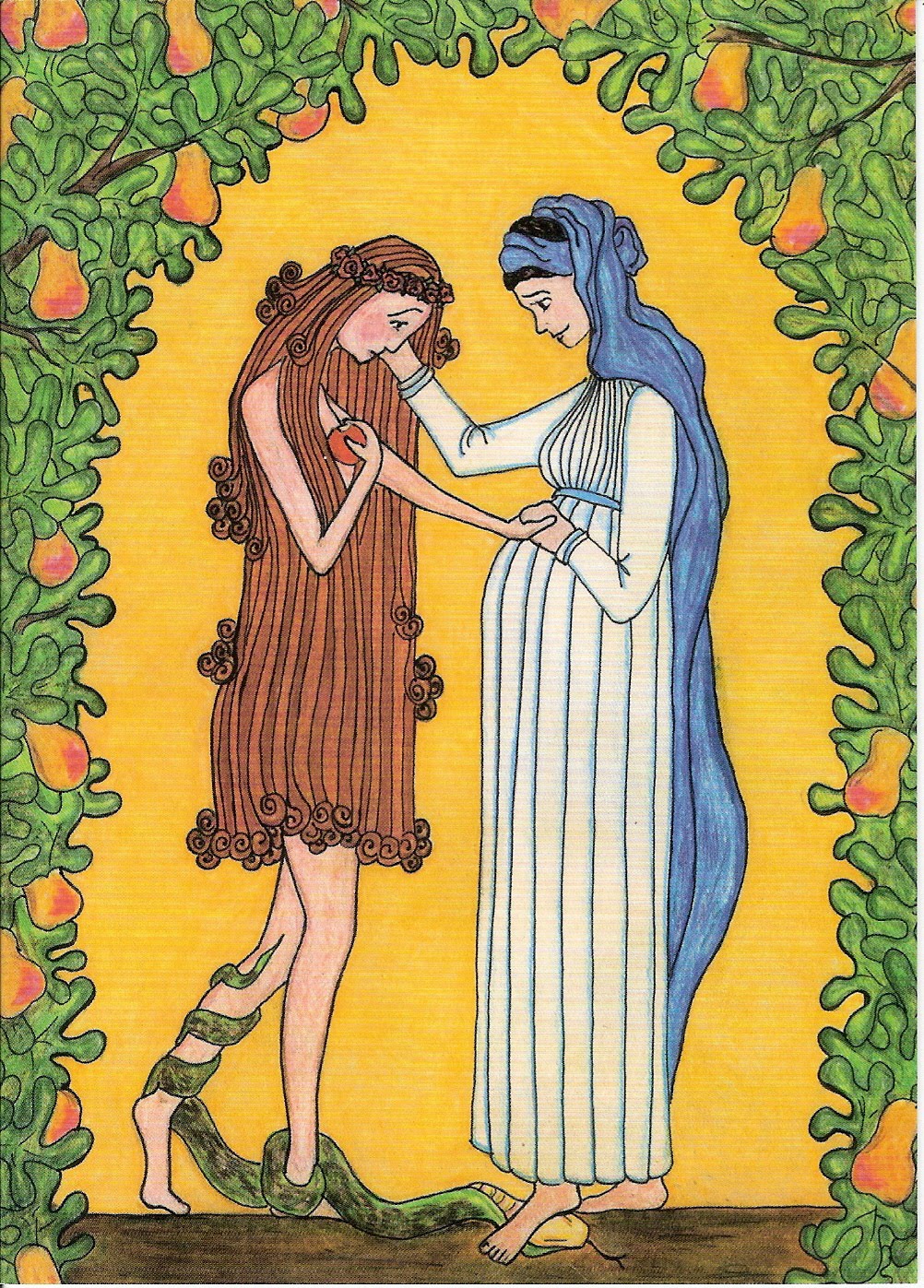
Mary Comforts Eve

At his Last Supper, Jesus demonstrated his servanthood by washing his disciples’ feet.[vi] He clearly taught the principle of humble submission.

Now there was also a dispute among them, as to which of them should be considered the greatest. And He said to them, “The kings of the Gentiles exercise lordship over them, and those who exercise authority over them are called ‘benefactors.’ But not so among you; on the contrary, he who is greatest among you, let him be as the younger, and he who governs as he who serves. For who is
greater, he who sits at the table, or he who serves? Is it not he who sits at the table? Yet I am among you as the One who serves.
“But you are those who have continued with Me in My trials. And I bestow upon you a kingdom, just as My Father bestowed one upon Me, that you may eat and drink at My table in My kingdom, and sit on thrones judging the twelve tribes of Israel
” (Luke 22:24-29, NKJV).

How will we defeat and disarm Satan and lay waste to his kingdom? It will not happen through mere political engagement. That is not the route Jesus took. That political rabbit hole is the devil’s lair. We are intruding on Satan’s turf when we head down that hole, and he knows how to fight and win down there. He has been doing it for thousands of years.

We win by using the same tactics as Jesus. It is the surrendered life that wins battles in the spiritual realm. It is the life surrendered to the will of the Father that prepares the way for salvation and world-transforming revival.


[i] Dr. Martin Luther’s Small Catechism, A Handbook of Christian Doctrine, Concordia Publishing House, Saint Louis, Missouri, P. 64

[ii] John 8:44

[iii] For a thorough play-by-play account of the trial and crucifixion of Christ, and the political machinations of Herod Antipas, Joseph Caiaphas, and Pontius Pilate read The Soldier Who Killed a King by David Kitz, Kregel Publications, 1917.

[iv] Matthew 11:11

[v] Philippians 2:5-11

[vi] John 13:1-17

This is the fifteenth weekly excerpt from the award-winning book 
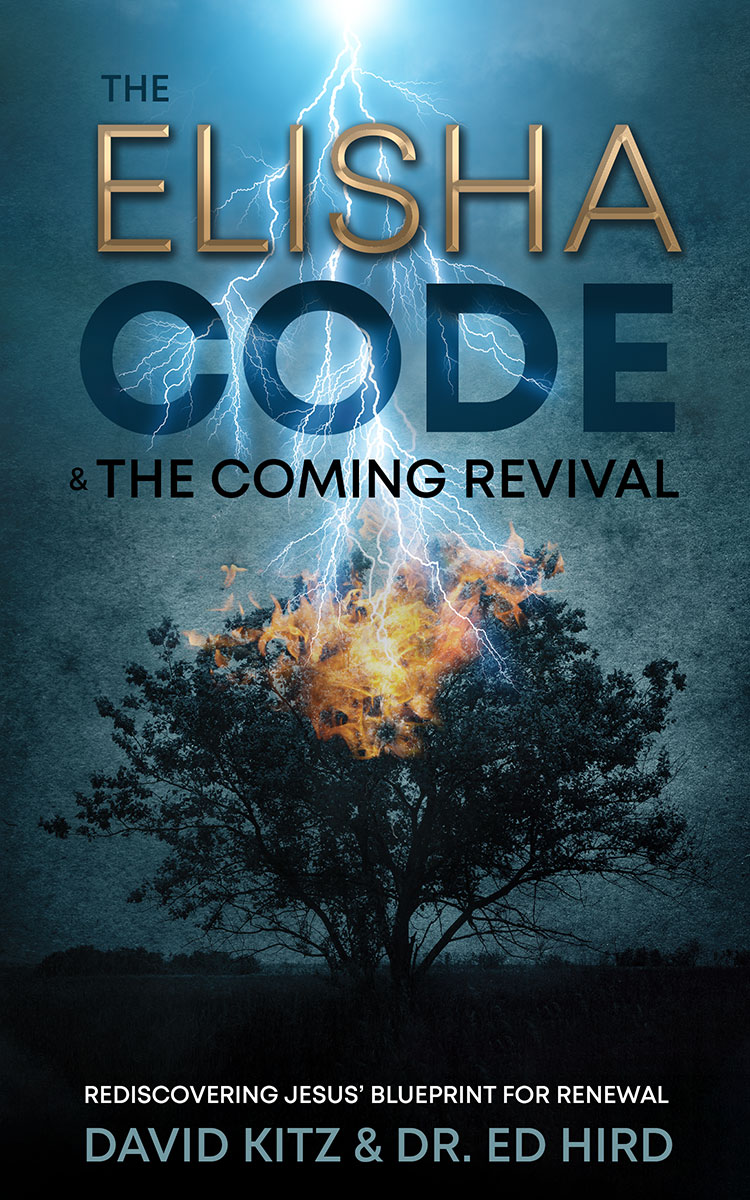
The Elisha Code & the Coming Revival 

A soul-gripping read.
Is a return-to-Jesus revival possible in our time?
This book points the way forward.
For details click here.

A Call for the Miraculous

02 Sunday Nov 2025

Posted by davidkitz in The Elisha Code

≈ 6 Comments

Tags

AB Simpson, Aimee Semple McPherson, faith, faith in Christ, Foursquare Church, God's grace, gospel, healing, Jesus, miracles, miraculous, Prayer, revival, salvation, scriptures

“And these signs will accompany those who believe:
In my name they will drive out demons;
 

they will speak in new tongues; 
they will pick up snakes with their hands;
and when they drink deadly poison, it will not hurt them at all;
they will place their hands on
 
sick people, and they will get well.”
(Mark 16:17-18, NIV)

More Autumn glory — photo by David Kitz

What will it take to turn this nation and the world to faith in Jesus Christ? That question should set us on a Holy Spirit driven quest to see a world-changing, Book-of-Acts revival take place in our time.

There are those within the church who argue the age of miracles ended with the death of the original apostles. But those who hold such a view are not being true to the Scriptures, or the historical record of the church down through the ages.

Have you noticed that most revivals in the last hundred years involved a renewed emphasis on the healing ministry? Many denominations have functionally delegated the healing ministry to the wastebin of New Testament history. Sorry, they might say, this is the wrong dispensation to get healed. Jesus does not do that anymore. Spiritual gifts like prophecy, tongues, and healing have all ceased since the publishing of the New Testament. If you are sick, all that is left is to go to your medical doctor and hope for the best. “If it be your will” prayers have become the dominant way of praying for the sick. Perhaps God nowadays wants us sick rather than whole.

Aimee Semple McPherson and AB Simpson were two Ontario-raised Canadians who challenged that assumption. Both asserted that spiritual gifts are still available today, including the gifts of healing. While both valued the role of medical doctors, they helped many discover that Jesus Christ our healer is the same yesterday, today, and forever (Hebrews 13:8). Both asserted that this is not the wrong dispensation to get healed by Jesus. He is still willing and able to heal the sick in body, mind, and spirit.

Both Semple McPherson and AB Simpson helped people rediscover the prayer of faith in James 5:15 where we read that if anyone is sick, they are to call the elders who will lay hands on them, anoint them with oil, and exercising the prayer of faith will heal the sick. They will be restored to health. By confessing their sins one to another and praying for each other (sins like rage, unforgiveness, bitterness, self-hatred), many were healed. In the healing revival, it was noticed that people were often healed first spiritually and emotionally. The outer physical healings often naturally followed the inner healings.

Albert Benjamin Simpson was born on Prince Edward Island on December 15th, 1843, of Scottish Covenanter heritage.  His family had emigrated from Morayshire, Scotland to Bayview, P.E.I. After the collapse of his father’s shipbuilding business in the 1840’s depression, his family moved from P.E.I. to a farm in western Ontario.

Fresh out of seminary in 1865, Simpson had accepted the call to pastor Knox Church in Hamilton, a congregation with the second largest Presbyterian church building in Canada. Over the next eight years, 750 new people joined the congregation.

But AB Simpson had been such a workaholic that he destroyed his health.  In 1881, his medical doctor gave him just three months to live.  But upon meeting an Episcopalian (Anglican) physician, Dr. Charles Cullis, at Old Orchard Camp in Maine, he experienced a remarkable healing of his near-fatal heart condition. His restoration to health was so complete that the next day, Simpson was able to climb a 3,000-foot mountain, and then successfully pray for his daughter Margaret’s healing from diphtheria. This was the very disease which had earlier killed his son Melville.

Simpson believed that Jesus Christ is still healing people today (Hebrew 13:8). His first of many books was fittingly called The Gospel of Healing.

Word spread fast regarding these healings. He was inundated by many with pleas for help. By others, he was vilified and ridiculed as another quack miracle worker. Simpson started Friday afternoon healing & holiness meetings, which quickly became New York City’s largest attended spiritual weekday meeting, with 500 to 1,000 in attendance. He even turned his own house into a healing home where people could come for prayer ministry.

Simpson, as founder of the Christian & Missionary Alliance, brought together four separate movements into one alliance (1) missions and evangelism (2) healing (3) holiness, and (4) Jesus’ Second Coming. His four-fold gospel emphasized “Christ our Saviour, Sanctifier, Healer and Coming King.”  Simpson saw that the healing ministry as vital in the fulfillment of the Great Commission to make disciples of all nations.

Few people nowadays realize that Aimee Semple McPherson[i] was the most famous North American woman in the1920s. How is it a Canadian farm girl came to have a lasting impact on the lives of millions around the world?

Aimee Semple McPherson

Growing up on a farm near Salford, Ontario, Aimee was raised in the Salvation Army by her mother.

At age 17, Aimee said, “Lord, I’ll never eat or sleep again until you fill me with the Spirit of power.”

Having been touched by the Spirit, she married the visiting evangelist, Robert Semple. They promptly went to China as missionaries. But within months of their arrival in Hong Kong, her husband died after they both contracted malaria. Aimee came back to North America in 1912 as a broken woman, a widow, and a single mother of a daughter from her brief marriage.

She wrote: “I had come home from China like a wounded little bird, and my bleeding heart was constantly pierced with curious questions from well-meaning people.”[ii]

Remarrying on the rebound to the practical Harold McPherson, she tried unsuccessfully to be the traditional stay-at-home housewife her new husband wanted. It almost killed her. After ending up in hospital, and near death, God told her to go back preaching. She said yes to her calling and was instantly healed.

Leaving that night with her two children, she began preaching in Canada. At her first meetings, only two men and a boy turned up for the first four days. Then, after miraculous healings broke out, the curious crowds appeared.

“My healings?” said Aimee, “I do nothing. If the eyes of the people are on me, nothing will happen. I pray and believe with others, who pray and believe, and the power of Christ works the miracle.”

The next step was travel to the West Coast. Aimee and her mom, Minnie Kennedy, became the first women to drive alone across North America on uncharted roads. After relocating to Los Angeles, Aimee became as well-known as Charlie Chaplain, Harry Houdini, and even President Teddy Roosevelt.

In the 1920s, the sheer numbers of medically verified healings at her services was astounding. This included the wheelchair-bound being able to walk, the blind able to see, the deaf hearing, and tumors disappearing.

Angeles Temple

On January 1st, 1923, Aimee Semple McPherson opened her headquarters church in Los Angeles, the 5,300 seat Angeles Temple. A typical Sunday would see Aimee preaching three services to a full house, while tens of thousands more listened on radio. Her influence on the culture of southern California was so profound that linguists attribute the present-day southern California accent to the impact she had on the language. In those formative years, so many heard her voice in person and via radio that she shaped the pronunciation and syntax of daily speech of that region.

One month after opening Angeles Temple, Aimee started L.I.F.E Bible College which soon attracted 1,000 students. Many of those students became Foursquare pastors and missionaries who spread the Foursquare Gospel around the globe.

Like AB Simpson, Aimee proclaimed a fourfold gospel message centered on Jesus—Jesus as Savior, Healer, Baptizer with the Holy Spirit, and coming King. She called this the Foursquare Gospel and founded the denomination by that name.

Her legacy remains and flourishes. Today, there are 44,000 Foursquare Gospel churches in 143 countries around the world, and through the ministry of those churches, a million new believers committed their lives to Christ in the last calendar year.

But as we know, each new generation needs to discover the scope and power of the gospel for themselves. We cannot live on our parents’ faith. We must experience God’s grace firsthand. Undoubtedly, it was for this reason that Jude begins his epistle with these words:

Dear friends, although I was very eager to write to you about the salvation we share, I felt compelled to write and urge you to contend for the faith that was once for all entrusted to God’s holy people (Jude 1:3, NIV).

Are we contending for the faith that was entrusted to us by the apostles? It is a faith that moved mountains of doubt, fear, and disability and cast them into the sea. It is a faith that healed the sick, restored the crippled, and raised the widow Tabatha from her deathbed.[iii] Are we contending for that kind of world-shaking, bondage-breaking faith?

Photo by Jill Wellington on Pexels.com

The following testimony from evangelist R. W. Shambach illustrates the power of supernatural healing in bringing the lost to faith in Christ. Shambach made his first trip to India in 1956. He was gripped by the poverty and misery he saw in the marketplaces, and by the many he saw who were sick, crippled, and blind.

On that opening day, I preached for two hours, and my interpreter translated for two hours—for a total of four hours. They wanted me to go on. When I gave the altar call, I was so disappointed. I had preached to 50,000 people, and not one soul had come to accept Jesus.

Although no one came forward to accept Christ, and the crowd was obviously ready for the benediction, I said, “I am not done now. God says that signs follow His Word. I did what God called me to do. Now I am going to let God do what He said He was going to do.”

I invited three people from the audience to come forward—they were beggars. I knew who they were. One was blind, one was deaf and dumb, and the other was a crippled woman who had never walked upright.

Fifty thousand people were watching.


They were all healed.


Do you know what happened? The people in that crowd started jumping out of trees, and a mob came running towards me… I never saw such an onslaught of people. They were yelling something at the top of their voice. I asked my interpreter, “What are they saying?”

He said, “They are hollering, ‘Jesus is alive. Jesus is the Christ. Jesus is God.’ They are coming to get saved.”
What a thrill! Not one of them came when I preached, but when they saw the demonstration of the Gospel, they came.

God has called the Church to demonstrate His power.
Aren’t you glad He is alive today?[iv]

What will it take to turn this nation and the world to faith in Jesus Christ? Many are blind and hostile to God and the message of the gospel. The only thing that will open their eyes to the reality of Christ’s love is a demonstration of the Lord’s supernatural healing power.

Paul knew the importance of the miraculous in his ministry to the lost of his time.

 I came to you in weakness with great fear and trembling. My message and my preaching were not with wise and persuasive words, but with a demonstration of the Spirit’s power, so that your faith might not rest on human wisdom, but on God’s power (1 Corinthians 2:3-5, NIV).

Is the gospel message we are presenting just wise and persuasive words? To be truly biblical our message needs to be rooted in a demonstration of the Spirit’s power.

Healing and the miraculous are an integral part of the Elisha Code. Let’s not miss out on this key to future revivals.

[i] For a complete picture of the life and ministry of Aimee Semple McPherson see Sister Aimee by Daniel Mark Epstein, Harcourt Brace & Company.

[ii] “The Story of My Life”, Aimee Semple McPherson, Foursquare Crusader, September 7, 1927, Page 6.

[iii] Acts 28:8-9, Acts 3:1-10, Acts 9:32-43

[iv] Excerpt From “Miracles: Eyewitness to the Miraculous” by R. W. Schambach, 1969.

This is the eighth weekly excerpt from the award-winning book 
The Elisha Code & the Coming Revival 

A soul-gripping read.
Is a return-to-Jesus revival possible in our time?
This book points the way forward.
For details click here.

The Fire on the Road to Emmaus

21 Sunday Sep 2025

Posted by davidkitz in The Elisha Code

≈ 2 Comments

Tags

bread, breaking bread, Christ's teaching, David Kitz, disciples, fire, Holy Spirit, Jesus, Messiah, New Testament, Old Testament, Road to Emmaus, scriptures

And they said to one another,
“Did not our heart burn within us while He talked with us on the road,
and while He opened the Scriptures to us?”
 (Luke 24:32, NKJV)

Is there a conversation in the Bible, that you wish you could listen in on? How about the conversation between Mary and Joseph when she announces she is pregnant? What about the discussion the disciples had after Jesus stilled the storm on the Sea of Galilee? Or that night when Peter got out of the boat and began walking on the water? Oh, to have been there—to have seen the disciple’s astonishment and have heard their words!

Luke tells us of a conversation two downcast Jesus-followers had on the road to Emmaus on the afternoon of the first resurrection Sunday.

So it was, while they conversed and reasoned, that Jesus Himself drew near and went with them. But their eyes were restrained, so that they did not know Him.

And He said to them, “What kind of conversation is this that you have with one another as you walk and are sad?” (Luke 24:15-17, NKJV)

Jesus patiently listens as they speak of their dashed hopes and shattered dreams—dreams and hopes that ended with the crucifixion of the man they thought was the long-awaited Messiah. They go on to report that some of their women folk who had gone to his tomb had seen a vision of angels who announced this prophet from Nazareth was in fact alive. What were they to make of all this?

Then He said to them, “O foolish ones, and slow of heart to believe in all that the prophets have spoken! Ought not the Christ to have suffered these things and to enter into His glory?” And beginning at Moses and all the Prophets, He expounded to them in all the Scriptures the things concerning Himself (Luke 24:25-27, NKJV).  

Certainly, that was a conversation we all wish we could eavesdrop on. Specifically, what Scriptures did Jesus draw on as he expounded concerning Himself? Let’s keep in mind this was decades before any of the books of the New Testament canon were written.

The Word of God — photo by David Kitz

Surely, Jesus would have drawn on Isaiah 53 as he spoke of his suffering. What about the Psalms? Many of them resound with a prophetic Messianic ring.  To a degree, we can imagine what some of those Old Testament references might be. For example, we know that Peter quoted verbatim from both Psalm 16 and Psalm 110 in his first sermon on the day of Pentecost. (See Acts 2:25-28 and Acts 2:34-35.) Did Peter develop this understand concerning these prophetic Scriptures on his own, or were these passages an integral part of Christ’s teaching concerning himself during his post resurrection ministry? Were they part of the discussion on that eventful resurrection Sunday walk?  

Though the content of the Road to Emmaus discourse remains hidden from us, it is possible to tease out some of Christ’s teaching concerning himself and his ministry by examining other passages in both the New and Old Testament.

According to Luke, Cleopas and his companion were initially unable to recognize Jesus when he walked with them on the road. But their eyes were restrained, so that they did not know Him (Luke 24:16, NKJV).

Two disciples—men who had previously spent time with Jesus—were blind to their Lord and Savior. Why was this the case? Undoubtedly, Jesus looked different. A brutal death followed by a supernatural resurrection must have brought significant changes to his physical appearance. A lifelong friend or relative may look startlingly different after a severe trauma or illness. Surely, this accounts for some of the disciples’ inability to recognise Jesus.

But this inability to recognise Jesus extended beyond his physical appearance. It had a spiritual dimension. They were unable recognise that Jesus was the Christ—their long-awaited Messiah promised to them in their Scriptures. After all, this was what the conversation on the road was all about. It was Jesus revealing himself to these two men through the written Word of Moses and the Prophets.

Do we suffer from the same spiritual blindness? Do we need an eye-opening experience with the Lord and his Word? This lack of perception inhibits our walk with our Savior. We think we know the Word of God. But like these disciples of old, have our eyes been veiled as we read the Scriptures? Do we have a wrong set of expectations?

Many Christ-followers have never read the Old Testament—the first three quarters of their Bibles. Similarly, many Sunday sermons focus exclusively on texts drawn from the New Testament. How can we say we know the Word when we neglect the only Scriptures that Jesus knew and studied?

Something transpires when we immerse ourselves in God’s Word. Hearts and minds are transformed when the Word comes alive.

But let’s not fool ourselves. If we don’t understand the Word, or handle it incorrectly, we gain nothing. Worse yet, we deceive ourselves, pride inflates the mind, and we lead others astray. The Pharisees knew and followed the letter of the Law (the Word), but often they were devoid of the Spirit. The same self-deception can happen to us unless the Holy Spirit lights the way. Christ’s parable of the Sower and the seed plays out in real time to this present moment. The living word must root in us to bear fruit.

So, when did the light come on for Cleopas and his friend? When did recognition occur?

Now it came to pass, as He sat at the table with them, that He took bread, blessed and broke it, and gave it to them. Then their eyes were opened and they knew Him; and He vanished from their sight (Luke 24:30-31, NKJV).

Photo by Pixabay on Pexels.com

Jesus was recognized when he broke bread with these two disciples. In that moment, they had their most intimate view of the living Christ.

Imagine the scene as Jesus picks up the bread. For the first time his hands come into full view. They gasp—awestruck at the sight of the nail scars. Who else could this be? It must be but their Savior! He offers thanks to his Father. With wounded hands, he tears the loaf and offers them a portion.

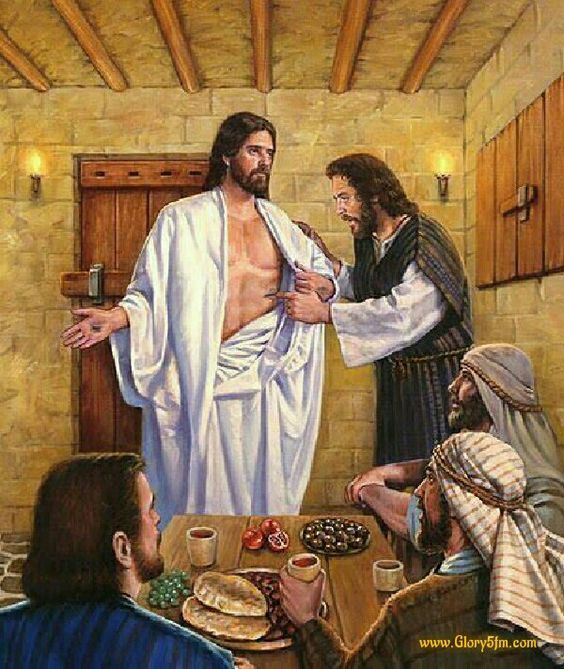
Like Thomas, who had a similar encounter nine days later, they are beyond astonished. Imagine them humbled—dropping to their knees before their Lord.

And then he is gone.

Only one thing remains. The fire remains. It remains within them.

And they said to one another, “Did not our heart burn within us while He talked with us on the road, and while He opened the Scriptures to us?” (Luke 24:32, NKJV)

It’s the same fire we must catch. The match was struck on the road to Emmaus. In the hearts of these two disciples, dying embers of hope began to glow as Jesus opened the Scriptures. Fifty days later, those embers would burst into open flame on the Day of Pentecost.

And suddenly there came a sound from heaven, as of a rushing mighty wind, and it filled the whole house where they were sitting. Then there appeared to them divided tongues, as of fire, and one sat upon each of them. And they were all filled with the Holy Spirit and began to speak with other tongues, as the Spirit gave them utterance (Acts 2:2-4, NKJV).

Are you ready to catch the fire?

This is the third weekly excerpt from the award-winning book 
The Elisha Code & the Coming Revival 

A soul-gripping read.
Is a return-to-Jesus revival possible in our time?
This book points the way forward.
For details click here.

The Messiah Had to Suffer

27 Friday Jun 2025

Posted by davidkitz in Psalm 119, Psalms

≈ 2 Comments

Tags

Jesus, Messiah, Moses, Prayer, prophets, Psalms, scriptures, word of God, worship

Today’s quote and prayer from
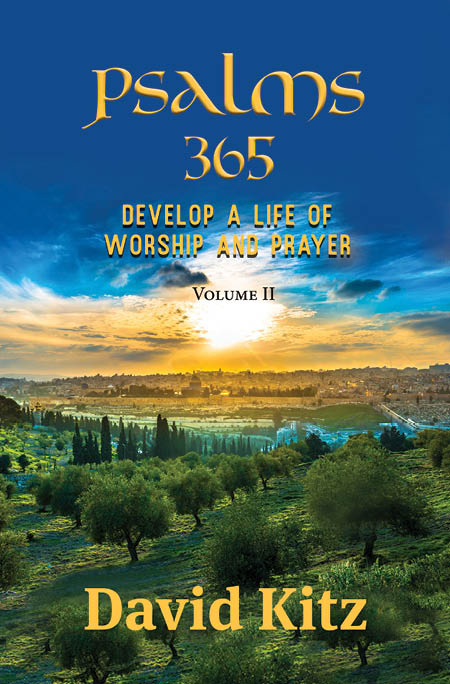
“Psalms 365: Develop a Life of Worship and Prayer”
by David Kitz.


Reading: Psalm 119:33-40

Father God,
I want to see you.
Open my eyes to your wonders around me.
Teach me your ways
in practical life altering steps
that draw me close to you.
Open your Word to me.
Amen.

— — — —

He [Jesus] said to them, 
“How foolish you are,
and how slow to believe all
that the prophets have spoken!

Did not the Messiah have to suffer these things
and then enter his glory?”

And beginning with Moses 
and all the Prophets, 
he [Jesus] explained to them
what was said in all the Scriptures
concerning himself.
(Luke 24:30-32 NIV)*

Para la publicación de Salmos 365 de hoy en español haga clic aquí.

bgbg_v4.3_1501818
* NEW INTERNATIONAL VERSION, COPYRIGHT ©1973, 1978, 1984, 2011 BY BIBLICA

Please pray for peace to return to Israel, Gaza, Iran, and Ukraine!

Volume I of Psalms 365: Develop a Life of Worship and Prayer won the Best Book of the Year Award from The Word Guild and Volume II has won the Best Devotional of the Year Award. For those who love God’s word, this three-book series is an ideal way to daily meet with the Lord. To purchase or for a closer look click here.

A gripping read from David Kitz.
Is a return-to-Jesus revival possible in our time?
This book points the way forward.
For details click here.

He Opened the Scriptures to Us

25 Wednesday Jun 2025

Posted by davidkitz in Psalm 119

≈ 1 Comment

Tags

Jesus, Prayer, Psalms, scriptures, spiritual blindness, spiritual vision, the LORD, word of God

Today’s quote and prayer from
“Psalms 365: Develop a Life of Worship and Prayer”
by David Kitz.


Reading: Psalm 119:17-24

Father God,
open my eyes and my heart
to the truths of your glorious word.
Day by day,
I want to grow in my knowledge
and love for you.
I need to be transformed by your Spirit.
Remove the veil from my eyes.
I pray in Jesus’ name.
Amen.

— — — —

 When he [Jesus] was at the table with them,
he took bread, gave thanks,
broke it and began to give it to them.
Then their eyes were opened
and they recognized him,
and he disappeared from their sight.

They asked each other,
“Were not our hearts burning within us
while he talked with us on the road
and opened the Scriptures to us?”
(Luke 24:30-32 NIV)*

Para la publicación de Salmos 365 de hoy en español haga clic aquí.

bgbg_v4.3_1501818
* NEW INTERNATIONAL VERSION, COPYRIGHT ©1973, 1978, 1984, 2011 BY BIBLICA

Please pray for peace to return to Israel, Gaza, Iran, and Ukraine!

Volume I of Psalms 365: Develop a Life of Worship and Prayer won the Best Book of the Year Award from The Word Guild and Volume II has won the Best Devotional of the Year Award. For those who love God’s word, this three-book series is an ideal way to daily meet with the Lord. To purchase or for a closer look click here.

A gripping read from David Kitz.
Is a return-to-Jesus revival possible in our time?
This book points the way forward.
For details click here.

Peace Be with You

20 Sunday Apr 2025

Posted by davidkitz in Easter Sunday

≈ Leave a comment

Tags

Bible, Christianity, faith, ghost, God, Jesus, joy, Messiah, praise the LORD, proof of the resurrection, prophets, Psalms, scriptures

I will praise the LORD!

Luke 24:1-12

Jesus Appears to the Disciples

While they were still talking about this,
Jesus himself stood among them
and said to them,
“Peace be with you.”

They were startled and frightened,
thinking they saw a ghost.
He said to them,
“Why are you troubled,
and why do doubts rise in your minds?

Look at my hands and my feet.
It is I myself!
Touch me and see;
a ghost does not have flesh and bones,
as you see I have.”

When he had said this,
he showed them his hands and feet.
 
And while they still did not believe it
because of joy and amazement,
he asked them,
“Do you have anything here to eat?”
They gave him a piece of broiled fish,
and he took it and ate it in their presence.

He said to them,
“This is what I told you
while I was still with you:
Everything must be fulfilled
that is written about me in the Law of Moses,
the Prophets and the Psalms.”

Then he opened their minds
so they could understand the Scriptures.
 
He told them,
“This is what is written:
The Messiah will suffer
and rise from the dead on the third day,

and repentance for the forgiveness of sins
will be preached in his name to all nations,
beginning at Jerusalem.

You are witnesses of these things.
I am going to send you
what my Father has promised;
but stay in the city
until you have been clothed
with power from on high.”
 
*

Para la publicación de Salmos 365 de hoy en español haga clic aquí.

bgbg_v4.3_1501818
* NEW INTERNATIONAL VERSION, COPYRIGHT ©1973, 1978, 1984, 2011 BY BIBLICA

Please pray for peace to return to Israel, Gaza, and Ukraine!

Volume I of Psalms 365: Develop a Life of Worship and Prayer won the Best Book of the Year Award from The Word Guild and Volume II has won the Best Devotional of the Year Award. For those who love God’s word, this three-book series is an ideal way to begin the new year, and daily meet with the Lord. To purchase or for a closer look click here.

RGB72PsalmsVol2

A gripping read from David Kitz.
4485 SHARABLE-2

This biblically accurate novel is ideal for the Lent/Easter season.
For details click here.

Of First Importance

29 Tuesday Oct 2024

Posted by davidkitz in Psalm 47, Psalms

≈ Leave a comment

Tags

apostles, Christ's victory, Jesus, Prayer, Psalms, scriptures, victory over death

Today’s quote and prayer from
“Psalms 365: Develop a Life of Worship and Prayer”
by David Kitz.Psalm 47_6-7

Reading: Psalm 47

LORD God,
I thank you for the victory of Jesus!
He is my forerunner.
Help me to live and reign
through Him in my life
today and forever.

Amen.

— — —

For what I received I passed on to you
as of first importance:
that Christ died for our sins
according to the Scriptures,

that he was buried,
that he was raised on the third day
according to the Scriptures,

and that he appeared to Cephas,
and then to the Twelve.

After that,
he appeared to more than five hundred
of the brothers and sisters at the same time,
most of whom are still living,
though some have fallen asleep.

Then he appeared to James,
then to all the apostles,

and last of all he appeared to me also,
as to one abnormally born.

(1 Corinthians 15:3-8), NIV)*

Para la publicación de Salmos 365 de hoy en español haga clic aquí.

bgbg_v4.3_1501818
* NEW INTERNATIONAL VERSION, COPYRIGHT ©1973, 1978, 1984, 2011 BY BIBLICA

Please pray for peace to return to Israel, Gaza, and Ukraine!

Volume I of Psalms 365: Develop a Life of Worship and Prayer won the Best Book of the Year Award from The Word Guild and Volume II has won the Best Devotional of the Year Award. For those who love God’s word, this three-book series is an ideal way to daily meet with the Lord. To purchase or for a closer look click here.

New from David Kitz
Winner of the 2024 Word Award of Merit in Biblical Studies
TheElishaCodeCVR5

To purchase or for a closer look click here.

Clothed with Power

16 Wednesday Oct 2024

Posted by davidkitz in Psalm 42, Psalms

≈ Leave a comment

Tags

clothed, downcast, forgiveness of sins, Jesus, Messiah, repentance, Savior, scriptures

Today’s quote and prayer from
“Psalms 365: Develop a Life of Worship and Prayer”
by David Kitz.
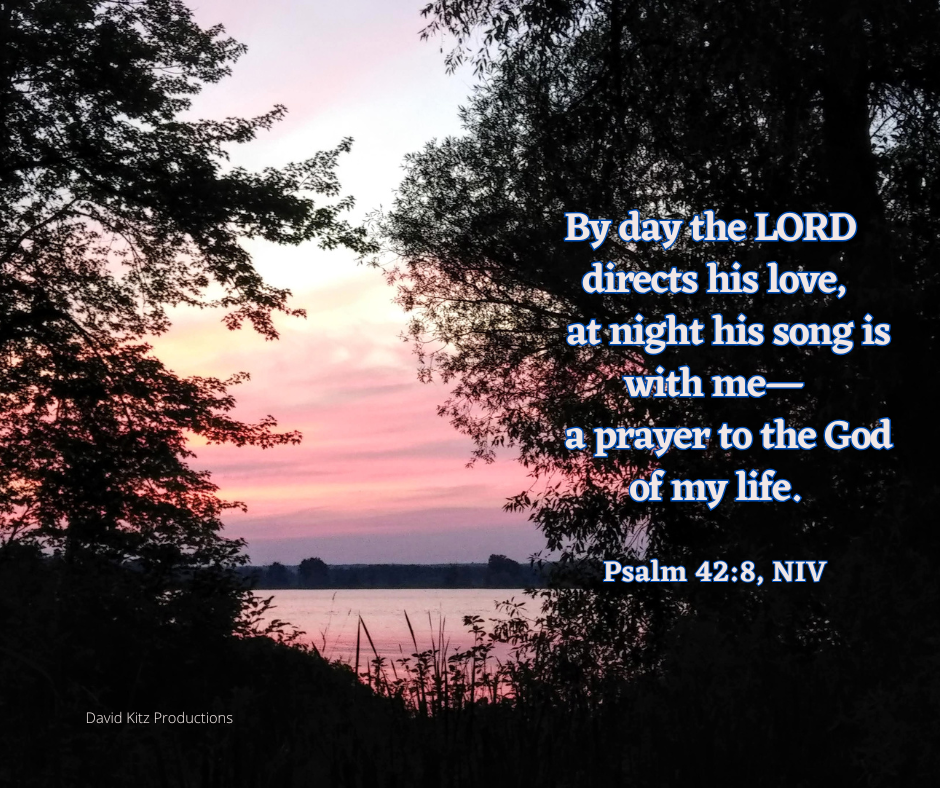
Psalm 42_8

Reading: Psalm 42:6-11

LORD God,
I thank you for Jesus.
He is the helper of the downcast.
I am thankful he willingly laid down his life
so I could be forgiven
and experience new life.
I put my hope in my Savior and my God.
Hallelujah!

Amen.

— — —

Then he [Jesus] opened their minds
so they could understand the Scriptures.
 
He told them,
“This is what is written:
The Messiah will suffer
and rise from the dead on the third day,

and repentance for the forgiveness of sins
will be preached in his name to all nations,
beginning at Jerusalem.

You are witnesses of these things.
I am going to send you what my Father has promised;
but stay in the city until you have been clothed
with power from on high.”
(Luke 24:45-49), NIV)*

Para la publicación de Salmos 365 de hoy en español haga clic aquí.

* NEW INTERNATIONAL VERSION, COPYRIGHT ©1973, 1978, 1984, 2011 BY BIBLICA

Please pray for peace to return to Israel, Gaza, and Ukraine!

Volume I of Psalms 365: Develop a Life of Worship and Prayer won the Best Book of the Year Award from The Word Guild and Volume II has won the Best Devotional of the Year Award. For those who love God’s word, this three-book series is an ideal way to daily meet with the Lord. To purchase or for a closer look click here.

New from David Kitz
Winner of the 2024 Word Award of Merit in Biblical Studies
TheElishaCodeCVR5

To purchase or for a closer look click here.

Reaching the Limits of Perfection

13 Tuesday Feb 2024

Posted by davidkitz in Psalm 119

≈ 4 Comments

Tags

art, eternal, God's word, perfection, Psalm 119, Psalms, scriptures, wisdom of God

Reading: Psalm 119:89-96
ל Lamedh
Your word, LORD, is eternal;
it stands firm in the heavens.
Your faithfulness continues through all generations;
you established the earth, and it endures.
Your laws endure to this day,
for all things serve you.
If your law had not been my delight,
I would have perished in my affliction.
 I will never forget your precepts,
for by them you have preserved my life.
Save me, for I am yours;
I have sought out your precepts.
The wicked are waiting to destroy me,
but I will ponder your statutes.
To all perfection I see a limit,
but your commands are boundless
(NIV). *

img_20231004_1014230

Gatineau Park vista — God’s art work — photo by David Kitz

Reflection
One of my hobbies is art. I enjoy drawing. In recent years, I have rediscovered my childhood love for pencil crayons. When creating any piece of art, I find there is a delicate balance that needs to be reached. Anything I do can be improved. Early in the process there is a lot of improving or refining needed, but eventually you reach a point where further tinkering becomes pointless. I aim for perfection, but perfection always seems illusive. At some point I need to say, “I’m done. This piece is finished.”

In today’s reading the psalmist reached that same conclusion. To all perfection I see a limit, but your commands are boundless.

We will never reach the limits of God’s holy Word. There is always more to be discovered, to comprehend and apply. It is as the psalmist declares, “Your word, LORD, is eternal; it stands firm in the heavens.”

St. Paul expresses the same thought. Oh, the depth of the riches of the wisdom and knowledge of God! How unsearchable his judgments, and his paths beyond tracing out! (Romans 11:33). Eternity gives us insufficient time to explore the wisdom of God. But let’s begin the quest; let’s take up the challenge. All of Psalm 119 can be viewed as a grand challenge to discover the wisdom and beauty of God’s Word, His commands, and precepts.

Let’s continue the journey. This glorious art—the divine art of God’s Word—is without beginning or end.

Response: Father God, I love your word. I want to dig deeper in it and know you better thereby. You are a totally awesome God, far beyond my comprehension, but not beyond my appreciation. Amen.

Your Turn: Have you taken up the challenge to study God’s Word? When is the best time for you to read and study the Scriptures?

* NEW INTERNATIONAL VERSION, COPYRIGHT ©1973, 1978, 1984, 2011 BY BIBLICA

BGBG_v4.3_150[1818]

Please pray for peace to return to Israel, Gaza, and Ukraine!

Volume I of Psalms 365: Develop a Life of Worship and Prayer won the Best Book of the Year Award from The Word Guild and Volume II has won the Best Devotional of the Year Award. For those who love God’s word, this three-book series is an ideal way to daily meet with the Lord. To purchase or for a closer look click here.TheElishaCodeCVR5

To purchase or for a closer look click here.

He Opened Their Minds

09 Sunday Apr 2023

Posted by davidkitz in Easter Sunday

≈ Leave a comment

Tags

ghost, Jesus, joy, Messiah, scriptures

 While they were still talking about this, Jesus himself stood among them and said to them, “Peace be with you.”

They were startled and frightened, thinking they saw a ghost. He said to them, “Why are you troubled, and why do doubts rise in your minds? Look at my hands and my feet. It is I myself! Touch me and see; a ghost does not have flesh and bones, as you see I have.”
Jesus & Thomas

When he had said this, he showed them his hands and feet. And while they still did not believe it because of joy and amazement, he asked them, “Do you have anything here to eat?” They gave him a piece of broiled fish, and he took it and ate it in their presence.

He said to them, “This is what I told you while I was still with you: Everything must be fulfilled that is written about me in the Law of Moses, the Prophets and the Psalms.”

Then he opened their minds so they could understand the Scriptures. He told them, “This is what is written: The Messiah will suffer and rise from the dead on the third day, and repentance for the forgiveness of sins will be preached in his name to all nations, beginning at Jerusalem. You are witnesses of these things. I am going to send you what my Father has promised; but stay in the city until you have been clothed with power from on high” (Luke 24:36-49, NIV).

← Older posts

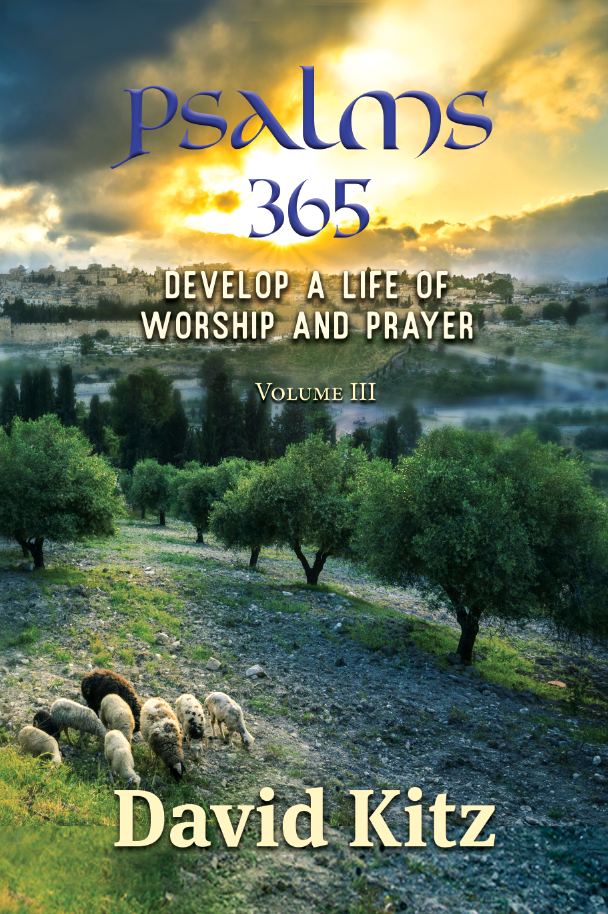
Psalms 365: Develop a Life of Worship and Prayer

Psalms 365 Volume II

Psalms 365 vol 3
— Psalms 365 Volume III

Psalms

Recent posts

  • The Need for a Place of Refuge January 9, 2026
  • David Dances before the LORD January 8, 2026
  • The God of Turn-Arounds January 8, 2026
  • The LORD Who Heals You January 7, 2026
  • Why Praise God? January 7, 2026
  • I Give You My Peace January 6, 2026
  • Peace within the Storm January 6, 2026

Calendar

January 2026
M T W T F S S
 1234
567891011
12131415161718
19202122232425
262728293031  
« Dec    

Blog Posts

Comments

  • davidkitz on The Ultimate Come from Behind Victory  
  • cjsmissionaryminister on Preparing a Landing Strip for the Holy Spirit
  • cjsmissionaryminister on The Ultimate Come from Behind Victory  

Blog at WordPress.com.

Privacy & Cookies: This site uses cookies. By continuing to use this website, you agree to their use.
To find out more, including how to control cookies, see here: Cookie Policy
  • Subscribe Subscribed
    • I love the Psalms
    • Join 1,381 other subscribers
    • Already have a WordPress.com account? Log in now.
    • I love the Psalms
    • Subscribe Subscribed
    • Sign up
    • Log in
    • Report this content
    • View site in Reader
    • Manage subscriptions
    • Collapse this bar
 

Loading Comments...