• Home
  • About
  • DavidKitz.ca
  • Youtube Videos
  • Books by David
  • Books on Amazon.com

I love the Psalms

~ Connecting daily with God through the Psalms

I love the Psalms

Tag Archives: kingdom

The Unfailing Love of the LORD

13 Tuesday Aug 2019

Posted by davidkitz in Devotionals, Psalm 94, Psalms

≈ 1 Comment

Tags

anxiety, corruption, election, king, kingdom, political leaders

Reading: Psalm 94
(Verses 16-23)
Who will rise up for me against the wicked?
Who will take a stand for me against evildoers?
Unless the L
ORD had given me help,
I would soon have dwelt in the silence of death.
When I said, “My foot is slipping,”
your unfailing love, L
ORD, supported me.
When anxiety was great within me,
your consolation brought me joy.
Can a corrupt throne be allied with you—
a throne that brings on misery by its decrees?
The wicked band together against the righteous
and condemn the innocent to death.
But the L
ORD has become my fortress,
and my God the rock in whom I take refuge.
He will repay them for their sins
and destroy them for their wickedness;
the L
ORD our God will destroy them (NIV).

img_20190805_0712464

Early morning calm, Petrie Island Park — photo by David Kitz

Reflection
Here is a question that is well worth asking at election time, or really at any time during the life of a nation: Can a corrupt throne be allied with you—a throne that brings on misery by its decrees?

Whatever your political persuasion, this is a question that has relevance. Corruption isn’t a problem that is unique to just one party. It transcends the political spectrum. Corruption and poorly designed laws or policies can bring misery to millions. According to the psalmist, it has happened in the past and as long as we live in a fallen world, it will continue into the future.

If we fix our eyes on the problems of this world, we can soon find ourselves in despair. Like the psalmist, in times of worry, we need to turn to the LORD. When I said, “My foot is slipping,” your unfailing love, LORD, supported me. When anxiety was great within me, your consolation brought me joy.

That’s the good news of the gospel. In times of anxiety we have someone to turn to. His name is Jesus. He was familiar with suffering and adversity. In Psalm 55 we read, “Cast your cares on the LORD and he will sustain you; he will never let the righteous be shaken” (Psalm 55:22). The apostle Peter reiterates the same thought: Cast all your anxiety on him [God] because he cares for you (1 Peter 5:7).

In times of trouble the unfailing love of the LORD will sustain you. In times of loss His consolation will bring you joy. That’s the promise of Psalm 94. It’s a promise that’s worth clinging to in good times and bad, and yes, even in election years.

Response: LORD God, I am so glad that first and foremost I live under your Kingdom rule. You are my King. I find unfailing love and consolation in knowing you. Guide the leaders of our land into paths of righteousness, wisdom and truth. Amen.

Your Turn: Are you facing adversity now? Are others supporting you in prayer?

Our Conquering Hero

08 Wednesday May 2019

Posted by davidkitz in Psalm 68, Psalms

≈ 3 Comments

Tags

citizenship, conquer, kingdom, triumph, triumphant, victorious

Reading: Psalm 68
(Verses 24-31)
Your procession, God, has come into view,
the procession of my God and King into the sanctuary.
In front are the singers, after them the musicians;
with them are the young women playing the timbrels.
Praise God in the great congregation;
praise the L
ORD in the assembly of Israel.
There is the little tribe of Benjamin, leading them,
there the great throng of Judah’s princes,
and there the princes of Zebulun and of Naphtali.
Summon your power, God;
show us your strength, our God, as you have done before.
Because of your temple at Jerusalem
kings will bring you gifts.
Rebuke the beast among the reeds,
the herd of bulls among the calves of the nations.
Humbled, may the beast bring bars of silver.
Scatter the nations who delight in war.
Envoys will come from Egypt;
Cush will submit herself to God
(NIV).

img_20190501_1412423

Red cross tulip — photo by David Kitz

Reflection
All of Psalm 68 is a hymn of triumph—national triumph. In today’s reading it is apparent that this psalm is a triumphant processional song penned by David. The enemies of Israel have been vanquished and God’s army has returned victorious. 

For Christians today, does this psalm hold a deeper significance? Does it signify more than a celebration after a military conquest?

The King we serve—the one born in a stable—didn’t come to establish an earthly kingdom by means of guns and war. In his defence before Pilate Jesus said, “My kingdom is not of this world. If it were, my servants would fight to prevent my arrest by the Jewish leaders. But now my kingdom is from another place” (John 18:36).

Make no mistake; Jesus calls us to be citizens in his heavenly Kingdom. It is a Kingdom that is headquartered in heaven, but its address on the earth is the human heart—your heart—my heart. Furthermore, that Kingdom grows in power and influence as we yield our will to God and joyfully become more like His son, Jesus. For followers of Jesus, battles are won as we submit our will to God.

There are nations—Egypt and Cush (the upper Nile region) are mentioned here—that will submit themselves to God. But for us today, submission must first come from our own stubborn heart.

Response: LORD God, I yield my will to you. Conquer my heart with your love. Through Jesus sacrifice on the cross I am yours. Help me to joyfully live as a productive citizen of your Kingdom on earth. Amen.

Your Turn: Have you been conquered by the love of God? Where is your primary citizenship?

Reading 30 for Lent from “The Soldier Who Killed a King”

04 Thursday Apr 2019

Posted by davidkitz in Lent, The Soldier Who Killed a King

≈ 1 Comment

Tags

Elijah, Jesus, kingdom, Son of God, the cross

A journey to the cross is a journey to repentance. It’s a journey to deep personal change. Will you take this journey with me?

Date: Three o’clock in the afternoon, Friday, April 7, 30A.D.
Jesus’ final moments on the cross.

Here is the obscenity of crucifixion. Naked men are unwillingly mated to two wooden beams. They must thrust the whole of their bodies upward in excruciating pain, ever- increasing pain to catch their next breath—until all strength is drained away. Then death steals in.
This is the shame of the cross. Here is the depravity—a profane sacrilege inflicted upon the human body.
The ghastly rhythm of it was driving me mad.
Then in soul- wrenching anguish, his voice erupted. “Eli, Eli, lema sabachthani?”
“What does that mean?” I cried out into the darkness.
From beyond the military cordon came the answer. “My God, my God, why have you forsaken me?”
He had broken. The Christ hung broken. The cross had broken him. He too was human. We were all together now, a great crowd caught up in this drama. There was no us and them. We were together. We were caught between heaven and hell in this dark, surreal atmosphere.
It was dreadful. Centur Rep
Someone frantically yelled, “It’s Elijah! He’s calling Elijah.”
Exhaling.
Mounting up.
Ever-heightening pain.
Catching a breath.
Retreating.
From on the Mother’s Hill, a wail went up. It was steady, constant, a wave of woe flowing over the dark scene.
Exhaling.
Mounting up.
Ever-heightening pain.
Catching a breath.
Retreating.
“Will Elijah come?” someone asked. “Will he come?” Many of the hostile were even now on bended knees. The cavalrymen dismounted.
Exhaling.
Mounting up.
Ever-heightening pain.
Catching a breath.
Retreating.
“I thirst!” the king called out.
Claudius leaped to his feet. There was a jar of wine off to one side. The soldiers had been drinking freely from this. He ran over to it and got a sponge. He dropped the sponge into the jar of wine and then skewered it with a long reed. This he held up to dampen the lips of the donkey king.
But some yelled out, “Wait! Let’s see if Elijah will come and save him.”
Exhale.
Mounting up.
Ever-heightening pain.
Catch a breath.
Retreat.
The rarified air crackled with anticipation.
Exhaling.
Mounting up.
Ever-heightening pain.
Catching a breath.
Retreating.
Can the Creator—the God of heaven and earth—save him now?
Exhaling.
Mounting up.
Ever-heightening pain.
Catching a breath.
Retreating.
“It is finished!” he cried.
But there was no anguish in his voice. There was the ring of victory to it, as if he had caught with that last breath a glimpse—a glimpse of his kingdom. A glorious kingdom! He had gained the summit. Now with vigor renewed, he pushed up and forward one last time.Free WWe SHARABLE-1 (2)
Exhaling.
Mounting up.
Ever- heightening pain.
Catching a breath.
Retreating.
“Father . . .
“Into your hands . . .
“I commit . . .
“My Spirit.”
His head dropped. It was over.
As his chin hit his chest, the earth began to rumble. Low thrumming. Building . . . building . . .
The rock Skull began to move beneath my feet. And with it, my soul.
I fell to the ground.
The crosses began to vibrate and rock with the power of the quake. His head bobbed from side to side.
But he was dead.
He was dead!
Everyone was with me on bended knees.
Heaven had rendered its dark judgment. The sun had hidden its face. The very earth had answered back. The verdict was in.
I caught two huge breaths of air, and then for the whole world to hear, I cried out, “He really was the Son of God.”
He was the Son of God.
The sun broke through.
A rooster crowed.

To download a free study guide for this high-impact, bible-based novel visit: https://www.davidkitz.ca/centurion.php/free study guide PDF

For book purchases of The Soldier Who Killed a King try Amazon or https://www.christianbook.com

Reading 23 for Lent from “The Soldier Who Killed a King”

28 Thursday Mar 2019

Posted by davidkitz in Lent, The Soldier Who Killed a King

≈ 1 Comment

Tags

Jesus, king of the Jews, kingdom, Lent, Pilate, repentance

A journey to the cross is a journey to repentance. It’s a journey to deep personal change. Will you take this journey with me?

Date: Six fifty in the morning, Friday, April 7 A.D.
Jesus trial before Pontius Pilate continues.

When we entered the judgment hall, the dark-eyed Badger was seething. He knew Caiaphas was using him. He had said so to the assessor. He let fly a string of profanity. “He has me trapped!” he snarled. “Trapped like a rat in a stone water jar.” And with that he tossed the list of charges onto his desk.
James ThtThen he turned to Jesus in the center of the room. He looked him over, walked fully around him. Pilate sighed and nervously ran his fingers through his thinning hair. He made a smacking sound with his lips and asked, “Are you the king of the Jews?”
“You have said so,” came his equivocal answer.
This answer left the governor rocking on his heels. He brought a finger to his lips in pensive thought.
Jesus was not making an acquittal any easier.
But after a moment Jesus continued. “Is that your own idea, or did others talk to you about me?”
“Am I a Jew?”
 Pilate shot back with an ample measure of haughty contempt. “Your own people and chief priests handed you over to me.” He continued the questioning. “What is it you have done?”
“My kingdom is not of this world,” Jesus said, and to drive home this point, he added, “If it were, my servants would fight to prevent my arrest by the Jewish leaders. But now my kingdom is from another place.”
Certain words that Claudius had spoken came echoing back into my mind. He had been convinced that this kingdom Jesus spoke of was somehow different from kingdoms as we know them. Now I heard it from this would-be Messiah’s mouth. He was no armed insurrectionist, and he had offered the actions of his followers as proof.
But Pilate seized on that word—kingdom. “You are a king, then!” Pilate deduced.
With calm, clear deliberation the prophet spoke. “You say that I am a king. In fact, the reason I was born and came into the world is to testify to the truth. Everyone on the side of truth listens to me.”
It almost seemed from this response that Jesus was operating from, and speaking on,Biblical fiction winner 2017 some higher plane—a dimension I had witnessed him operate from during the healings at the temple. He was inviting Pilate to join him in discovering this higher ground of truth.
Pilate would not be moved. They were speaking past each other.
“What is truth?” Pilate shrugged. The question was rhetorical. He had no intention of being dragged into a philosophical discussion with this prophet of the Jewish masses. Once again, the Badger retreated.
Grabbing the list of charges from off his desk, he motioned for us to follow him back outside.

To download a free study guide for this high-impact, bible-based novel visit: https://www.davidkitz.ca/centurion.php/free study guide PDF

For book purchases of The Soldier Who Killed a King try Amazon or https://www.christianbook.com

Zealous and Jealous Love

25 Wednesday Apr 2018

Posted by davidkitz in Bible, Devotionals, Psalm 105, Psalms

≈ Leave a comment

Tags

Abraham, anointed, Canaan, covenant, generations, inheritance, Isaac, Jacob, jealous, kingdom, prophet, the LORD, true love, zealous

Reading:                                   Psalm 105                                                    

(Verses 8-15)
He remembers his covenant forever,
the promise he made, for a thousand generations,
the covenant he made with Abraham,
the oath he swore to Isaac.
He confirmed it to Jacob as a decree,
to Israel as an everlasting covenant:
“To you I will give the land of Canaan
as the portion you will inherit.”
When they were but few in number,
few indeed, and strangers in it,
 they wandered from nation to nation,
from one kingdom to another.
He allowed no one to oppress them;
for their sake he rebuked kings:
“Do not touch my anointed ones;
do my prophets no harm”
(NIV).

Reflection
Covenant is a term that is not used much in daily speech. The Encarta Dictionary provides us with this definition of covenant: a solemn agreement that is binding on all parties. By that definition marriage is a covenant that we enter into. A sound Christian marriage is a three-way covenant between the husband, the wife and their Creator.

2018-04-02c

His enduring love stretches beyond the horizon — photo by David Kitz

Encarta also provides a biblical definition of God’s enduring covenant with His people: in the Bible, the promises that were made between God and the Israelites, who agreed to worship no other gods.

There is something very exclusive about both these covenants. In our marriage vows we covenant or promise to love each other exclusively. No other lover may intrude. In the same way no other gods may intrude into the covenant relationship that we have with God. The LORD wants us exclusively for Himself. That is the nature of true love. It is jealous—zealous and jealous in guarding that relationship.

God’s zealous and jealous love for His people is clearly visible in today’s reading from Psalm 105. We read: He remembers his covenant forever, the promise he made, for a thousand generations. A thousand generations is a long time, 25,000 years by the commonly used reckoning. But forever is much longer. What an incredible love the LORD has for us!

We serve a faithful, passionate God who will remain true to His covenant. The question that remains for us is, will we remain true to our end of the bargain? Will we be faithful, passionate and committed in our love for the LORD? Through Christ we have an eternal inheritance by a covenant that is not of this world. Praise be to God for his enduring love.

Response: Father God, thank you for your love and faithfulness even when I have gone astray. You draw me back. Today, I renew my covenant with you. I commit myself afresh to loving and serving you. Amen.

Your Turn: Have you stayed faithful to your covenant? Does your covenant need to be renewed?

He Rules Over All

17 Tuesday Apr 2018

Posted by davidkitz in Bible, Devotionals, Psalm 103, Psalms

≈ Leave a comment

Tags

angels, dominion, evil, force, free moral agents, good, kingdom, love, Lover, obey, praise, praise the LORD, rapist, Sally Meadows, teacher, throne, worship

Reading:                                    Psalm 103                                                                  

(Verses 19-22)
The LORD has established his throne in heaven,
and his kingdom rules over all.
Praise the LORD, you his angels,
you mighty ones who do his bidding,
who obey his word.
Praise the L
ORD, all his heavenly hosts,
you his servants who do his will.
Praise the L
ORD, all his works
everywhere in his dominion.
Praise the LORD, my soul (NIV).

Reflection
Have you ever found yourself in a chaotic situation where you immediately ask this question, “Who’s in charge here?” Sometimes I have walked into an unruly classroom where that question is very pertinent. The teacher may be nowhere in sight, or is absorbed with one or two students while bedlam reigns supreme all around. It takes very little to lose control of thirty thirteen-year-olds. Trust me on this point: It takes a wide range of skills to get a class of youngsters motivated, engaged and moving in the same direction.

Sally Meadows

All His works will sing His praise, Bohemian waxwing — photo courtesy of Christian recording artist Sally Meadows

Today’s reading from the psalms gives us an answer to that age old question, “Who’s in charge here?” The LORD has established his throne in heaven, and his kingdom rules over all.

So there is your answer. The LORD is in charge here. He’s in charge of everything—the orderly and the controlled, and the seemingly random. Above this world and its mixture of order, routine, bedlam and chaos, the LORD sits enthroned as ruler over all.

Often the LORD is blamed for the bedlam and the chaos, but is that a fair assessment? Yes, He could control everything—every detail, but then there would be no humans on this planet—no free moral agents. To be human is to have the ability to choose both good and evil. If God sovereignly decided that we could only do good, then we would be robotic humanoids—not true humans at all.

Can there be true love, if love is enforced from on high rather than freely chosen? Can there be genuine worship, if this divine privilege is induced by the Creator rather than willingly offered by the created? No, the LORD calls for our worship, but He forces it on no one. Forced love isn’t love at all. The God I serve is not a rapist; He is a true lover.

So I will freely join with all creation to praise Him. I will join the angels, the heavenly hosts and all his works everywhere in his dominion. I will join in praising my Creator and my Redeemer, who was born in a stable and raised high to suffer on a cross, but now His throne is established in heaven and His kingdom rules over all. He is the One I will praise. How about you? 

Response: Father God, I appreciate the free will that you have given me. I choose to worship you. You are the lover of my soul. Thank you for all you have done. I owe my life to Jesus. Amen.

Your Turn: Do we choose God or does He choose us, or are both answers correct?

Excerpt 30 for Lent from The Soldier Who Killed a King

30 Friday Mar 2018

Posted by davidkitz in Books by David Kitz, Christ's Passion, Good Friday, Lent, The Soldier Who Killed a King

≈ Leave a comment

Tags

Christ, Creator, David Kitz, Elijah, Jesus, Jesus' last words, kingdom, pain, sacrilege, Son of God, the cross, The Soldier Who Killed a King

A journey to the cross is a journey to repentance. It’s a journey to deep personal change. Will you take this journey with me?

Date: Three o’clock in the afternoon, Friday, April 7, 30A.D.
Jesus’ final moments on the cross.

Here is the obscenity of crucifixion. Naked men are unwillingly mated to two wooden beams. They must thrust the whole of their bodies upward in excruciating pain, ever- increasing pain to catch their next breath—until all strength is drained away. Then death steals in.
This is the shame of the cross. Here is the depravity—a profane sacrilege inflicted upon the human body.
The ghastly rhythm of it was driving me mad.
Then in soul- wrenching anguish, his voice erupted. “Eli, Eli, lema sabachthani?”
“What does that mean?” I cried out into the darkness.
From beyond the military cordon came the answer. “My God, my God, why have you forsaken me?”
He had broken. The Christ hung broken. The cross had broken him. He too was human. We were all together now, a great crowd caught up in this drama. There was no us and them. We were together. We were caught between heaven and hell in this dark, surreal atmosphere.
It was dreadful. Centur Rep
Someone frantically yelled, “It’s Elijah! He’s calling Elijah.”
Exhaling.
Mounting up.
Ever-heightening pain.
Catching a breath.
Retreating.
From on the Mother’s Hill, a wail went up. It was steady, constant, a wave of woe flowing over the dark scene.
Exhaling.
Mounting up.
Ever-heightening pain.
Catching a breath.
Retreating.
“Will Elijah come?” someone asked. “Will he come?” Many of the hostile were even now on bended knees. The cavalrymen dismounted.
Exhaling.
Mounting up.
Ever-heightening pain.
Catching a breath.
Retreating.
“I thirst!” the king called out.
Claudius leaped to his feet. There was a jar of wine off to one side. The soldiers had been drinking freely from this. He ran over to it and got a sponge. He dropped the sponge into the jar of wine and then skewered it with a long reed. This he held up to dampen the lips of the donkey king.
But some yelled out, “Wait! Let’s see if Elijah will come and save him.”
Exhale.
Mounting up.
Ever-heightening pain.
Catch a breath.
Retreat.
The rarified air crackled with anticipation.
Exhaling.
Mounting up.
Ever-heightening pain.
Catching a breath.
Retreating.
Can the Creator—the God of heaven and earth—save him now?
Exhaling.
Mounting up.
Ever-heightening pain.
Catching a breath.
Retreating.
“It is finished!” he cried.
But there was no anguish in his voice. There was the ring of victory to it, as if he had caught with that last breath a glimpse—a glimpse of his kingdom. A glorious kingdom! He had gained the summit. Now with vigor renewed, he pushed up and forward one last time.Free WWe SHARABLE-1 (2)
Exhaling.
Mounting up.
Ever- heightening pain.
Catching a breath.
Retreating.
“Father . . .
“Into your hands . . .
“I commit . . .
“My Spirit.”
His head dropped. It was over.
As his chin hit his chest, the earth began to rumble. Low thrumming. Building . . . building . . .
The rock Skull began to move beneath my feet. And with it, my soul.
I fell to the ground.
The crosses began to vibrate and rock with the power of the quake. His head bobbed from side to side.
But he was dead.
He was dead!
Everyone was with me on bended knees.
Heaven had rendered its dark judgment. The sun had hidden its face. The very earth had answered back. The verdict was in.
I caught two huge breaths of air, and then for the whole world to hear, I cried out, “He really was the Son of God.”
He was the Son of God.
The sun broke through.
A rooster crowed.

American readers click this link to purchase The Soldier Who Killed a King.

Canadian readers click this link to purchase The Soldier Who Killed a King directly from the author.

Excerpt 23 for Lent from The Soldier Who Killed a King

21 Wednesday Mar 2018

Posted by davidkitz in Books by David Kitz, Christ's Passion, Good Friday, Lent

≈ 1 Comment

Tags

governor, Jesus, Jewish, king, kingdom, Messiah, Pontius Pilate, prophet, repentance, truth

A journey to the cross is a journey to repentance. It’s a journey to deep personal change. Will you take this journey with me?

Date: Six fifty in the morning, Friday, April 7 A.D.
Jesus trial before Pontius Pilate continues.

When we entered the judgment hall, the dark-eyed Badger was seething. He knew Caiaphas was using him. He had said so to the assessor. He let fly a string of profanity. “He has me trapped!” he snarled. “Trapped like a rat in a stone water jar.” And with that he tossed the list of charges onto his desk.
James ThtThen he turned to Jesus in the center of the room. He looked him over, walked fully around him. Pilate sighed and nervously ran his fingers through his thinning hair. He made a smacking sound with his lips and asked, “Are you the king of the Jews?”
“You have said so,” came his equivocal answer.
This answer left the governor rocking on his heels. He brought a finger to his lips in pensive thought.
Jesus was not making an acquittal any easier.
But after a moment Jesus continued. “Is that your own idea, or did others talk to you about me?”
“Am I a Jew?”
Pilate shot back with an ample measure of haughty contempt. “Your own people and chief priests handed you over to me.” He continued the questioning. “What is it you have done?”
“My kingdom is not of this world,” Jesus said, and to drive home this point, he added, “If it were, my servants would fight to prevent my arrest by the Jewish leaders. But now my kingdom is from another place.”
Certain words that Claudius had spoken came echoing back into my mind. He had been convinced that this kingdom Jesus spoke of was somehow different from kingdoms as we know them. Now I heard it from this would-be Messiah’s mouth. He was no armed insurrectionist, and he had offered the actions of his followers as proof.
But Pilate seized on that word—kingdom. “You are a king, then!” Pilate deduced.
With calm, clear deliberation the prophet spoke. “You say that I am a king. In fact, the reason I was born and came into the world is to testify to the truth. Everyone on the side of truth listens to me.”
It almost seemed from this response that Jesus was operating from, and speaking on,Biblical fiction winner 2017 some higher plane—a dimension I had witnessed him operate from during the healings at the temple. He was inviting Pilate to join him in discovering this higher ground of truth.
Pilate would not be moved. They were speaking past each other.
“What is truth?” Pilate shrugged. The question was rhetorical. He had no intention of being dragged into a philosophical discussion with this prophet of the Jewish masses. Once again, the Badger retreated.
Grabbing the list of charges from off his desk, he motioned for us to follow him back outside.

American readers click this link to purchase The Soldier Who Killed a King.

Canadian readers click this link to purchase The Soldier Who Killed a King directly from the author.


Excerpt 11 for Lent from The Soldier Who Killed a King

05 Monday Mar 2018

Posted by davidkitz in Books by David Kitz, Christ's Passion, Lent, Psalms

≈ 1 Comment

Tags

governor, Jesus of Nazareth, king, King Herod, kingdom, Kingdom of God, Marcus, Messiah, pilgrims, prophet, Roman, The Soldier Who Killed a King, weapons

A journey to the cross is a journey to repentance. It’s a journey to deep personal change. Will you take this journey with me?

In today’s reading, Marcus the centurion meets with Flavio, the Roman tribune, who is his commanding officer. He lays out his concerns about a Galilean prophet that he sees as a dangerous threat—Jesus of Nazareth.

“Sometimes I think you worry too much, Marcus.”
“I worry because it’s my job to worry,” I shot back. “Barabbas is in prison because I worry.”
Flavio appeared to consider my reply as he swallowed another stringy morsel. “So what do you know about this prophet?”
“A lot of people think he’s the Messiah.”
“May all the gods help us! Another Roman-killing messiah!” Flavio jeered.
“This one just might be the real thing,” I said.
Centur. Sw“Ha!” he scoffed. “Bring him on!” He reached for his flagon. Finding it empty, he bellowed, “Where’s my wine?”
“Bloody incompetent servants,” he muttered. Then turning to me, he asked, “Does he have weapons?”
“No, not that I’ve seen.”
“Has he threatened us?”
“Not exactly.”
“Assaulted the tax collectors?”
“No.”
“Then leave the Jewish dog alone.”
The servant arrived with a bowl of hot, sticky cheese and placed it before me, along with two small barley loaves.
“Wine! Where’s the ruddy wine?” Flavio demanded of his harried attendant.
“He is preaching about a kingdom—the kingdom of God,” I countered.
“So let him preach.”
“Who do you think will be the king of this kingdom?” I reasoned. When Flavio remained silent, I answered my own question. “I’m sure it will be none other than Jesus of Nazareth. I don’t think there’s room for two kings in this town, and a Roman governor too.”
“I see your point,” Flavio said. He wiped a greasy hand across his mouth and thenbiblical-fiction-award-2017_orig rubbed the three days of stubble on his chin. “So he talks about a kingdom?”
“The coming kingdom,” I clarified. “It’s the whole point—the core of his message. So I’m told.”
The servant arrived with the wine. Flavio helped himself. Drank two- thirds of it in a massive gulp, then poured himself some more.
“And he has followers?” Flavio continued.
“Most of the Galilean pilgrims are firmly in his camp.”
“Galilee?” Flavio questioned. “He’s Herod’s man.” He paused to rub the tip of his nose. “I wonder what the Fox thinks of this Messiah.”

American readers click this link to purchase The Soldier Who Killed a King.

Canadian readers click this link to purchase The Soldier Who Killed a King directly from the author.

Foreword

06 Tuesday Jun 2017

Posted by davidkitz in Books by David Kitz, Psalms

≈ 4 Comments

Tags

Barry Buzza, David Kitz, donkey, eyewitness, Foursquare Church, geopolitical center, kingdom, pagan, religious bigots, Roman centurion, Roman tyranny, soldier, tyranny

What would it have been like to live in the geopolitical center of the first-century world, when donkeys and camels were the cars and trucks, conversations over goblets of wine were the social media, and religious conflict influenced every facet of life? What would it have been like to live under the pagan, political domination of Roman tyranny, while also under the oppressive ritualistic control of hypocritical religious bigots? What would it have been like to live in the very week that this dark, confused world was invaded by heaven—a week when history shifted from BC to AD?

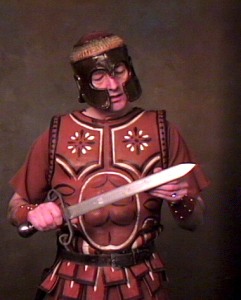
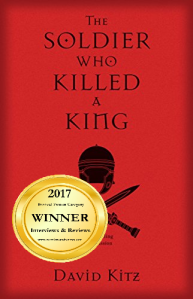
Soldier bookThis gripping story offers its readers a front-row seat from which we can view the action. It’s a hidden camera on the helmet of a primary witness of the history-altering drama when the Sovereign of the Universe, quietly riding a lowly donkey, overthrew the pomp and dominion of the most powerful kingdom this world had ever known. More than that, it’s a look into the mind and heart of a man, not unlike you or me, who wrestled with the meaning and purpose of life.

As you read the thoughtful eyewitness account of Marcus Longinus, the Roman centurion, the soldier who killed a king, you’ll feel his anxiety and anguish as well as exult in his ultimate answers because—despite the differences of time and culture—his story is our story.

Dr. Barry Buzza
President Emeritus
Foursquare Gospel Church of Canada

For the month of June The Soldier Who Killed a King is available for preorder from Kregel Publishing for the early bird price of $10.99. The worldwide release date is July 25th.

Place your order today: http://www.kregel.com/fiction/the-soldier-who-killed-a-king/

← Older posts
Newer posts →

Psalms 365: Develop a Life of Worship and Prayer

Psalms 365 Volume II

Psalms 365 vol 3
— Psalms 365 Volume III

Psalms

Recent posts

  • He Refreshes My Soul December 21, 2025
  • The Church and the Third Temptation of Christ December 21, 2025
  • May the LORD Grant All Your Requests December 20, 2025
  • A Horn of Salvation December 19, 2025
  • Ready for the King of Glory December 19, 2025
  • My Spirit Rejoices in God My Savior December 18, 2025
  • Joining the Generation That Seeks God December 18, 2025

Calendar

December 2025
M T W T F S S
1234567
891011121314
15161718192021
22232425262728
293031  
« Nov    

Blog Posts

Comments

  • davidkitz on The Church and the Third Temptation of Christ
  • My Life in Our Father's World on The Church and the Third Temptation of Christ
  • davidkitz on My Spirit Rejoices in God My Savior

Blog at WordPress.com.

Privacy & Cookies: This site uses cookies. By continuing to use this website, you agree to their use.
To find out more, including how to control cookies, see here: Cookie Policy
  • Subscribe Subscribed
    • I love the Psalms
    • Join 1,377 other subscribers
    • Already have a WordPress.com account? Log in now.
    • I love the Psalms
    • Subscribe Subscribed
    • Sign up
    • Log in
    • Report this content
    • View site in Reader
    • Manage subscriptions
    • Collapse this bar
 

Loading Comments...