• Home
  • About
  • DavidKitz.ca
  • Youtube Videos
  • Books by David
  • Books on Amazon.com

I love the Psalms

~ Connecting daily with God through the Psalms

I love the Psalms

Tag Archives: Satan

The Church and the Third Temptation of Christ

21 Sunday Dec 2025

Posted by davidkitz in Psalms, The Elisha Code

≈ 3 Comments

Tags

Caesar, Christ, church, false christs, false saviors, God and Caesar, Jesus, kingdom, political, politics, prophecy, prophet, Satan, Savior, scriptures, temptation, the cross

And He said to them,
“Render therefore to Caesar the things that are Caesar’s,
and to God the things that are God’s.”
 

(Matthew 22:21b, NKJV)

The church cannot move forward in the right direction unless there is a clear-eyed assessment of where we stand today.

Here then are a few questions to help us assess our current position:

  • Are local churches growing, thriving, and multiplying in your city/community?
  • Are individuals in your community repenting and coming to faith in Christ?
  • Is the message of the gospel transforming society, or is the world transforming the church?
  • Over the last twenty years, has the church become more politically engaged?

We have been keen observers of the church and the impact of the gospel on society for over fifty years. During that time there have been encouraging waves of numerical growth and spiritual renewal, but there have also been seasons of testing and decline. Broadly speaking, over the last decade, decline has been the dominant theme. Yes, there are exceptions to this downward trend, and they should be celebrated, but nevertheless, the trendline is not moving in our favor. Statistical surveys indicate a steady decline in church attendance and self-identification with the Christian faith.

Landestreu Church — photo by Donald Adam

Why is this so?

What has not declined is the church’s level of political engagement. While the embers of spiritual revival have been dying, the fires of political engagement have been burning red hot. And political leaders of all stripes have been eager to fan the flames. After all, they know where the votes lie and how to spark political passions.

The sharp divisions between the political left and right have been mirrored in the church. The theologically liberal have championed social justice issues, while theological conservatives have tried to hold the line against what they see as a creeping socialist sin agenda.

To a degree, these divisions in the church have been present for generations. But in recent years the divisions have grown sharper as political discourse has become more polarized. Throw in some misinformation, a few conspiracy theories, and we have a toxic brew that social media spreads worldwide.

Where is the good news of the gospel in all of this? All too often, it’s been abandoned or drowned out in both camps. A worshipper may attend a Sunday service at a left leaning church and hear a sermon on the merits of caring for the poor and marginalized, but the name of Jesus is never mentioned. Similarly, I have attended so called ‘prayer meetings’ of evangelical pastors where not a single word of prayer is uttered, but the entire conversation is centered on right wing political machinations and strategies.

Is the message of the gospel transforming our society and culture? No. The world is transforming the culture of the church. The glorious light of the gospel has been turned to darkness. Jesus’ call to take up our cross and follow him is being ignored—ignored in the house of God while we pursue purely political objectives.

Christ’s admonition rings true:

“Salt is good; but if the salt has lost its flavor, how shall it be seasoned? It is neither fit for the land nor for the dunghill, but men throw it out. He who has ears to hear, let him hear!” (Luke 14:34-35, NKJV)

The church has too often gone down a political rabbit hole thinking it can somehow save this generation by political means. No such salvation exists, nor has it ever existed, and those who promise it are false saviors. Furthermore, Jesus prophesied such false political saviors would arise.

Then if anyone says to you, ‘Look, here is the Christ!’ or ‘There!’ do not believe it. For false christs and false prophets will rise and show great signs and wonders to deceive, if possible, even the elect. See, I have told you beforehand (Matthew 24:24-25, NKJV).

Every generation has seen its share of false saviors, but after 2,000 years only one Savior remains standing. His name is Jesus. Let’s cling to him and the message of the cross.

Photo by Pixabay on Pexels.com

Often politicians use religion for personal gain—to curry favor and capture votes, therefore, leaders in the Christian community need to exercise caution. We believe Christ followers should vote and be politically engaged, but our first loyalty must be to Christ. A life of service in the political realm can be a noble vocation ordained by God.

What blueprint did Jesus follow as he began his earthly ministry and set the foundation for the church? Was he engaged in the politics of his time? His politics was not the politics of this world. It was the politics of humility, forgiveness, and self-sacrifice.

The blueprint our Lord followed can be found in his response to the three temptations of Christ as recorded in the gospels. The third temptation found in Matthew’s gospel specifically addresses the lure of political engagement.

Again, the devil took Him up on an exceedingly high mountain, and showed Him all the kingdoms of the world and their glory. And he said to Him, “All these things I will give You if You will fall down and worship me.”
Then Jesus said to him, “Away with you, Satan! For it is written, ‘You shall worship the Lord your God, and Him only you shall serve’”
(Matthew 4:8-10)

There is something quite striking, first about the devil’s offer, and then Jesus’ response. Satan offered the kingdoms of the world and their glory. Implied in this offer is the understanding that these kingdoms are currently his—under the devil’s control. Jesus does not refute this. The nations are, in fact, within the devil’s domain. This is in full agreement with Jesus’ teaching on this matter as he identified Satan as the prince of this world. See John 12:30-33.

Similarly, Paul asserts that before their conversion the Ephesians “walked according to the course of this world, according to the prince of the power of the air, the spirit who now works in the sons of disobedience” (Ephesians 2:2).

Jesus refused Satan’s offer of political power and reward if he would worship him. He refused to play on the devil’s turf. He turned down the offer of earthly, political kingdoms so he could establish an eternal, spiritual kingdom—the Kingdom of God.

Matthew ends his account of the three temptations of Christ with this statement: Then the devil left Him, and behold, angels came and ministered to Him (Matthew 4:11, NKJV).

But Luke’s account ends differently: When the devil had finished all this tempting, he left him until an opportune time (Luke 4:13, NIV).

Were there other occasions when Jesus was tempted to become politically engaged and establish an earthly kingdom? There may have been numerous occasions, but three are readily identifiable.

John identifies one such occasion immediately after the feeding of the five thousand.

Then those men, when they had seen the sign that Jesus did, said, “This is truly the Prophet who is to come into the world.”
Therefore when Jesus perceived that they were about to come and take Him by force to make Him king, He departed again to the mountain by Himself alone (John 6:14-15, NKJV).

What a grand opportunity this was! Jesus could become king. Furthermore, it would not appear to be something he sought. He could simply bow to the will of the people, and they would proclaim him king.

Can you hear the devil’s whisper, “Surely, this must be the will of God?”

But what did Jesus do? Did he accept the devil’s latest offer? No. He walked away. Instead of making a deal with the world and the devil, Jesus went to prayer in a lonely place where he met with his Father. He walked away from an earthly political kingdom and all its trappings. Wealth. Fame. Adoration.

Why walk away?

For a second time Jesus walked away from a temporal, material kingdom because he was establishing an eternal, spiritual Kingdom—a Kingdom that exists on a much higher plane than the kingdoms of this world.

And after a time of communion with his Father, what did Christ do?

He walked on water.

The juxtaposition of these events was not due to random chance. Jesus walked out on the Sea of Galilee to visibly demonstrate the spiritual nature of his eternal Kingdom. The disciple’s initial reaction illustrates this perfectly.

Shortly before dawn Jesus went out to them, walking on the lake. When the disciples saw him walking on the lake, they were terrified. “It’s a ghost,” they said, and cried out in fear (Matthew 14:25-26, NIV).

Jesus was entirely at home in the spirit world, but we are not. The disciples reacted just as we would. The truth we must lay hold of is the spiritual nature of Christ and his Kingdom. By faith Peter briefly grasped that truth as he stepped out of the boat, and he too walked on water.

Photo by Pixabay on Pexels.com

Oh, for the faith to do likewise in this day and hour! Are we ready to do as Peter did, step into the supernatural and walk in the Spirit?

The second occasion when Jesus was tempted to take a political position is well known. It occurred within the temple courts during the last week of his earthly ministry.

Then the Pharisees went and plotted how they might entangle Him in His talk. And they sent to Him their disciples with the Herodians, saying, “Teacher, we know that You are true, and teach the way of God in truth; nor do You care about anyone, for You do not regard the person of men. Tell us, therefore, what do You think? Is it lawful to pay taxes to Caesar, or not?”
But Jesus
 perceived their wickedness, and said, “Why do you test Me, you hypocrites? Show Me the tax money.”
So they brought Him a denarius.
And He said to them, “Whose image and inscription is this?”
They said to Him, “Caesar’s.”
And He said to them, “Render therefore to Caesar the things that are Caesar’s, and to God the things that are God’s.” When they had heard these words, they marveled, and left Him and went their way (Matthew 22:15-22, NKJV).

The Pharisees were certain they could trap Jesus on the horns of this dilemma. Note that to execute their devious scheme, the Pharisees teamed with a political party, the Herodians. In this situation, politics and religion conspire together, and undoubtedly Satan is the one who chaired this meeting.

The exact wording of this question is significant. The question could have been, “Is it lawful to pay taxes to Rome, or not?” Or perhaps, “Is it lawful to pay taxes to the Empire, or not?” Why this direct reference to Caesar?

The question as asked goes to the very heart of the Jewish faith, and the Christian faith as well. Caesar was a deity in the Roman pantheon of gods. By paying taxes to Caesar were Jewish believers violating the first commandment of the law of Moses? Were they participating in the worship of a foreign god? To the devout Jew, the image of Caesar on a Roman coin was a graven image signifying idolatry. For this reason, Roman coinage, the denarius, was not accepted in the temple treasury. It must be converted to Tyrian shekels, hence the need for moneychangers in or near the temple courts.

If Jesus said it was wrong to pay taxes to Caesar, he could be accused of supporting the zealots who advocated rebellion against Rome. If he approved of tax payment, he left himself vulnerable to the charge of violating the first commandment and the worship of a foreign god.

How does Jesus solve the dilemma? His answer can be described as a brilliant sidestep. It allows for tax payment and allegiance to both God and Caesar. But…

But we need to qualify this statement. Supremacy and first allegiance belong to the Lord. To put our allegiance to the nation state on an equal footing with our allegiance to God runs contrary to the counsel of Christ and the Scriptures. Note well our Savior’s words:

“No one can serve two masters; for either he will hate the one and love the other, or else he will be loyal to the one and despise the other. You cannot serve God and mammon (Matthew 6:24, NKJV).

Though the reference above contrasts service to God and service to mammon (money/material possessions), the implications of having two masters are clear. One master must take precedence. Is it God or money? Is it God or the state? Is it God or the political leader or party?

Far too many believers have divided loyalties when Christ demands our all. A weak-kneed gospel requires little from us, but in truth, Jesus demands our all.

Now great multitudes went with Him. And He turned and said to them, “If anyone comes to Me and does not hate his father and mother, wife and children, brothers and sisters, yes, and his own life also, he cannot be My disciple. And whoever does not bear his cross and come after Me cannot be My disciple (Matthew 14:25-27, NKJV).

God and Caesar are not on an equal footing. And dual loyalty on an equal basis is not what Christ is advocating for in his discussion with the Pharisees and the Herodians. He is conceding that submission to civil authorities is required.

Photo by Todd Trapani on Pexels.com

In his teaching on the command to honor father and mother, Martin Luther expands the scope of those to whom honor, and obedience are due. He includes masters and goes on to define them as follows: “Masters are all those who by God’s ordinance are placed over us in the home, in the state, at the school and at the place where we work.”[i]

Luther saw in the Ten Commandments a hierarchy of submission and obedience that began with God and extended through the family, the state and the workplace.

Jesus’ answer makes it clear that he is not leading a political rebellion—a rebellion against Rome. He is not taking the devil’s bait or participating in the devil’s rebellion. Since the foundation of the world, the devil has been the author and master of rebellion. For this reason, Christians must exercise due diligence and hear from God before throwing in their lot with those who advocate the overthrow of established authorities. If those authorities are established by God, we may find ourselves working against the God we serve.

There are multiple examples in the Scriptures where God called for submission to authority, even heathen authority, rather than rebellion. The classic example is the Jewish people’s submission to foreign rule during their seventy years of captivity in Babylon. After urging the captives to build homes and raise families, the prophet Jeremiah gave the exiles these instructions:

Also, seek the peace and prosperity of the city to which I have carried you into exile. Pray to the Lord for it, because if it prospers, you too will prosper” (Jeremiah 29:7, NIV).

While serving in a position of submission to ungodly autocrats, leaders such as Daniel and Nehemiah laid the groundwork for the return to the holy land, and the restoration of the Jewish state, and temple worship. This is not the outcome one would expect from yielding to the authority of a pagan government. However, we need to recognize there is a much higher authority who oversees the affairs of all humanity. Surely, this proverb holds true: In the Lord’s hand the king’s heart is a stream of water that he channels toward all who please him (Proverbs 21:1, NIV).

Jesus displayed impeccable wisdom in his response to the politically charged question of taxation. But his wise response did not prevent his arrest, trial, and crucifixion. And what were the charges brought against him?

Jesus before Pilate

Then the whole assembly rose and led him off to Pilate. And they began to accuse him, saying, “We have found this man subverting our nation. He opposes payment of taxes to Caesar and claims to be Messiah, a king” (Luke 23:1-2, NIV).

The charges before Pontius Pilate were entirely political. Let’s remember another name for Satan is the accuser, and he is only too eager to use human vessels to convey his accusations. Furthermore, why not use an outright lie, since he is the father of lies?[ii]

Following the feeding of the five thousand, Jesus rejected the role of an earthly king, and later, he explicitly endorsed the payment of taxes to Caesar, yet the master of lies and distortion accused him of both these political infractions. The devil never plays fair. In Christ’s trial before Pilate, Satan manipulated the high priest, the crowd and all the players to achieve his goal—the death of Jesus.[iii]

Throughout his ministry Jesus steadfastly resisted political entanglement, but in the end, the accusation of political ambition is precisely what Satan used to bring about Christ’s crucifixion.

Finally, let’s examine the third occasion when Jesus was tempted to become politically engaged and establish an earthly kingdom. The location was Gethsemane. After agonizing several hours in prayer, Jesus rises to meet his betrayer. John tells us that Peter rose to Christ’s defense and in the ensuing fracas Peter cut off the ear of the servant of the high priest.

“Put your sword back in its place,” Jesus said to him, “for all who draw the sword will die by the sword. Do you think I cannot call on my Father, and he will at once put at my disposal more than twelve legions of angels? But how then would the Scriptures be fulfilled that say it must happen in this way?”

In that hour Jesus said to the crowd, “Am I leading a rebellion, that you have come out with swords and clubs to capture me? Every day I sat in the temple courts teaching, and you did not arrest me. But this has all taken place that the writings of the prophets might be fulfilled.” Then all the disciples deserted him and fled (Matthew 26:52-56, NIV).

It is clear from the passage above that Jesus was continually tempted to reverse his arrest, trial, and crucifixion. Twelve legions of angels were standing ready to do just that. At any moment, by a dramatic show of force, he could overpower any adversary. Why endure the coming humiliation, torture, and death?

Rising on angel wings — photo by David Kitz

Jesus provides the answer to this question in this statement, “But this has all taken place that the writings of the prophets might be fulfilled.” He was moving according to a plan established in eternity, revealed by the prophets, and prepared well in advance. Nothing was happening by chance. During this Passover celebration, the sacrificial Lamb of God would lay down his life. His redeeming blood would stain a cross to wash away the stains of our corrosive sin.

Jesus had prepared his heart in prayer. He heard his Father’s voice. He must drink this bitter cup of suffering, and nothing would deter him. Not the comforts of the flesh. Not the temptations of the world. Not the demons of hell.

The temptation for Jesus to call on legions of angels for deliverance combines aspects of the three wilderness temptations as described in Matthew chapter four. It brings comfort to the body rather than excruciating torture—the first temptation. It appeals to the desire for fame, self-promotion, and the spectacular—the second temptation. And it finally, it holds the promise of a political victory over an oppressive enemy. Why not call on the angels? Why not establish Christ’s immediate supremacy over his earthly foes? The angels had ministered to him after his forty-day fast and temptation in the wilderness. Why not call on them now?

The answer lies in the nature of the King and the nature of his Kingdom. Jesus is God by nature and coequal within the Trinity. Yes, he was and is fully human, but he is simultaneously fully eternal and divine. This King has no beginning and no end, and his power and authority have no limits. Holiness is the foundation of his throne.

But this same King—this same Jesus—came to the cross in full submission to his Father. He took the lowest position. Jesus became the least in the Kingdom of God, being willing to suffer humiliation and a criminal’s death on the cross.[iv]

Was Jesus leading a rebellion against the political authorities of his day? The answer is a resounding “No!”

But in his human flesh, he was leading a rebellion to unseat the most powerful earthly ruler of all time, the prince of the power of the air. How did Christ defeat him?

Jesus defeated Satan by becoming the exact opposite of his foe. The chief characteristics of Satan are pride and rebellion. To defeat the master of pride and rebellion Jesus took on the form of a servant.[v] He humbled himself to the lowest place—the place of the cross—and from that position he crushed the head of the ancient serpent.
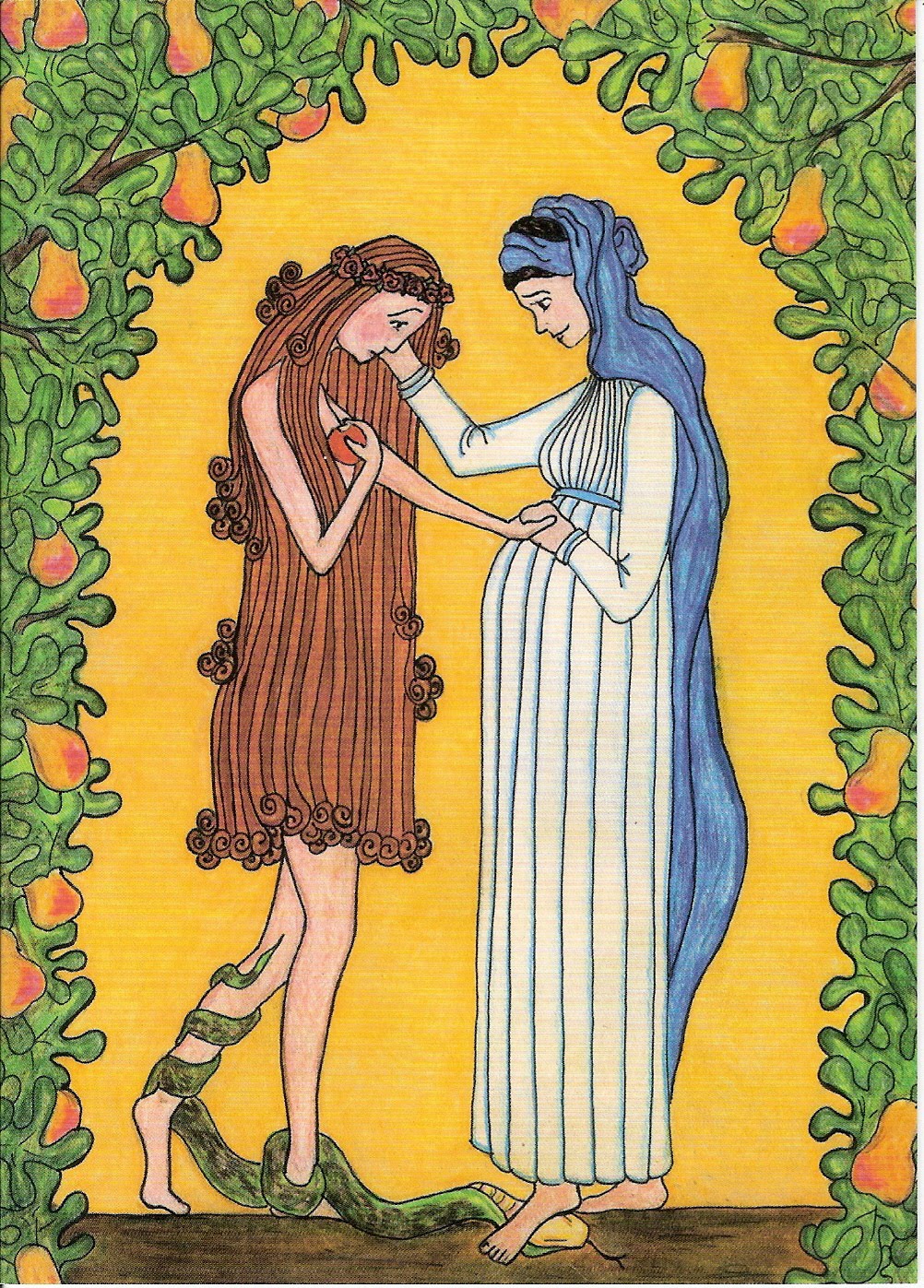
Mary Comforts Eve

At his Last Supper, Jesus demonstrated his servanthood by washing his disciples’ feet.[vi] He clearly taught the principle of humble submission.

Now there was also a dispute among them, as to which of them should be considered the greatest. And He said to them, “The kings of the Gentiles exercise lordship over them, and those who exercise authority over them are called ‘benefactors.’ But not so among you; on the contrary, he who is greatest among you, let him be as the younger, and he who governs as he who serves. For who is
greater, he who sits at the table, or he who serves? Is it not he who sits at the table? Yet I am among you as the One who serves.
“But you are those who have continued with Me in My trials. And I bestow upon you a kingdom, just as My Father bestowed one upon Me, that you may eat and drink at My table in My kingdom, and sit on thrones judging the twelve tribes of Israel
” (Luke 22:24-29, NKJV).

How will we defeat and disarm Satan and lay waste to his kingdom? It will not happen through mere political engagement. That is not the route Jesus took. That political rabbit hole is the devil’s lair. We are intruding on Satan’s turf when we head down that hole, and he knows how to fight and win down there. He has been doing it for thousands of years.

We win by using the same tactics as Jesus. It is the surrendered life that wins battles in the spiritual realm. It is the life surrendered to the will of the Father that prepares the way for salvation and world-transforming revival.


[i] Dr. Martin Luther’s Small Catechism, A Handbook of Christian Doctrine, Concordia Publishing House, Saint Louis, Missouri, P. 64

[ii] John 8:44

[iii] For a thorough play-by-play account of the trial and crucifixion of Christ, and the political machinations of Herod Antipas, Joseph Caiaphas, and Pontius Pilate read The Soldier Who Killed a King by David Kitz, Kregel Publications, 1917.

[iv] Matthew 11:11

[v] Philippians 2:5-11

[vi] John 13:1-17

This is the fifteenth weekly excerpt from the award-winning book 
The Elisha Code & the Coming Revival 

A soul-gripping read.
Is a return-to-Jesus revival possible in our time?
This book points the way forward.
For details click here.

Standing Secure in God

27 Thursday Nov 2025

Posted by davidkitz in Psalms

≈ Leave a comment

Tags

armor, armor of God, battle, David, devil, discipline, faith, Israel, protection, Psalms, refuge, Satan, Scripture, spiritual warrior, strength, victory, warfare

Today’s Devotion from Psalms 365 by David Kitz

Reading: Psalm 18:30-36

Listen to today’s reading by Jonathan Dent:

https://davidkitz.blog/wp-content/uploads/2025/11/psalm-18-4-30-6-final-mix-2.mp3

As for God, his way is perfect:
The LORD’s word is flawless;
he shields all who take refuge in him.
For who is God besides the LORD?
And who is the Rock except our God?
It is God who arms me with strength
and keeps my way secure.
He makes my feet like the feet of a deer;
he causes me to stand on the heights.
He trains my hands for battle;
my arms can bend a bow of bronze.
You make your saving help my shield,
and your right hand sustains me;
your help has made me great.
You provide a broad path for my feet,
so that my ankles do not give way (NIV). *

Photo by Pixabay on Pexels.com

Reflection
There’s a principle of biblical interpretation that goes something like this: The natural comes first, and then comes the spiritual. We can see this illustrated in Paul’s comparison of the first man, Adam, with the new man, Christ, in 1 Corinthians 15:20-28. Similarly, the natural Kingdom of Israel is replaced in the New Testament by the spiritual Kingdom of God, which has no physical or geographic boundaries.

In David’s time natural Israel had borders, which needed to be defended from attack by flesh and blood enemies only too eager to take advantage of any perceived weakness. In the same way today, the church and every born-again believer must be on guard, because Satan and his demons are lying in wait, ready to attack.

Yes, Virginia, there is a Devil. And he has marked you as his target. He has spiritual murder as his top priority—your murder. Your enemy the devil prowls around like a roaring lion looking for someone to devour (1 Peter 5:8).

But God did not leave David or natural Israel defenseless. The LORD provided His matchless word and His impenetrable shield of faith against the foes attack. Furthermore, there was strength for the battle. David declares, “It is God who arms me with strength and keeps my way secure… He trains my hands for battle; my arms can bend a bow of bronze” (v. 32, 34).

This portion of Psalm 18 has its New Testament spiritual counterpart in Ephesians 6:10-17, where Paul the apostle, calls us as spiritual warriors to put on the armor of God. Like David, we are in a battle.

Response: Heavenly Father, help me to fight the good fight. Today, I put on the armor of God to fight the attacks of the enemy. Give me your strength in Jesus’ name. Amen.

Your Turn: How does Satan try to bring you down? What weapons are you using to counter his attacks?

Happy Thanksgiving to all my American readers.

Para la publicación de Salmos 365 de hoy en español haga clic aquí.

bgbg_v4.3_1501818
* NEW INTERNATIONAL VERSION, COPYRIGHT ©1973, 1978, 1984, 2011 BY BIBLICA

Thank God for peace in Israel and Gaza,
and continue to pray for peace to return to Ukraine and Russia!

Volume I of Psalms 365: Develop a Life of Worship and Prayer won the Best Book of the Year Award from The Word Guild and Volume II has won the Best Devotional of the Year Award. For those who love God’s word, this three-book series is an ideal way to daily meet with the Lord. To purchase or for a closer look click here.

New from David Kitz

James—the brother of Jesus—who was this man? What evidence do we have that this “brother of our Lord” even existed?

David Kitz digs deep into archeology, family dynamics, church history, and the biblical texts. What emerges from his research is a portrait of a decisive, pivotal leader who embodied the will and character of Jesus Christ.

But how did James—James the unbeliever—transform to become a leader who changed the course of world history? In these pages you will uncover the answer and rediscover for yourself the life-changing power of the gospel.

To view further details or purchase this or other books directly from the author click here.

Liberation from Bondage

19 Tuesday Aug 2025

Posted by davidkitz in Psalm 135, Psalms

≈ 1 Comment

Tags

accuser, bondage, devotion, Jesus, liberation, liberator, Prayer, Psalms, redemption, salvation, Satan, sin, the LORD

Reading: Psalm 135:8-14

He struck down the firstborn of Egypt,
    the firstborn of people and animals.
He sent his signs and wonders into your midst, Egypt,
    against Pharaoh and all his servants.
He struck down many nations
    and killed mighty kings—
Sihon king of the Amorites,
    Og king of Bashan,
    and all the kings of Canaan—
and he gave their land as an inheritance,
    an inheritance to his people Israel.
Your name, LORD, endures forever,
    your renown, L
ORD, through all generations
For the L
ORD will vindicate his people
    and have compassion on his servants
(NIV). *

Foster farm, Durham, ON , photo by David Kitz

Reflection
Psalm 135 began with a call for the LORD’s people to praise Him. For the LORD has chosen Jacob to be his own, Israel to be his treasured possession (v. 4).

In today’s reading, the psalmist continues by recounting how Israel came to be God’s treasured possession. It happened as the result of a great cosmic struggle. The descendants of the patriarch Israel (who was also called Jacob) were enslaved in Egypt. There they toiled under cruel taskmasters until by the hand of Moses the LORD sent his signs and wonders into their midst. After ten terrible plagues, Pharaoh finally relented and set God’s people free. Nevertheless, Pharaoh changed his mind and sent his army to pursue Israel. Again, at the Red Sea, the LORD intervened. He parted the sea, for His chosen people, but brought it crashing down upon Egypt’s army.

Make no mistake; you too are part of a great cosmic struggle. You were born into a world that is under the control of Satan. Jesus called our adversary the ruler, or prince of this world (John 16:11). We were born under Satan’s authority and within his domain just as the Hebrew children were born into a state slavery in the land of Egypt. As we grow up, Satan has his taskmasters, who set us to work doing his bidding. It begins as we bow to peer pressure, but soon those things we choose begin to assert control. We can soon find ourselves in a downward spiral, imprisoned by sinful habits.

Only Jesus can liberate us from this bondage. At the cross he paid the full price for our redemption. Crossing the Red Sea foreshadows the New Testament sacrament of baptism. It signals our break with the old life—the old bondage. See 1 Corinthians 10:1-4. We have a new master now. His name is Jesus. He is the great liberator. He liberates us from the bondage of sin, and the taunts of the Accuser, who insists that we will never be good enough. But Jesus is our sufficiency. By his grace we are saved.

Response: Father God, I thank you for liberation. Through Jesus, you freed me from the bondage of sin. I am eternally grateful. Fill me with the joy of your salvation. You saved me. Hallelujah! Amen.

Your Turn: Have you been liberated from the bondage of sin? What did that liberty feel like?

Para la publicación de Salmos 365 de hoy en español haga clic aquí.

bgbg_v4.3_1501818
* NEW INTERNATIONAL VERSION, COPYRIGHT ©1973, 1978, 1984, 2011 BY BIBLICA


Please pray for peace to return to Israel, Gaza, and Ukraine!


Volume I of Psalms 365: Develop a Life of Worship and Prayer won the Best Book of the Year Award from The Word Guild and Volume II has won the Best Devotional of the Year Award. For those who love God’s word, this three-book series is an ideal way to daily meet with the Lord. To purchase or for a closer look click here.

A gripping read from David Kitz.
Is a return-to-Jesus revival possible in our time?
This book points the way forward.
For details click here.

You Are His Target

04 Thursday Jul 2024

Posted by davidkitz in Psalm 18, Psalms

≈ Leave a comment

Tags

armor of God, church, David, demons, devil, Jesus, Kingdom of God, New Testament, Psalms, Satan, spiritual attacks, the LORD

Reading: Psalm 18:30-36
As for God, his way is perfect:
The L
ORD’s word is flawless;
he shields all who take refuge in him.
For who is God besides the L
ORD?
And who is the Rock except our God?
 It is God who arms me with strength
and keeps my way secure.
He makes my feet like the feet of a deer;
he causes me to stand on the heights.
He trains my hands for battle;
my arms can bend a bow of bronze.
You make your saving help my shield,
and your right hand sustains me;
your help has made me great.
You provide a broad path for my feet,
so that my ankles do not give way
(NIV). *

L Kranz 2024-04-06

Sunset photo by Liz Kranz

Reflection
There’s a principle of biblical interpretation that goes something like this: The natural comes first, and then comes the spiritual. We can see this illustrated in Paul’s comparison of the first man, Adam, with the new man, Christ, in 1 Corinthians 15:20-28. Similarly, the natural Kingdom of Israel is replaced in the New Testament by the spiritual Kingdom of God, which has no physical or geographic boundaries.

In David’s time natural Israel had borders, which needed to be defended from attack by flesh and blood enemies only too eager to take advantage of any perceived weakness. In the same way today, the church and every born-again believer must be on guard, because Satan and his demons are lying in wait, ready to attack.

Yes, Virginia, there is a Devil. And he has marked you as his target. He has spiritual murder as his top priority—your murder. Your enemy the devil prowls around like a roaring lion looking for someone to devour (1 Peter 5:8).

But God did not leave David or natural Israel defenseless. The LORD provided His matchless word and His impenetrable shield of faith against the foes attack. Furthermore, there was strength for the battle. David declares, “It is God who arms me with strength and keeps my way secure… He trains my hands for battle; my arms can bend a bow of bronze.”

This portion of Psalm 18 has its New Testament spiritual counterpart in Ephesians 6:10-17, where Paul the apostle, calls us as spiritual warriors to put on the armor of God. Like David, we are in a battle.

Response: Heavenly Father, help me to fight the good fight. Today, I put on the armor of God to fight the attacks of the enemy. Give me your strength in Jesus’ name. Amen.

Your Turn: How does Satan try to bring you down? What weapons are you using to counter his attacks?

Happy Independence Day to my American readers.

Para la publicación de Salmos 365 de hoy en español haga clic aquí.

* NEW INTERNATIONAL VERSION, COPYRIGHT ©1973, 1978, 1984, 2011 BY BIBLICA

BGBG_v4.3_150[1818]

Please pray for peace to return to Israel, Gaza, and Ukraine!

Volume I of Psalms 365: Develop a Life of Worship and Prayer won the Best Book of the Year Award from The Word Guild and Volume II has won the Best Devotional of the Year Award. For those who love God’s word, this three-book series is an ideal way to daily meet with the Lord. To purchase or for a closer look click here.

New from David Kitz
TheElishaCodeCVR5

To purchase or for a closer look click here.

The Great Cosmic Struggle

26 Tuesday Mar 2024

Posted by davidkitz in Psalm 135, Psalms

≈ Leave a comment

Tags

baptism, grace of God, Jesus, liberation, Prayer, Psalms, salvation, Satan, the cross

Today’s Devotion from the Psalms

Reading: Psalm 135:8-14
He struck down the firstborn of Egypt,
the firstborn of people and animals.
He sent his signs and wonders into your midst, Egypt,
against Pharaoh and all his servants.
He struck down many nations
and killed mighty kings—
Sihon king of the Amorites,
Og king of Bashan,
and all the kings of Canaan—
and he gave their land as an inheritance,
an inheritance to his people Israel.
Your name, LORD, endures forever,
your renown, L
ORD, through all generations.
For the L
ORD will vindicate his people
and have compassion on his servants
(NIV). *

pxl_20240304_130214740

Narbonne Plage, France — photo by David Kitz

Reflection
Psalm 135 began with a call for the LORD’s people to praise Him. For the LORD has chosen Jacob to be his own, Israel to be his treasured possession.

In today’s reading, the psalmist continues by recounting how Israel came to be God’s treasured possession. It happened as the result of a great cosmic struggle. The descendants of the patriarch Israel (who was also called Jacob) were enslaved in Egypt. There they toiled under cruel taskmasters until by the hand of Moses the LORD sent his signs and wonders into their midst. After ten terrible plagues, Pharaoh finally relented and set God’s people free. Nevertheless, Pharaoh changed his mind and sent his army to pursue Israel. Again, at the Red Sea, the LORD intervened. He parted the sea, for His chosen people, but brought it crashing down upon Egypt’s army.

Make no mistake; you too are part of a great cosmic struggle. You were born into a world that is under the control of Satan. Jesus called our adversary the ruler, or prince of this world (John 16:11). We were born under Satan’s authority and within his domain just as the Hebrew children were born into a state slavery in the land of Egypt. As we grow up, Satan has his taskmasters, who set us to work doing his bidding. It begins as we bow to peer pressure, but soon those things we choose begin to assert control. We can soon find ourselves in a downward spiral, imprisoned by sinful habits.

Only Jesus can liberate us from this bondage. At the cross he paid the full price for our redemption. Crossing the Red Sea foreshadows the New Testament sacrament of baptism. It signals our break with the old life—the old bondage. See 1 Corinthians 10:1-4. We have a new master now. His name is Jesus. He is the great liberator. He liberates us from the bondage of sin, and the taunts of the Accuser, who insists that we will never be good enough. But Jesus is our sufficiency. By his grace we are saved.

Response: Father God, I thank you for liberation. Through Jesus, you freed me from the bondage of sin. I am eternally grateful. Fill me with the joy of your salvation. You saved me. Hallelujah! Amen.

Your Turn: Have you been liberated from the bondage of sin? What did that liberty feel like?

* NEW INTERNATIONAL VERSION, COPYRIGHT ©1973, 1978, 1984, 2011 BY BIBLICA

BGBG_v4.3_150[1818]

Please pray for peace to return to Israel, Gaza, and Ukraine!

Volume I of Psalms 365: Develop a Life of Worship and Prayer won the Best Book of the Year Award from The Word Guild and Volume II has won the Best Devotional of the Year Award. For those who love God’s word, this three-book series is an ideal way to daily meet with the Lord. To purchase or for a closer look click here.

4485 SHARABLE-1

Lent is here. Easter is approaching.
Are you ready for a journey to the cross?
For a closer look or to purchase click here.

Living under Siege

29 Wednesday Mar 2023

Posted by davidkitz in Psalm 31, Psalms

≈ 2 Comments

Tags

devil, pornography, salvation, Satan, spiritual battles

Reading: Psalm 31:21-24
Praise be to the LORD,
for he showed me the wonders of his love
when I was in a city under siege.
In my alarm I said,
“I am cut off from your sight!”
Yet you heard my cry for mercy
when I called to you for help.
Love the LORD, all his faithful people!
The L
ORD preserves those who are true to him,
but the proud he pays back in full.
Be strong and take heart,
all you who hope in the L
ORD (NIV). *

island during golden hour and upcoming storm

Photo by Johannes Plenio on Pexels.com

Reflection
David ends Psalm 31 with a testimony to God’s great love and mercy. Hear his declaration: Praise be to the LORD, for he showed me the wonders of his love when I was in a city under siege. In my alarm I said, “I am cut off from your sight!” Yet you heard my cry for mercy when I called to you for help.

Are you living in a city under siege? My quick and simple answer is no. My city is not surrounded by enemy troops who are lobbing artillery shells down on my neighborhood.

While in the physical sense that may be true, in the spiritual realm my city is caught up in active warfare. Demonic forces are firing their missiles into my city. The airwaves and social media feeds are filled with smut and pornography. In the public square Christian faith is routinely mocked and under attack. Atheists trumpet their cause with bestselling books and spew venom on any who dare to embrace the faith.

Meanwhile, pop culture plunges headlong into the deep end of gothic horror, vampire blood lust and zombie self-identification. Then we stand back in amazement when those same young people lash out in murderous deranged madness as happened when five young people were stabbed to death in Calgary or in my hometown when an eighteen-year-old killed his mother.

When you shun God and bed down with the devil, many are going to end up hurt. My city is under siege, but with the help and grace of God, I will not succumb to the enemy’s attack. I will emerge triumphant. David did. And here is his advice for you and me: Love the LORD, all his faithful people!

David’s advice is counterintuitive. Take your eyes off the enemy. Don’t be mesmerized by the devil’s devices and machinations. Your salvation comes from the LORD. Set your heart and your affections on Him. The LORD preserves those who are true to him, but the proud he pays back in full. Be strong and take heart, all you who hope in the LORD.

Response: LORD God, have mercy on me. I love you, LORD. Preserve me through the unfailing love of your Son, Jesus. I will be strong and take heart because I set my hope on you. Amen.

Your Turn: Do you feel your faith is under attack? How do you respond? What are some ways to counter the attacks? Do you cower or advance?

* NEW INTERNATIONAL VERSION, COPYRIGHT ©1973, 1978, 1984, 2011 BY BIBLICA

BGBG_v4.3_150[1818]

Please pray for peace to return to Ukraine!

Volume I of Psalms 365: Develop a Life of Worship and Prayer won the Best Book of the Year Award from The Word Guild and Volume II has won the Best Devotional of the Year Award. For those who love God’s word, this three-book series is an ideal way to daily meet with the Lord. To purchase or for a closer look click here.

As Far as the East is from the West

07 Thursday Jul 2022

Posted by davidkitz in Psalm 103, Psalms

≈ 2 Comments

Tags

compassion, forgiver, love, Satan

Reading: Psalm 103:7-12
He made known his ways to Moses,
his deeds to the people of Israel:
The L
ORD is compassionate and gracious,
slow to anger, abounding in love.
He will not always accuse,
nor will he harbor his anger forever;
he does not treat us as our sins deserve
or repay us according to our iniquities.
For as high as the heavens are above the earth,
so great is his love for those who fear him;
as far as the east is from the west,
so far has he removed our transgressions from us
(NIV).*

beige analog compass

Photo by Ylanite Koppens on Pexels.com

Reflection
Here is a little secret that will be a secret no longer: Of all the psalms, Psalm 103 is my favorite.

Why do I have such a deep love for this psalm? The answer lies in what the psalm tells us about God. The LORD is compassionate and gracious, slow to anger, abounding in love.

That sentence should be etched on our hearts and minds. The character of God is revealed in these traits. I stand in need of a God who has these qualities because by nature I am the polar opposite. In various situations I have lacked compassion. I have reasoned that those who suffer are getting what they deserve. Rather than extent grace, I have a tendency to be judgmental. When things don’t go my way, I can be quick tempered rather than slow to anger. I like to think I am loving, but I’m not sure others would always agree.

The amazing truth is that despite all our shortcomings God still loves you and me. He [the LORD] will not always accuse, nor will he harbor his anger forever; he does not treat us as our sins deserve or repay us according to our iniquities.

Satan is the accuser; God is the merciful forgiver. Sometimes I think in our minds we have reversed those roles. That’s why this psalm acts as such a powerful antidote to wrong thinking. Do you think God cannot forgive you because of some past transgression? Think again. Psalm 103 tells us to view God differently. He is more compassionate than we can imagine, more loving than we can fathom, more patient than we can comprehend.

For as high as the heavens are above the earth, so great is his love for those who fear him; as far as the east is from the west, so far has he removed our transgressions from us.

Infinite—our God’s love and compassion are infinite. Enough said.

Response: Father God, because of your love, mercy, and grace I want to serve you. Please accept my feeble attempts at loving you back. Your forgiveness leaves me with a debt of love I cannot pay. Amen.

Your Turn: Have you had a distorted view of God? How can the compassionate nature of God as seen in this Psalm reshape your perception? What is your favorite psalm? Why?

* NEW INTERNATIONAL VERSION, COPYRIGHT ©1973, 1978, 1984, 2011 BY BIBLICA

BGBG_v4.3_150[1818]

Please pray for the people of Ukraine!

Volume I of Psalms 365: Develop a Life of Worship and Prayer has won the 2021 Best Book of the Year Award and for those who love God’s word, it’s an ideal way to daily meet with the Lord. For a closer look at Volumes II and III click here.

Help in the Battles We All Face               

22 Monday Nov 2021

Posted by davidkitz in Psalm 35, Psalms

≈ 5 Comments

Tags

David, Jesus, Satan, the LORD

Reading: Psalm 35:7-10
Since they hid their net for me without cause
and without cause dug a pit for me,
may ruin overtake them by surprise—
may the net they hid entangle them,
may they fall into the pit, to their ruin.
Then my soul will rejoice in the L
ORD
and delight in his salvation.
My whole being will exclaim,
“Who is like you, L
ORD?
You rescue the poor from those too strong for them,
the poor and needy from those who rob them”
(NIV).*

img_20211020_1307062

Photo by David Kitz

Reflection
Paul the apostle reminds us that as believers in the Lord Jesus Christ, we are engaged in spiritual warfare. Put on the full armor of God, so that you can take your stand against the devil’s schemes. For our struggle is not against flesh and blood, but against the rulers, against the authorities, against the powers of this dark world and against the spiritual forces of evil in the heavenly realms. Therefore put on the full armor of God, so that when the day of evil comes, you may be able to stand your ground, and after you have done everything, to stand (Ephesians 6:11-13).

The conflicts that David experienced in the Old Testament, reflected in the words of this portion of Psalm 35, are mirrored in the spiritual warfare experienced by New Testament believers. Make no mistake—the devil and his cohorts have dug a pit to trap you; they spread their nets to ensnare you in sin and degradation. But as was true for David, the LORD has also provided a way of escape for you and me. Once again Paul reminds us of this: No temptation has overtaken you except what is common to mankind. And God is faithful; he will not let you be tempted beyond what you can bear. But when you are tempted, he will also provide a way out so that you can endure it (1 Corinthians 10:13).

The LORD has equipped us with the armor of God and He has provided a way of escape, so then with David we can rejoice in the victory the LORD will bring.

Then my soul will rejoice in the LORD and delight in his salvation. My whole being will exclaim, “Who is like you, LORD? You rescue the poor from those too strong for them, the poor and needy from those who rob them.”

Satan is a thief and a robber, who robs us of victory, peace and joy. But like David and Paul we can overcome. Victory is possible because the victory has already been won for us at the cross, and it was confirmed on resurrection morning at the empty tomb. “Thanks be to God, who delivers me through Jesus Christ our Lord!” (Romans 7:25).

Response: Heavenly Father, I thank you that you have provided armor so that I can stand against the wiles of the devil. I praise you for the power of your holy word. I have victory through your blood, Lord Jesus. Amen.

Your Turn: In your battle against sin are you using “the sword of the Spirit, which is the word of God?”

* NEW INTERNATIONAL VERSION, COPYRIGHT ©1973, 1978, 1984, 2011 BY BIBLICA

BGBG_v4.3_150[1818]

Volume I of Psalms 365: Develop a Life of Worship and Prayer has won the 2021 Best Book of the Year Award. For a closer look at Volumes II and III click here.


God’s Treasured Possession

04 Friday Jun 2021

Posted by davidkitz in Psalm 135, Psalms

≈ 5 Comments

Tags

bondage, liberation, Satan, taskmasters

Reading: Psalm 135:8-14
He struck down the firstborn of Egypt,
the firstborn of people and animals.
He sent his signs and wonders into your midst, Egypt,
against Pharaoh and all his servants.
He struck down many nations
and killed mighty kings—
Sihon king of the Amorites,
Og king of Bashan,
and all the kings of Canaan—
and he gave their land as an inheritance,
an inheritance to his people Israel.
Your name, LORD, endures forever,
your renown, L
ORD, through all generations.
For the L
ORD will vindicate his people
and have compassion on his servants
(NIV).*

img_20200831_1613437

The cove on the Ottawa River, Orleans, ON — photo by David Kitz

Reflection
Psalm 135 began with a call for the LORD’s people to praise Him. For the LORD has chosen Jacob to be his own, Israel to be his treasured possession (v. 4).

In today’s reading, the psalmist continues by recounting how Israel came to be God’s treasured possession. It happened as the result of a great cosmic struggle. The descendants of the patriarch Israel (who was also called Jacob) were enslaved in Egypt. There they toiled under cruel taskmasters until by the hand of Moses the LORD sent his signs and wonders into their midst. After ten terrible plagues, Pharaoh finally relented and set God’s people free. Nevertheless, Pharaoh changed his mind and sent his army to pursue Israel. Again at the Red Sea, the LORD intervened. He parted the sea, for His chosen people, but brought it crashing down upon Egypt’s army.

Make no mistake; you too are part of a great cosmic struggle. You were born into a world that is under the control of Satan. Jesus called our adversary the ruler, or prince of this world (John 16:11). We were born under Satan’s authority and within his domain just as the Hebrew children were born into a state slavery in the land of Egypt. As we grow up, Satan has his taskmasters, who set us to work doing his bidding. It begins as we bow to peer pressure, but soon those things we choose begin to assert control. We can soon find ourselves in a downward spiral, imprisoned by sinful habits.

Only Jesus can liberate us from this bondage. At the cross he paid the full price for our redemption. Crossing the Red Sea foreshadows the New Testament sacrament of baptism. It signals our break with the old life—the old bondage. See 1 Corinthians 10:1-4. We have a new master now. His name is Jesus. He is the great liberator. He liberates us from the bondage of sin, and the taunts of the Accuser, who insists that we will never be good enough. But Jesus is our sufficiency. By his grace we are saved.

Response: Father God, I thank you for liberation. Through Jesus you freed me from the bondage of sin. I am eternally grateful. Fill me with the joy of your salvation. You saved me. Hallelujah! Amen.

Your Turn: Have you been liberated from the bondage of sin? What did that feel like?

* NEW INTERNATIONAL VERSION, COPYRIGHT ©1973, 1978, 1984, 2011 BY BIBLICA

Volume II of Psalms 365: Develop a Life of Worship and Prayer by award-winning author David Kitz is available now. For a closer look at Volumes I and II click here.

A Debt of Love

05 Friday Feb 2021

Posted by davidkitz in Psalms 365: Develop a Life of Worship and Prayer

≈ 1 Comment

Tags

accuser, debt, God's forgiveness, mercy of God, Satan

Today’s quote from Psalms 365
Satan is the accuser; God is the merciful forgiver 365 Psalm 103Heavenly Father,
because of your love, mercy and grace
I want to serve you.
Please accept my feeble attempts at loving you back.
Your forgiveness leaves me with a debt of love
I cannot pay.
Amen.

The first volume of Psalms 365: Develop a Life of Worship and Prayer by award-winning author David Kitz is now available. For a closer look at this 262-page daily devotional book click here.

← Older posts

Psalms 365: Develop a Life of Worship and Prayer

Psalms 365 Volume II

Psalms 365 vol 3
— Psalms 365 Volume III

Psalms

Recent posts

  • The Need for a Place of Refuge January 9, 2026
  • David Dances before the LORD January 8, 2026
  • The God of Turn-Arounds January 8, 2026
  • The LORD Who Heals You January 7, 2026
  • Why Praise God? January 7, 2026
  • I Give You My Peace January 6, 2026
  • Peace within the Storm January 6, 2026

Calendar

January 2026
M T W T F S S
 1234
567891011
12131415161718
19202122232425
262728293031  
« Dec    

Blog Posts

Comments

  • davidkitz on The Ultimate Come from Behind Victory  
  • cjsmissionaryminister on Preparing a Landing Strip for the Holy Spirit
  • cjsmissionaryminister on The Ultimate Come from Behind Victory  

Blog at WordPress.com.

Privacy & Cookies: This site uses cookies. By continuing to use this website, you agree to their use.
To find out more, including how to control cookies, see here: Cookie Policy
  • Subscribe Subscribed
    • I love the Psalms
    • Join 1,381 other subscribers
    • Already have a WordPress.com account? Log in now.
    • I love the Psalms
    • Subscribe Subscribed
    • Sign up
    • Log in
    • Report this content
    • View site in Reader
    • Manage subscriptions
    • Collapse this bar
 

Loading Comments...